The leatherback turtle: an ocean giant found in Costa Rica
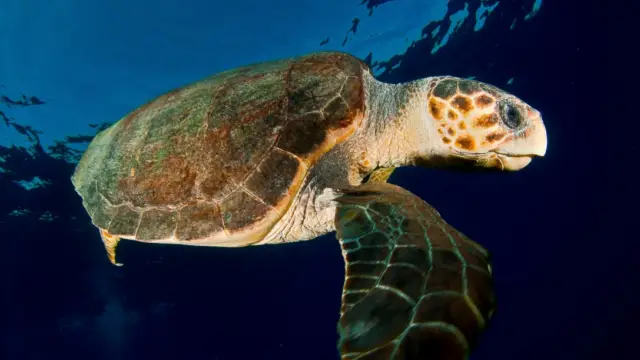
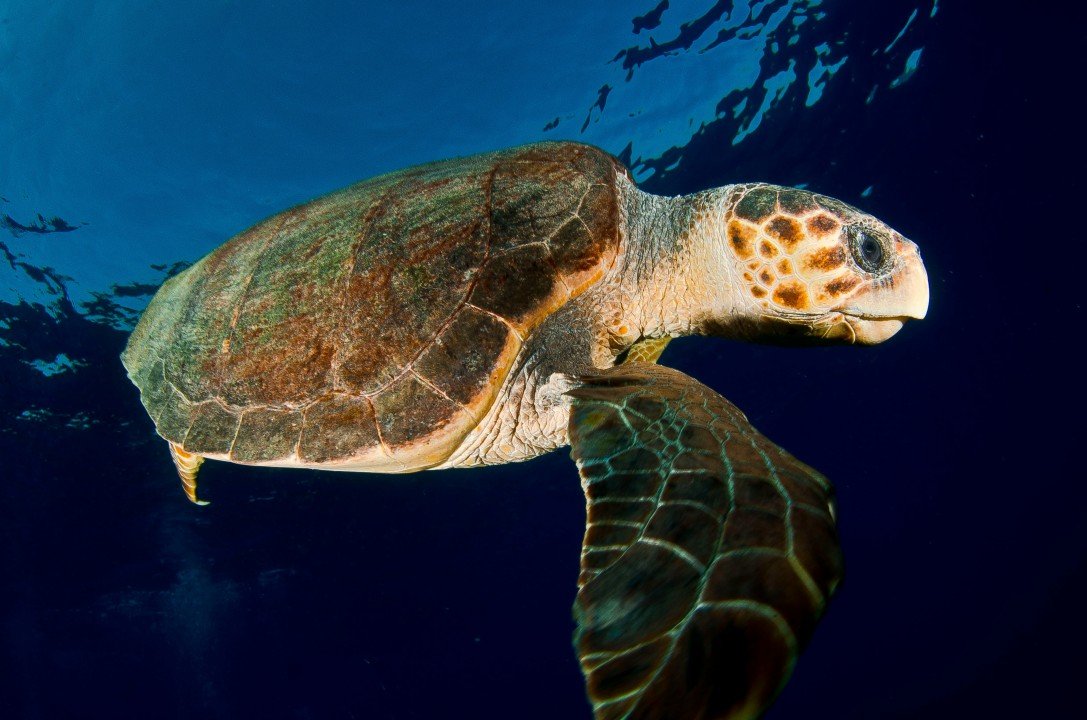
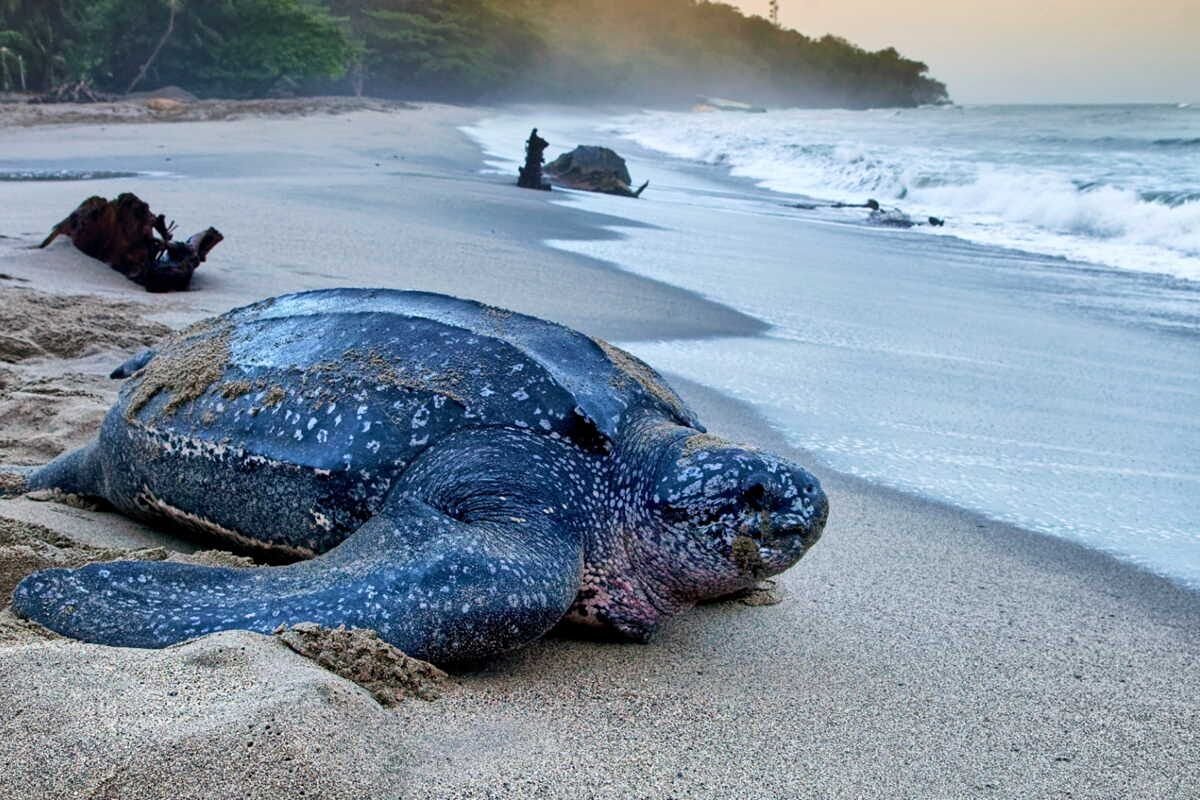
Known in Costa Rica as the tortuga baula, the leatherback turtle (Dermochelys coriacea) is the largest species of sea turtle in the world. An adult can reach nearly two meters in length and weigh more than 600 kg, with some exceptional specimens even exceeding one metric ton. Unlike other sea turtles, its shell is not made up of rigid plates but of thick, supple skin, which is why it is called the “leatherback turtle.”
A great migrant, the leatherback turtle travels thousands of kilometers across tropical and temperate oceans to reach its feeding grounds and nesting beaches. Costa Rica is one of the most important breeding grounds for this species in the entire Caribbean region.
In this article, you’ll learn about the leatherback turtle in Costa Rica, where to spot it, when it comes to lay its eggs, what rules to follow when observing it, and how local initiatives are helping to conserve it.
Where can you see leatherback turtles in Costa Rica?
On the Caribbean coast: Gandoca, Pacuare, and Moín.
The Caribbean coast is now the main nesting area for leatherback turtles in Costa Rica. Among the best-known sites are:
- The Gandoca-Manzanillo National Wildlife Refuge, in the far south of the country.
- The beaches of Pacuare and Barra Pacuare, located north of Limón.
- The Moín area, near Limón.
These relatively isolated beaches offer favorable conditions for nesting. Females return there regularly to dig their nests in the sand and lay several dozen eggs before returning to the ocean.
On the Pacific Coast: Marino Las Baulas National Park
On the northern Pacific coast, the main nesting site is Marino Las Baulas National Park, located around Playa Grande in the Guanacaste region. Created specifically to protect this species, the park is one of the main nesting sites for leatherback sea turtles along the Pacific coast of Central America. Costa Rica is also home to other species of sea turtles, including the green sea turtle, the hawksbill sea turtle , and the olive ridley sea turtle (lora turtle).
For travelers wishing to deepen their understanding of Costa Rica’s coastal ecosystems, there are experiences that allow you to learnabout conservation issues without participating in intrusive activities.
At Terra Caribea, we invite you to enjoy an immersive experience in Barra Pacuare, where you’ll get an up-close look at the daily lives of scientists and volunteers dedicated to preserving this exceptional ecosystem. It’s a unique opportunity to learn about conservation efforts firsthand and to contribute, in your own way, to the protection of local wildlife.
When is the leatherback turtle nesting season?
Nesting periods vary by region and may fluctuate slightly from year to year. On the Caribbean coast, the leatherback turtle nesting season generally runs from March to July for the first arrivals, with peak activity often observed between April and June.
In the Marino Las Baulas National Park area on the Pacific coast, the season generally begins between October and November and continues through February or March. Since exact dates may vary depending on environmental conditions, it is recommended to consult the latest information from protected area managers, SINAC, or local conservation organizations before planning any observation trip.
Nesting or arribada: what’s the difference?
The term “arribada” refers to the massive, synchronized arrival of thousands of turtles on a single beach. In Costa Rica, this phenomenon is particularly associated with the olive ridley sea turtle (tortuga lora) in the Ostional Reserve.
The leatherback turtle, on the other hand, generally does not undertake comparable arribadas. It comes to lay eggs individually or in small groups on nesting beaches.
Learn more about: Costa Rica’s national parks and nature reserves!
Observing Turtles Without Disturbing Them: Rules and Best Practices
Sea turtle observation is strictly regulated at most nesting sites in Costa Rica.
Rules may vary by national park and reserve, but several principles are common:
- Participate only in authorized tours or those led by a certified guide.
- Never use a flash or white light.
- Remain silent when near the animals.
- Respect the distances set by the guides.
- Never touch a turtle or its eggs.
- Avoid standing between the turtle and the ocean.
- Follow the specific guidelines of the park or reserve you are visiting.
These measures are designed to minimize stress for female turtles coming ashore to lay their eggs and to maximize the chances of survival for future generations.
💡 Check out our comprehensive guide to best practices for wildlife observation and responsible travel in Costa Rica.
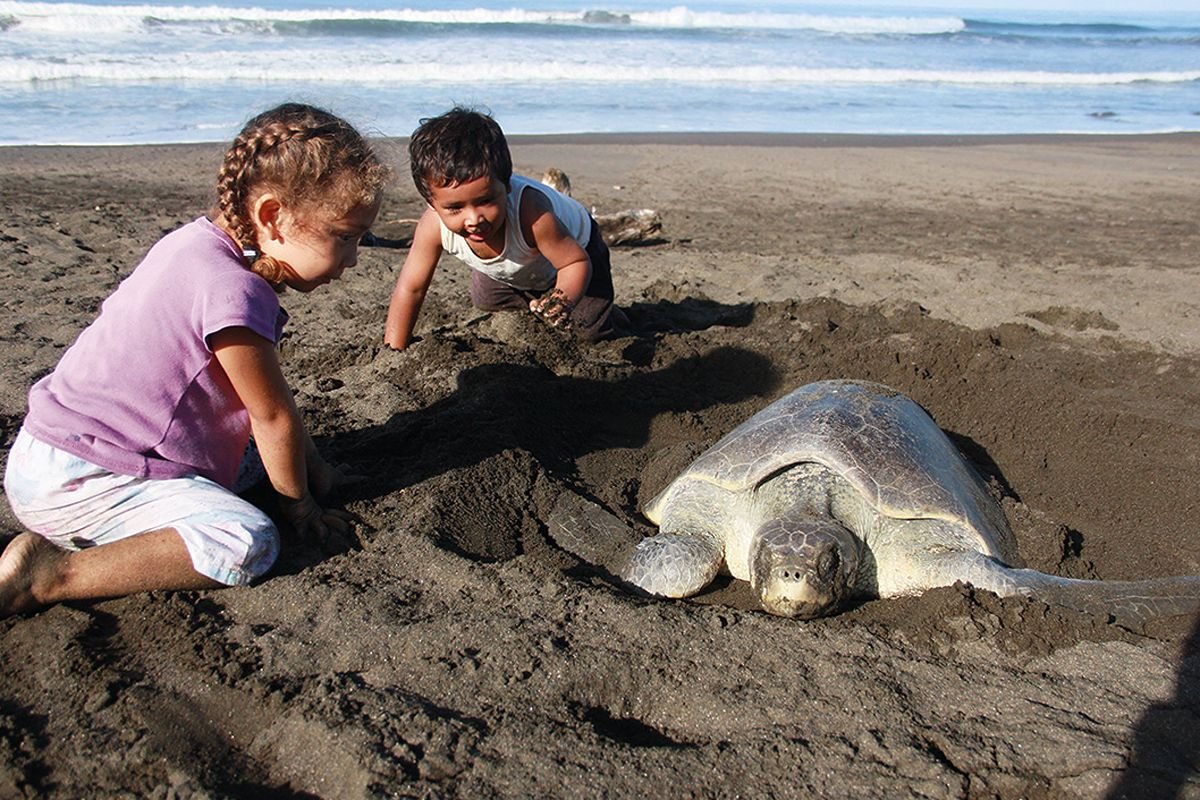
Conservation: Who Is Working to Protect the Leatherback Turtle?
The protection of sea turtles in Costa Rica relies on the collaboration of many stakeholders:
- MINAE (Ministry of the Environment and Energy).
- SINAC (National System of Conservation Areas).
- National parks and wildliferefuges where wildlife can be observed.
- Localassociations and NGOs specializing in marine conservation.
- Coastal communities are involved in monitoring and protecting the beaches.
Their work includes, in particular:
- Monitoring nesting beaches.
- Scientific monitoring of populations.
- Collecting data on migrations
- Protecting nests vulnerable to poaching or predation.
- Environmental education initiatives for residents and visitors.
Despite the progress made, leatherback turtles continue to face several threats:
- Incidental bycatch associated with certain fishing activities.
- Plasticpollution.
- Coastalerosion.
- The effects of climate change on nestingbeaches.
- Human development in certain coastal areas.
Conserving this species therefore requires ongoing efforts at both the local and international levels .
- YouTube Video: Volunteering in Costa Rica to Help Conserve Turtles and Deter Poachers.
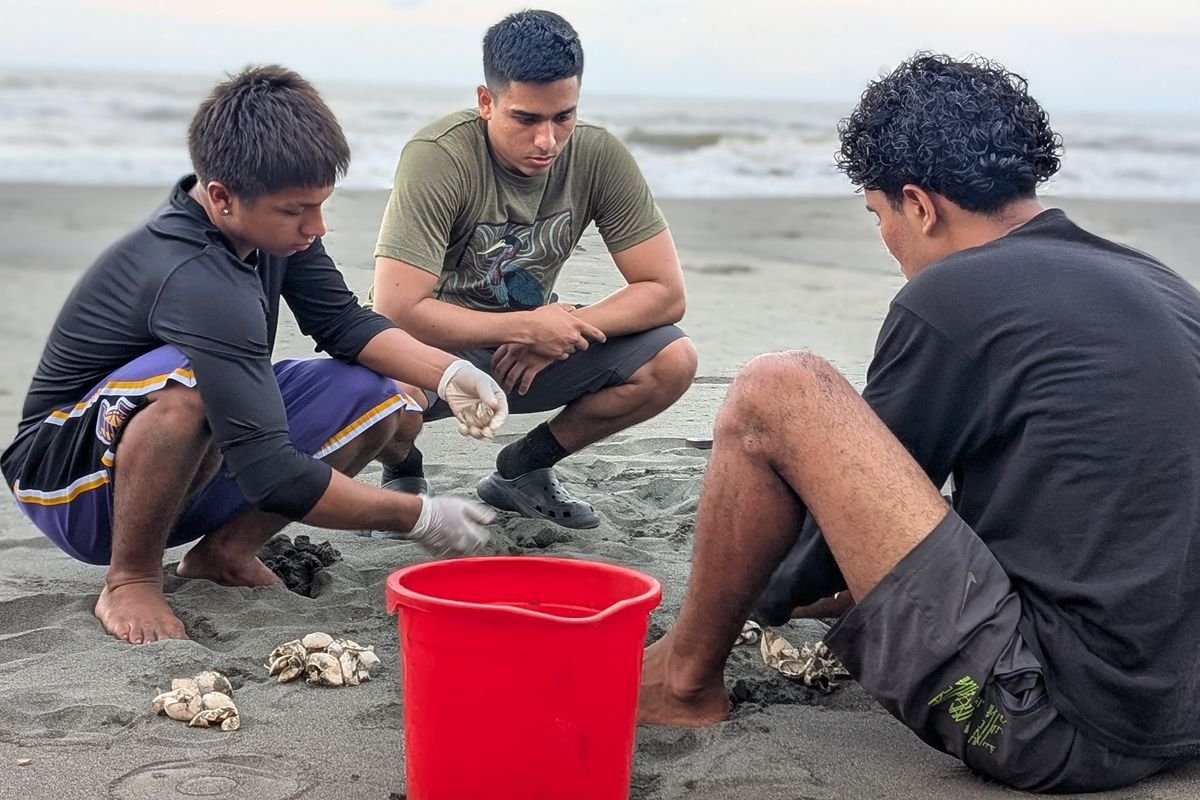
Preserving an Exceptional Natural Heritage
Watching a sea turtle come ashore to lay eggs is a memorable experience, but this encounter also comes with a responsibility: to follow the rules put in place to limit our impact on these particularly vulnerable species.
By opting for guided tours, supporting local initiatives, and behaving responsibly throughout the trip, every visitor can contribute in their own way to the conservation of these great ocean migrants.
At Terra Caribea, we also share with our travelers contact information and recommendations for local organizations that they can visit on their own during their stay to learn more about conservation programs in Costa Rica—and, if they’re lucky, to witness the release of baby turtles! 🐢
– The Terra Caribea Team