Costa Rica has no Mayan pyramids, but it does have a genuine and little-known pre-Columbian heritage. Three sites can be visited or explored today: the Guayabo National Monument, a stone city near Turrialba; the stone spheres of Diquís, designated a UNESCO World Heritage Site in 2014 and on display at the Finca 6 site museum; and the ruins of Reventazón, among the oldest in Central America. Article updated in July 2026.
Costa Rica, a Little-Known Archaeological Treasure Trove
While Costa Rica is world-famous for its lush natural beauty, it would be a shame to overlook the fact that it is also a land of ancient history. Off the beaten path,Costa Rican archaeology is full of mysteries and unique ruins. From the jungle of the Osa Peninsula to the valleys of Turrialba, here are three must-see sites to satisfy your craving for “old ruins”! Here are three sites that showcase the country’s rich heritage.
Costa Rica’s Major Archaeological Sites and Monuments
| Region | Region | Period | Must-see | Status |
|---|---|---|---|---|
| Guayabo National Monument | Turrialba, Cartago Province | 1000 BCE to 1400 CE | Mounds, aqueducts, paved roads, petroglyphs | Open to visitors |
| Stone Spheres of Diquís | Osa, South Pacific | Heyday: 800–1500 CE | Spheres aligned in situ at the Finca 6 Museum | UNESCO World Heritage Site, open to visitors |
| Reventazón Area | Siquirres, Caribbean slope | Up to approximately 12,200 years ago | Oldest remains in the region; interpretation center planned | Excavations, limited access |
These three sites span different time periods and cultures. Together, they paint a long and rich picture of pre-Columbian history—one far removed from the image of a country “without a past” that its natural beauty alone sometimes suggests.
Timeline of Pre-Columbian Costa Rica
| Period | Timeframe |
|---|---|
| Around 10,000 BCE | First human settlements, evidenced by the Reventazón site |
| 300–800 CE | The so-called Aguas Buenas period in the southern part of the country |
| 800–1,500 CE | The heyday of the chiefdom societies of Diquís and the golden age of Guayabo |
| Around 1400 AD | Abandonment of Guayabo, one century before the Spanish conquest |
| 1522 | Beginning of the Spanish presence in Costa Rican territory |
Archaeological Discoveries Near the Reventazón River
History sometimes resurfaces where you least expect it. It was during the construction of the Reventazón River hydroelectric dam that the oldest archaeological finds in the Central American region were made.
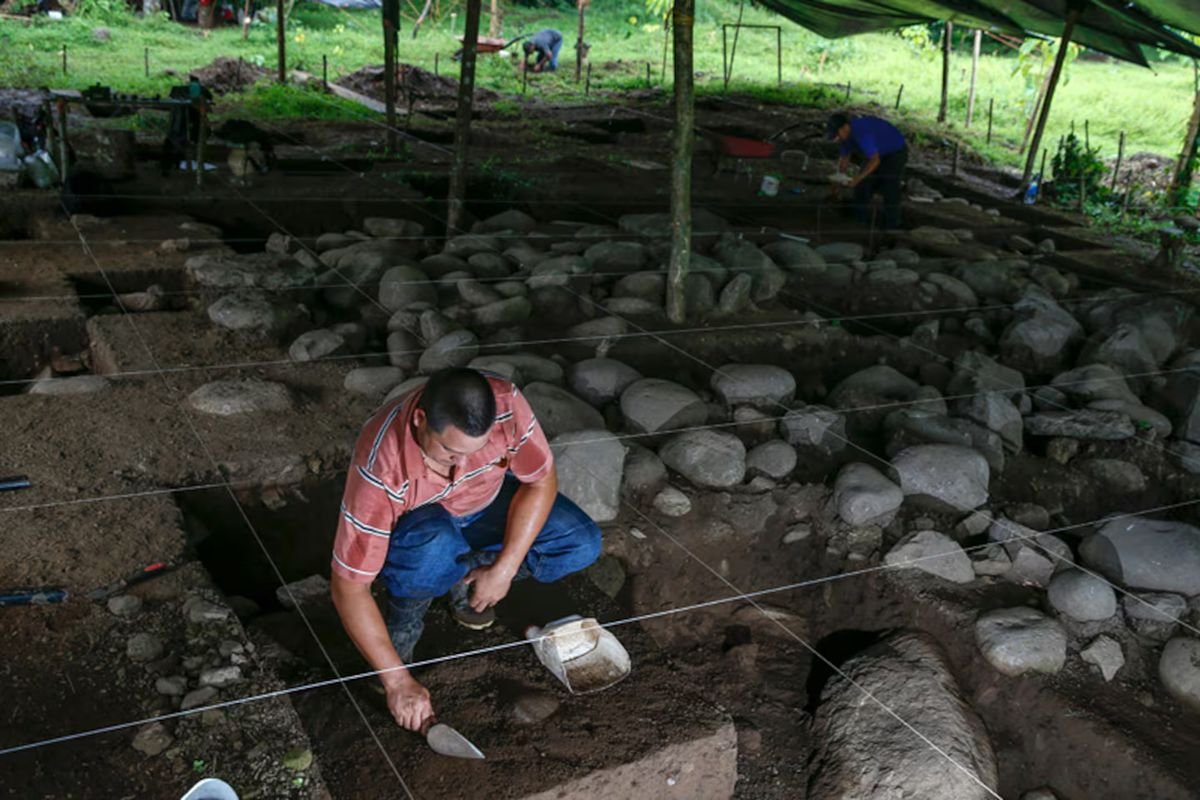
Across a vast area of 1,018 hectares in the canton of Siquirres, excavations conducted since 2006 haveuncovered remains proving the existenceof a civilization dating back approximately 12,200 years, spread across 66 archaeological sites. Archaeologists have unearthed an impressive variety of artifacts there: funerary objects, petroglyphs, foundations of dwellings, ancient paved roads, stone tools, ceramics, and kitchen utensils.
These collections provide us with vital information about the culture and way of life of the ancient inhabitants of Costa Rica’s Atlantic slope, the ancestors of the Cabecar indigenous peoples.
Where can these ruins be seen?
While the most delicate pieces have been entrusted to the Department of Cultural Heritage Protection at the National Museum in San José, the larger (and more difficult-to-transport) items remain on site, where plans are underway to build an interpretation center to welcome enthusiasts!
Discover the richness of the craftsmanship of Costa Rica’s indigenous peoples with this introductory video, which highlights the gallery dedicated to everyday objects from the pre-Columbian era at the National Museum of Costa Rica. YouTube video by Terra Panamericana.
The Diquís Archaeological Site
Located at the gateway tothe untamed Osa Peninsula and the must-see Corcovado National Park, the Diquís region (between the Térraba and Sierpe rivers) was home to flourishing pre-Columbian societies that reached their peak between the years 800 and 1500 CE. Today, this precious heritage belongs to all of humanity: Costa Rica is listed as a UNESCO World Heritage Site thanks to four major archaeological sites located in the South Pacific: Batambal, El Silencio, Finca 6, and Grijalba-2.
The country’s only on-site museum dedicated to the stone spheres
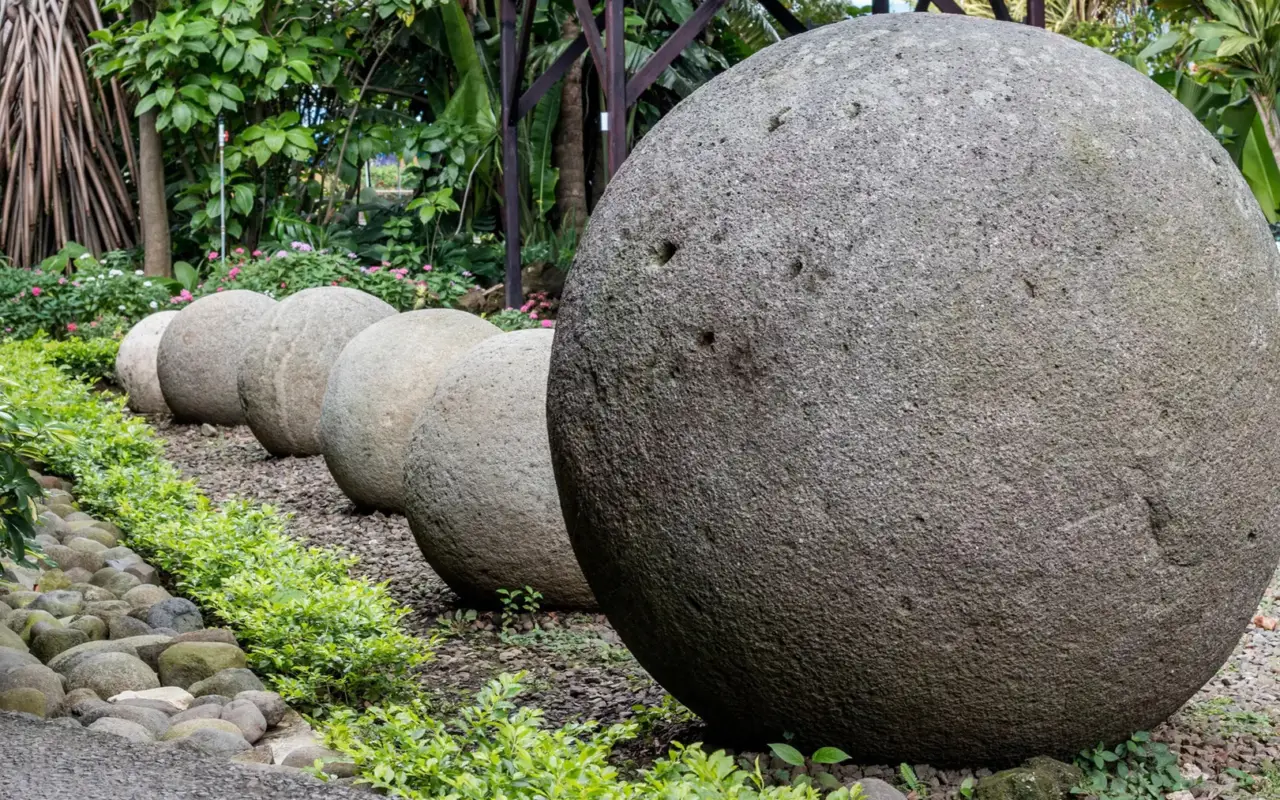
The region’s fame stems from its enigmatic stone spheres. With their uncanny geometric perfection, they conceal a turbulent history. It was in the 1940s, duringthe United Fruit Company’s banana operations in the Osa region, that the first stone blocks were unearthed… unfortunately leading to numerous instances of illicit removal and looting carried out with impunity.
However, moving these large-scale works out of their original context results in an irreparable loss of historical information. That is why the National Museum of Costa Rica and local communities have joined forces to protect and “reclaim” this heritage.
The solution was the creation of the Finca 6 Museum in Palmar Sur, in the canton of Osa, which serves as the ideal starting point. It is the country’s only in-situ pre-Columbian museum, perfect for attempting to unravel the secrets of these works.
Here, you’ll have the rare privilege ofobserving these megaliths exactly where pre-Columbian peoples left them. The spheres occupy what was once a large community plaza. Aligned along a very precise east-west axis, they form two distinct groups: the first stretches an impressive 77 meters and consists of three spheres, while the second consists of two spheres spaced 11 meters apart.
Guayabo National Monument
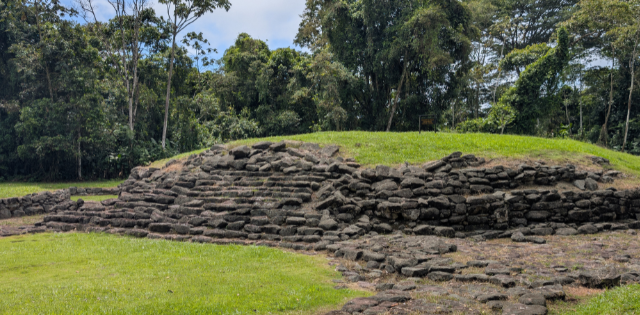
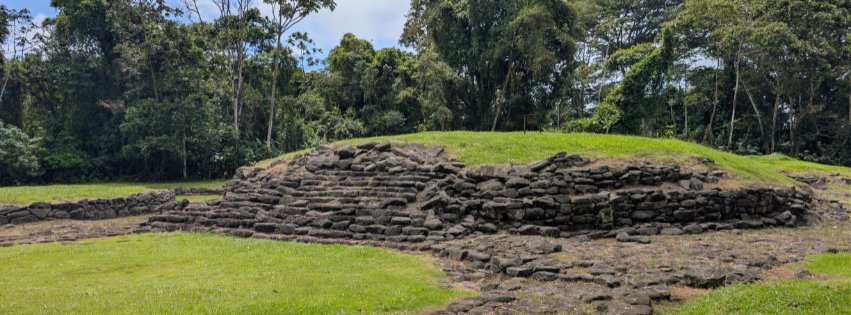
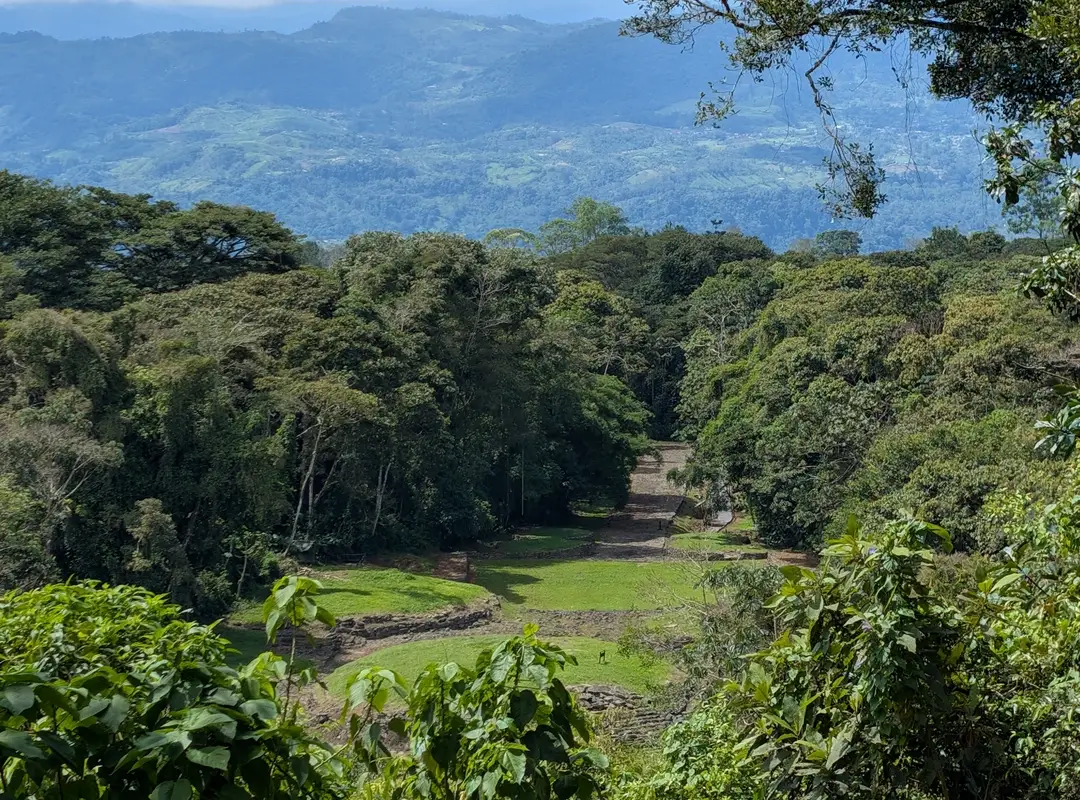
The Guayabo National Monument is, without a doubt, the country’s most important archaeological site. Located 19 km northeast of the city of Turrialba, this unique archaeological site was long hidden by the jungle. You’ll be pleasantly surprised to discover the ruins of a pre-Columbian city that once had a population of about 20,000 and is believed to have reached its golden age around 800 AD.
Impressive urban engineering
Systematic excavations conducted beginning in 1968 by the renowned archaeologist Carlos Aguilar Piedra revealed a particularly well-organized city. The complex includes 43 mounds (the most imposing stone structures), 3 aqueducts that are still functional, 2 public squares, 2 main paved thoroughfares, and a large enclosure, all connected by minor roads, bridges, and stairways.
Although it is known that the economy of these indigenous populations was based on agriculture, hunting, and fishing, historians still do not know why this specific site was settled… and, above all, why it was completely abandoned about a century before the Spanish conquest.
Tips for Your Visit
Don’t miss the observation deck on the site, which offers a superb panoramic view of all the structures and ancient alignments. To protect this fragile heritage, authorities enforce a limited visitor quota (weekends are the busiest days), and it is strongly recommended that you spend no more than 30 minutes within the archaeological structures area.
To date, only a tiny fraction of the site’s 232 hectares has been explored. Furthermore, Guayabo is home to the very last mid-altitude tropical forest in the province of Cartago. The perfect blend of historical mystery and natural immersion!
Visiting the Guayabo National Monument: Practical Information
| Information | Details |
|---|---|
| Location | Santa Teresita, about 18 km northeast of Turrialba, Cartago Province |
| Hours | Daily from 8:00 a.m. to 3:30 p.m., including holidays |
| Non-resident admission fee | $5 USD per adult |
| Protected Area | Approximately 20 hectares, of which only a small portion has been excavated |
| Time allowed on the structures | Maximum 30 minutes in the heart of the archaeological zone, for preservation purposes |
| Designation | Designated a World Heritage Site of Civil Engineering by the American Society of Civil Engineers |
| Not to be missed | The viewing platform, offering a panoramic view of the alignments |
The site has been designated a National Monument since 1973 and also protects the last mid-altitude tropical forest in the province of Cartago. Visitor traffic is heaviest on weekends, and a visitor quota is in effect.
Are there any Maya in Costa Rica?
No, there have never been any Maya in Costa Rica. The Maya civilization developed further north, in Mexico, Guatemala, Belize, and western Honduras and El Salvador. Costa Rica was located on the southern border of Mesoamerica, in an area that archaeologists call the Intermediate Zone, which extends as far north as Colombia, Venezuela, and Ecuador.
Consequently, Costa Rica has no pyramidal temples or glyphic writing comparable to those found at Tikal or Chichén Itzá. Costa Rica’s pre-Columbian heritage is expressed in other ways: through the stone urban engineering of Guayabo, the enigmatic spheres of Diquís, and the gold and jade artifacts preserved at the National Museum in San José. It is a more understated richness, but one that is very real and unique to this region.
A note for travelers wishing to combine these two worlds: our agency, Terra Maya, organizes tours of the major Mayan sites in Mexico and Guatemala, which complement a cultural trip to Costa Rica.
Frequently Asked Questions About Archaeology in Costa Rica
What is the most important archaeological site in Costa Rica?
The Guayabo National Monument, near Turrialba, is the country’s best-preserved and most important archaeological site. It reveals a pre-Columbian city featuring mounds, aqueducts that are still functional, and paved roads, which was inhabited for a long period before being abandoned around 1400, a century before the arrival of the Spanish.
What are the stone spheres of Costa Rica?
They are granite spheres of great geometric precision, crafted by the Diquís societies in the South Pacific. Rediscovered in the 1940s during banana plantation operations, they were inscribed on the UNESCO World Heritage List in 2014 as four sites: Finca 6, El Silencio, Batambal, and Grijalba-2. They can be seen aligned in their original setting at the Finca 6 on-site museum.
Are there any Maya or pyramids in Costa Rica?
No. The Maya civilization never extended to Costa Rica, which lay on the southern edge of Mesoamerica. The country therefore has no pyramidal temples or glyphic writing, but it does have its own pre-Columbian heritage, consisting of stone architecture, spheres, gold and silverwork, and jade.
Where can you see the stone spheres of Diquís?
At the Finca 6 site museum in Palmar Sur, in the canton of Osa, on the road to Sierpe. It is the country’s only in situ pre-Columbian museum: the spheres can be seen there exactly where the people of Diquís left them, on what was once a community plaza. The museum also displays ceramics and tools from the region.
How can you visit the Guayabo National Monument?
The site is located about 18 km northeast of Turrialba and is open daily from 8:00 a.m. to 3:30 p.m., including holidays. Admission is $5 for non-residents. To protect the ruins, time spent within the archaeological zone is limited to thirty minutes, and visitor quotas apply, especially on weekends.
What are the oldest archaeological remains in Costa Rica?
The oldest were unearthed in the Reventazón area, near Siquirres, during the construction of a hydroelectric dam. Excavations, conducted since 2006 at dozens of sites, have revealed traces of human occupation dating back approximately 12,200 years—among the oldest in Central America.
Can you combine archaeology and nature in Costa Rica?
Yes, in fact, it’s the country’s natural way of life. Guayabo protects Cartago’s last mid-altitude forest and is situated near the Turrialba volcano. The Diquís can be visited at the gateway to the Osa Peninsula and Corcovado National Park. The cultural aspect thus fits easily into a tour focused on biodiversity.
Where can you see pre-Columbian collections in San José?
At the National Museum of Costa Rica, which houses the most delicate artifacts from archaeological excavations, including funerary objects and items from pre-Columbian daily life. Two other museums in the capital—the Pre-Columbian Gold Museum and the Jade Museum—usefully round out the visit, offering insight into the goldsmithing and jade craftsmanship of these societies.
Discover Costa Rica’s archaeological heritage with a local tour agency
Costa Rica’s pre-Columbian heritage isn’t immediately apparent; it requires a bit of context and a few detours off the main tourist routes. This is precisely what our locally based travel designers love to share. Incorporating Guayabo into a stop in Turrialba, or Diquís into a trip to the Wild South, adds historical depth to a journey that’s often focused solely on nature.
Looking for a trip that blends nature and pre-Columbian history? Contact our team to create an itinerary that incorporates ancient sites, at a pace that suits you.
Sources:
- Rodríguez, C. (2016). PHR reveals oldest findings in Costa Rica and Central America https://semanariouniversidad.com/destacadas/phr-revela-hallazgos-mayor-antiguedad-costa-rica-centroamerica/
- Diquis World Heritage Site, https://diquis.go.cr/
- National Museum of Costa Rica https://www.museocostarica.go.cr/divulgacion/articulos-educativos/arqueologia/
Author: As atravel designer at Terra Caribea, Esteban is a local with a passion for history. He is committed to promoting and helping others discover the rich heritage of our small country—a precious treasure that is often overlooked.