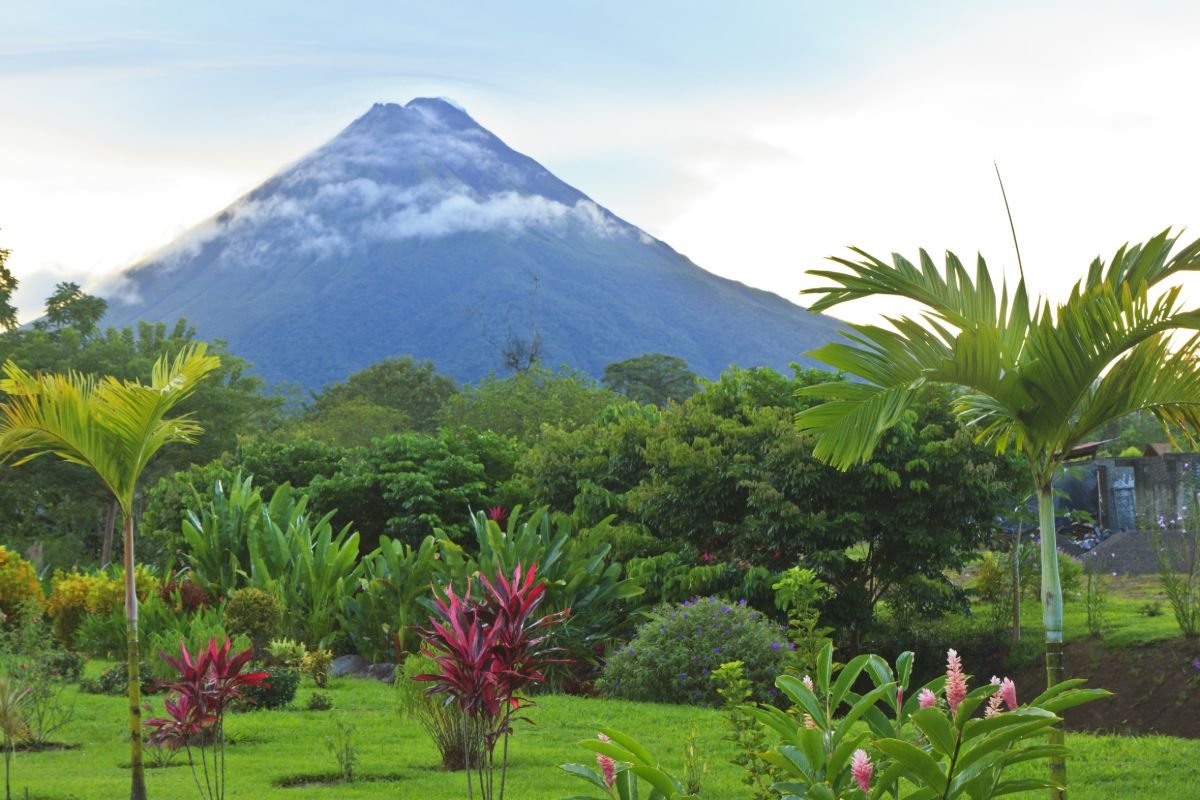
The Arenal Volcano rises to 1,670 meters above the town of La Fortuna, 130 km from San José. Dormant since 2010 after forty-two years of continuous activity, it remains Costa Rica’s most visited volcanic site. The national park is open from 8 a.m. to 4 p.m.; admission is $15 and is paid on-site; online reservations are not required. Plan to stay 2 to 3 nights. Article updated in July 2026.
An essential stop on most itineraries in the “Land of Green Gold,” the Arenal region alone encapsulates what Costa Rica is all about and what makes it famous. An iconic volcano, tropical rainforests, abundant biodiversity, and numerous activities to explore these many exceptional natural sites.
Arenal Volcano and La Fortuna: A Must-See Stop on Your Costa Rica Adventure
Arenal Volcano: Key Facts
| Data | Details |
|---|---|
| Elevation | 1,670 meters |
| Location | Alajuela Province, northern plains, the town of La Fortuna |
| Volcanic status | Dormant since 2010, following a continuous eruptive phase from 1968 to 2010 |
| National Park | Arenal Volcano National Park, established in 1991, approximately 12,100 hectares |
| Hours | 8 a.m. to 4 p.m., daily |
| Admission fee | $15 per non-resident adult, payable on site |
| Reservations | No online tickets available for this park: tickets must be purchased at the ticket office on the day of your visit |
| Main trails | Coladas (1.8 km), Los Tucanes or lava flows (approximately 4 km), Heliconias (1.7 km) |
| Distance from San José | 130 km, about a 3-hour drive |
| Recommended length of stay | 2 to 3 nights |
The entire admission fee is donated to the Costa Rican National Parks Fund, which finances the conservation of the country’s protected areas.
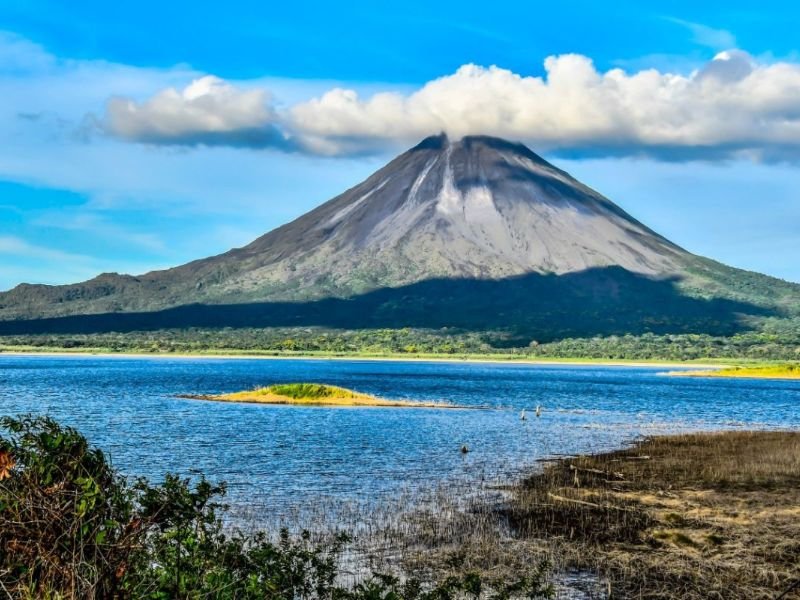
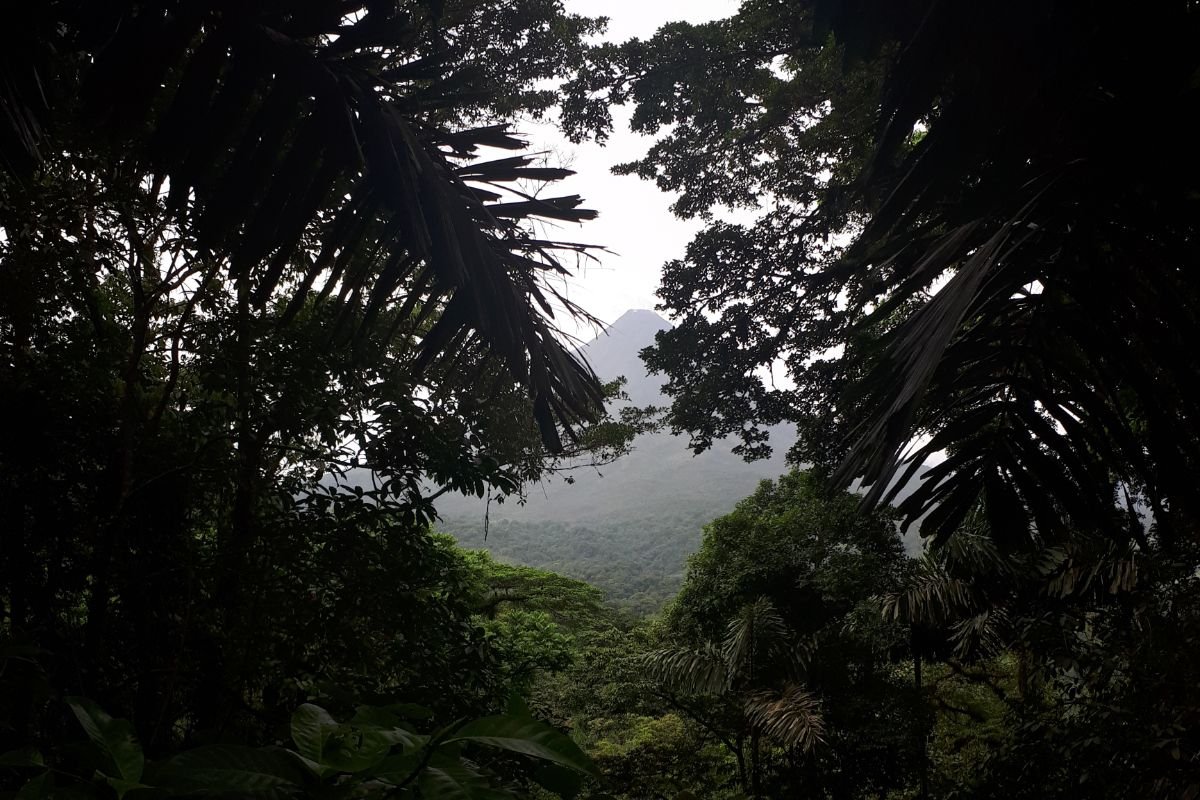
Located in the northern plains, in what is now the provinceof Alajuela, the Arenal Volcano has always captivated visitors with its perfectly conical shape and monumental stature. On one side, it towers over a vast artificial lake with unspoiled shores, and on the other ,over the charming town of La Fortuna, which is a major tourist destination. It is part of a volcanic chain that includes several famous volcanoes in northern Costa Rica.
Accessible from San José and the Central Valley
The town of La Fortuna is a strategic stopover, as it is easily accessible from San José and the Central Valley, but it is also ideally located for continuing your trip from the Caribbean coast—such as Tortuguero—or for wrapping up your trip in style as a final stop.
A mix of Costa Rican experiences
In my view, this stop offers a mix of experiences that truly makes you feel that Costa Rica is the birthplace of Pura Vida: excursions to magnificent natural sites, thrilling activities in various parks, the pleasure of hot springs, beautiful hotels and ecolodges seamlessly integrated into their ecosystems, as well as a wide range of dining options and modern infrastructure… All of these reasons make the city of La Fortuna and the Arenal region must-see destinations.
Is the Arenal Volcano still active?
Arenal Volcano is currently dormant. Its last visible lava flow occurred in 2010. Prior to that, it was one of the most active volcanoes on the planet: on July 29, 1968, a major eruption reopened the western crater after centuries of apparent dormancy, destroying the villages of Tabacón and Pueblo Nuevo. Activity then continued uninterrupted for forty-two years, with incandescent lava flows visible at night that helped build La Fortuna’s reputation as a tourist destination.
The current lull does not mean the volcano is extinct. The volcano remains under constant surveillance by OVSICORI, the Costa Rican Volcanological Observatory, and its edifice continues to emit steam. Visitors hoping to see lava, however, will need to adjust their expectations: since 2010, no eruptive activity has been observed. What people come to see today is the cone, the solidified lava flows from 1968, and the ecosystem that is recolonizing them.
How do I get to the Arenal Volcano?
| Route | Distance | Approximate duration | Note |
|---|---|---|---|
| San José to La Fortuna | 130 km | 3 hrs | Mountainous road; avoid leaving late |
| From Liberia Airport to La Fortuna | 130 km | 2 hrs 30 mins | Convenient for a tour starting in Guanacaste |
| La Fortuna to Río Celeste (Tenorio) | About 90 km | 1 hour 30 minutes | Day trip available |
| From La Fortuna to Monteverde | About 130 km by road | 3 hours by road, 3 hours by jeep-boat-jeep | Crossing Lake Arenal shortens the trip and makes it more scenic |
| From La Fortuna to Rincón de la Vieja | About 170 km | 3 hours | Via Cañas or Bagaces |
| From La Fortuna to the Caribbean coast (Tortuguero) | Varies | 4 hours 30 minutes to 5 hours to the dock | A logical stop at the beginning or end of the tour |
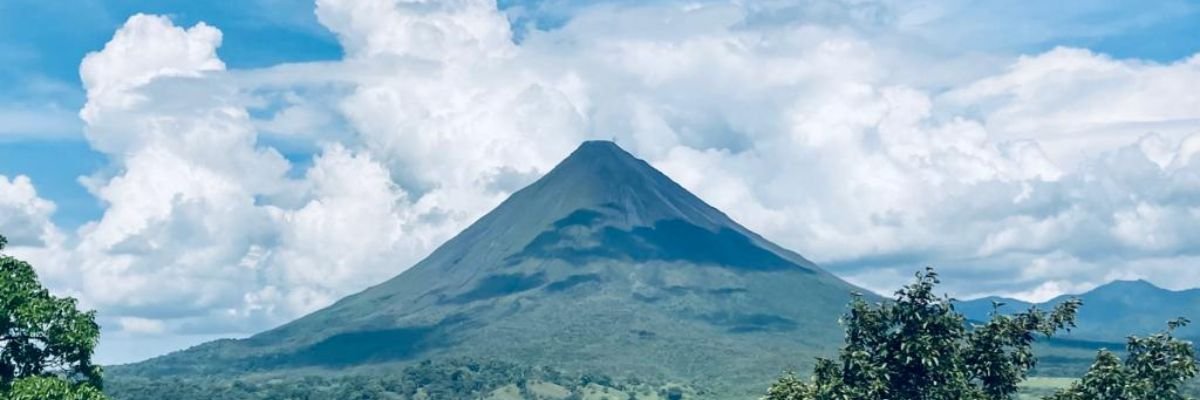
La Fortuna occupies a rare central location in Costa Rica: the town is within a half-day’s travel of the Central Valley, Guanacaste, Monteverde, and the northern plains. It is also this strategic location that makes it an almost mandatory stop on most itineraries.
Arenal Volcano: Hike and Tour
Climbing to the summit is prohibited
You cannot climb to the summit of Arenal Volcano. Access to the cone and crater is prohibited for all visitors, without exception, for safety reasons. Even though it has been dormant since 2010, Arenal remains an active volcano whose behavior can change. The area still emits sulfurous gases, the terrain is unstable, and rockfalls are frequent. There is no official trail leading to the summit. This rule applies regardless of the hiker’s skill level.
What You Can Do Instead
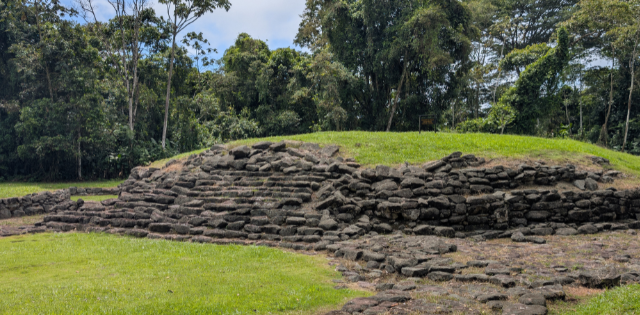
The visit focuses on the trails at the base of the volcano. You’ll walk along the solidified lava flows from the 1992 eruption, with the cone rising above you. The main trails are short and easy—often two to five kilometers long—and suitable for families. The nearby Cerro Chato, an extinct volcano with a crater lake, is also off-limits. So, the focus is on the lookouts and private reserves in the surrounding area, which also offer beautiful panoramic views of the cone.
Activities in a Volcanic Region
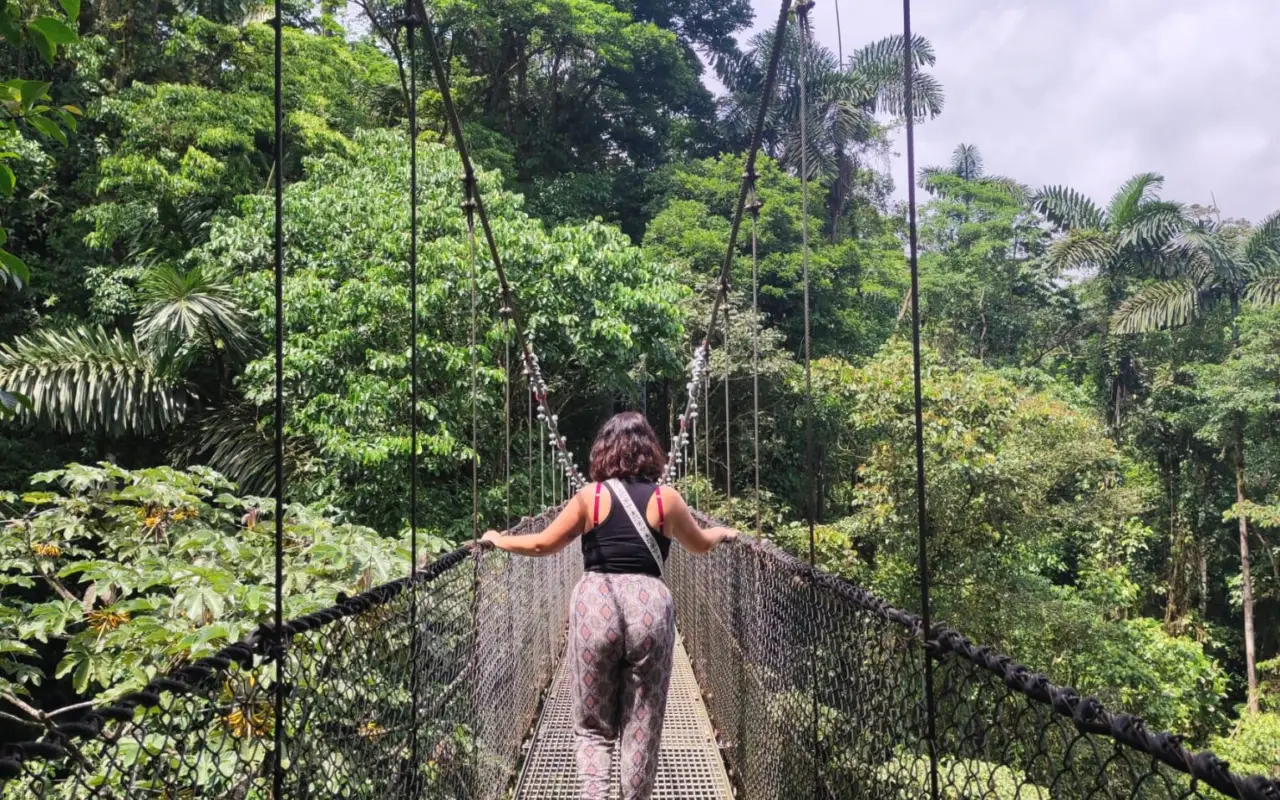
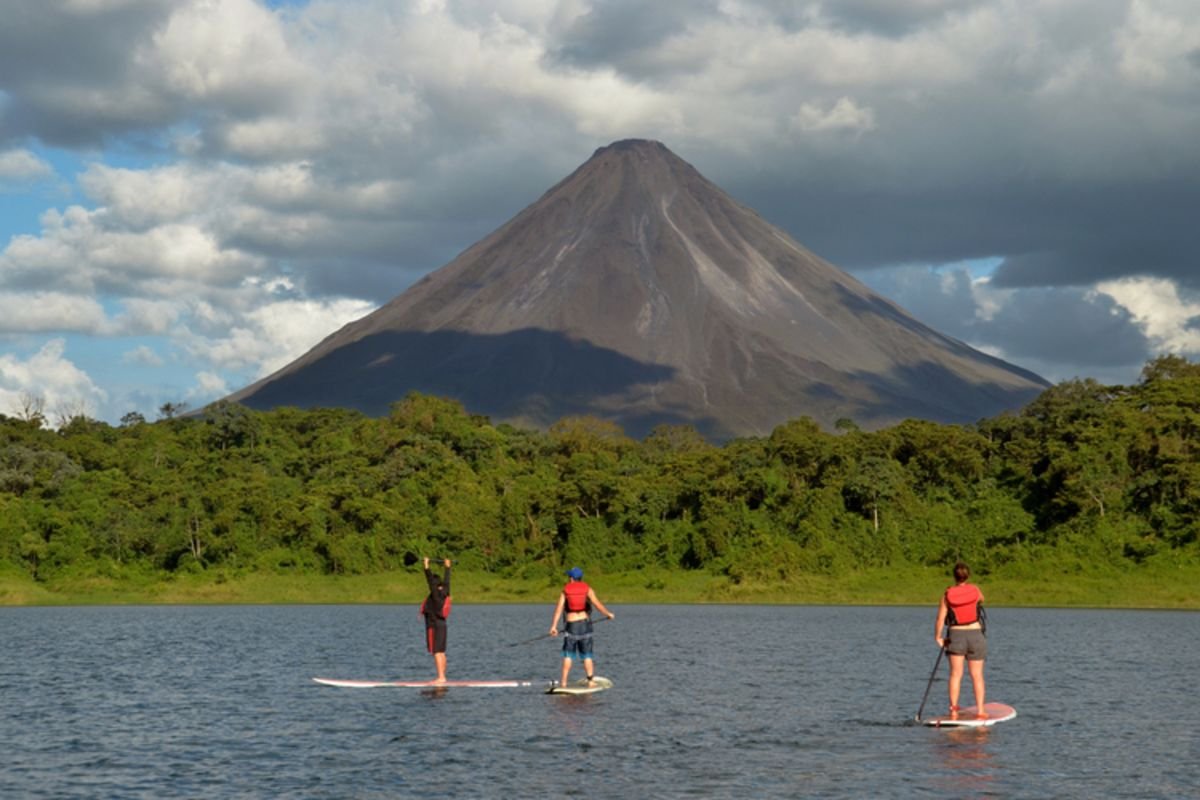
The appeal of Arenal lies not in climbing it, but in the scenery it creates. The nearly perfect cone serves as a backdrop for a wide range of activities:hiking across lava fields, wildlife watching, soaking in hot springs, kayaking on the lake, or crossing suspension bridges over the canopy.
A practical tip: the summit is often hidden by clouds in the afternoon. To see it clear, plan your visit for early morning, preferably during the dry season, from December to April.
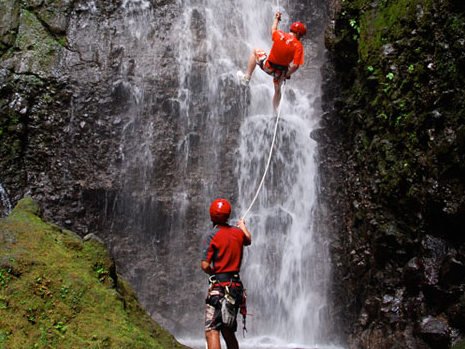
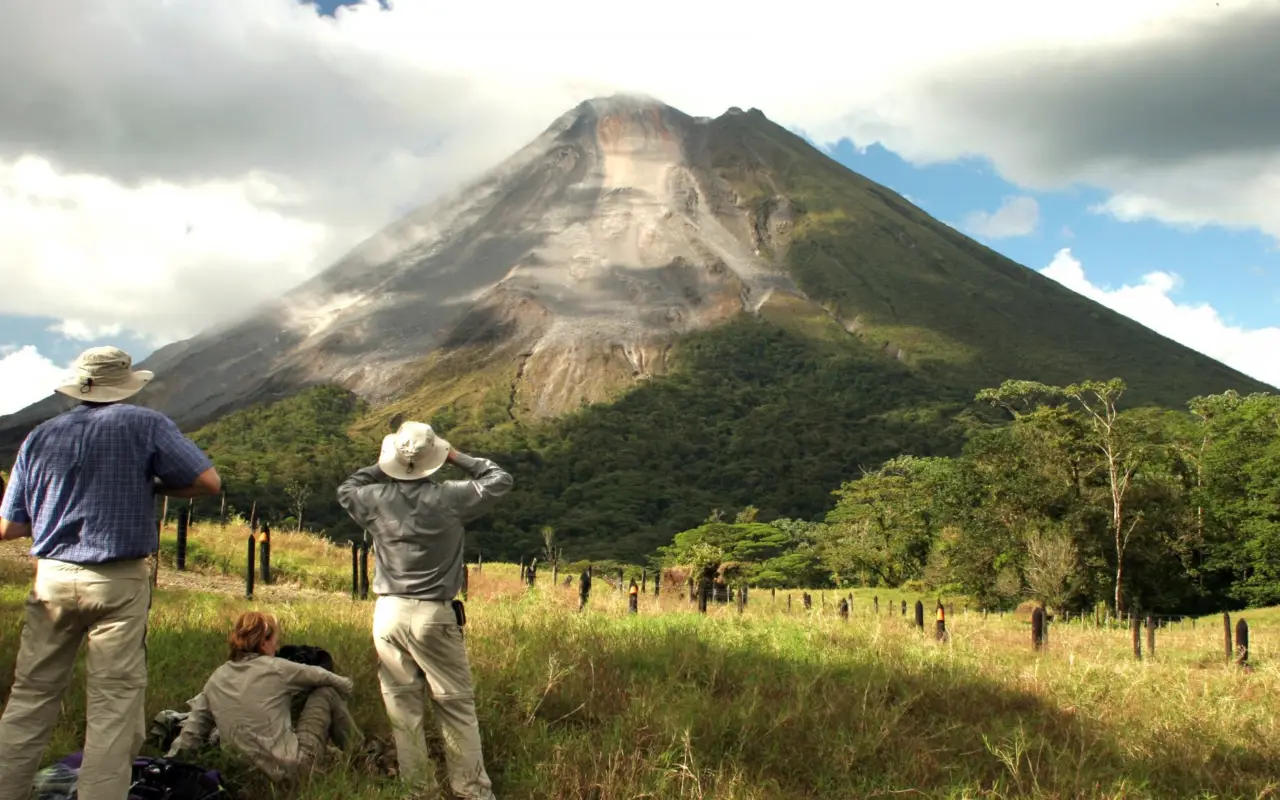
What to Do in Arenal and Around La Fortuna?
| Activity | Duration | Level | Good to Know |
|---|---|---|---|
| Hike in the national park | 2 to 3 hours | Easy | Trails along the 1968 lava flows; best visibility in the morning |
| Suspension bridges | 2 hours | Easy | Canopy viewing, suitable for families and seniors |
| Hot springs | Half-day | None | From rustic accommodations to luxury resorts |
| La Fortuna Waterfall | 1.5 to 2 hours | Moderate | Descending and ascending a long staircase; locally managed site |
| Canyoning | Half-day | Active | Abseiling in the region’s gorges |
| Zip line and canopy tour | 2 to 3 hours | Accessible | Several parks, with a wide range of heights and lengths |
| Rafting on the Balsa or Sarapiquí Rivers | Half-day | Active | Classes suitable for both beginners and experienced rafters |
| Venado Caves | Half-day | Moderate to challenging | Navigating through water and narrow passages; equipment provided |
| Night hike | 2 hours | Easy | Frogs, snakes, and insects; guide required |
| Excursion to Caño Negro | Day | Easy | Bird and caiman watching by boat |
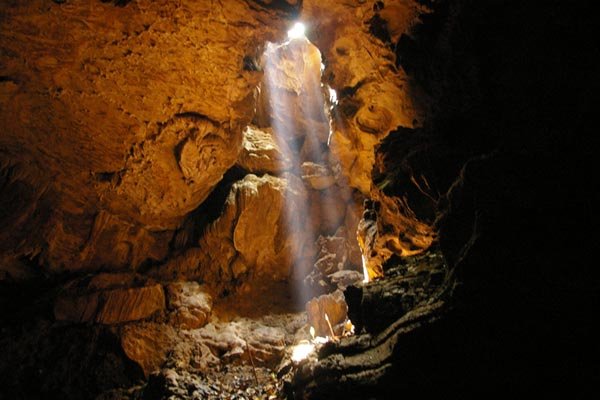
The volcano itself is stunning, and its surroundings are just as beautiful, starting with Lake Arenal, as well as the Venado Caves, which you can explore while canyoning, the Cerro Chato Lagoon, which you reach after a beautiful hike, or the various nature activities offered by local tour operators (rafting, suspension bridges, zip-lining, mountain biking, horseback riding…).
La Fortuna and the Arenal Volcano also serve as an excellentstarting point for exploring the entire region, with excursion options to Cano Negro, to Tenorio to see the Rio Celeste (another volcanic site that, in my opinion, is worth spending a little more time at), or even to Palo Verde National Park and the Poás Volcano—all of which are easily accessible from the Arenal region.
Visiting Arenal Volcano and the surrounding area:
- Pros: a lush volcanic region in a central location offering many activities
- Cons: Sometimes overcrowded, which can detract from its charm and lead to high prices
- Target Audience : The variety of accommodations and experiences caters to all types of travelers (solo travelers, couples, families, seniors, sports enthusiasts, nature lovers, etc.).
- Best time to visit: The Arenal region is enjoyable year-round, but December through April is the peak tourist season with the highest visitor numbers.
- Optimal length of stay : 2 to 3 nights, to enjoy the various activities available in the region, possibly including an excursion to the surrounding area.
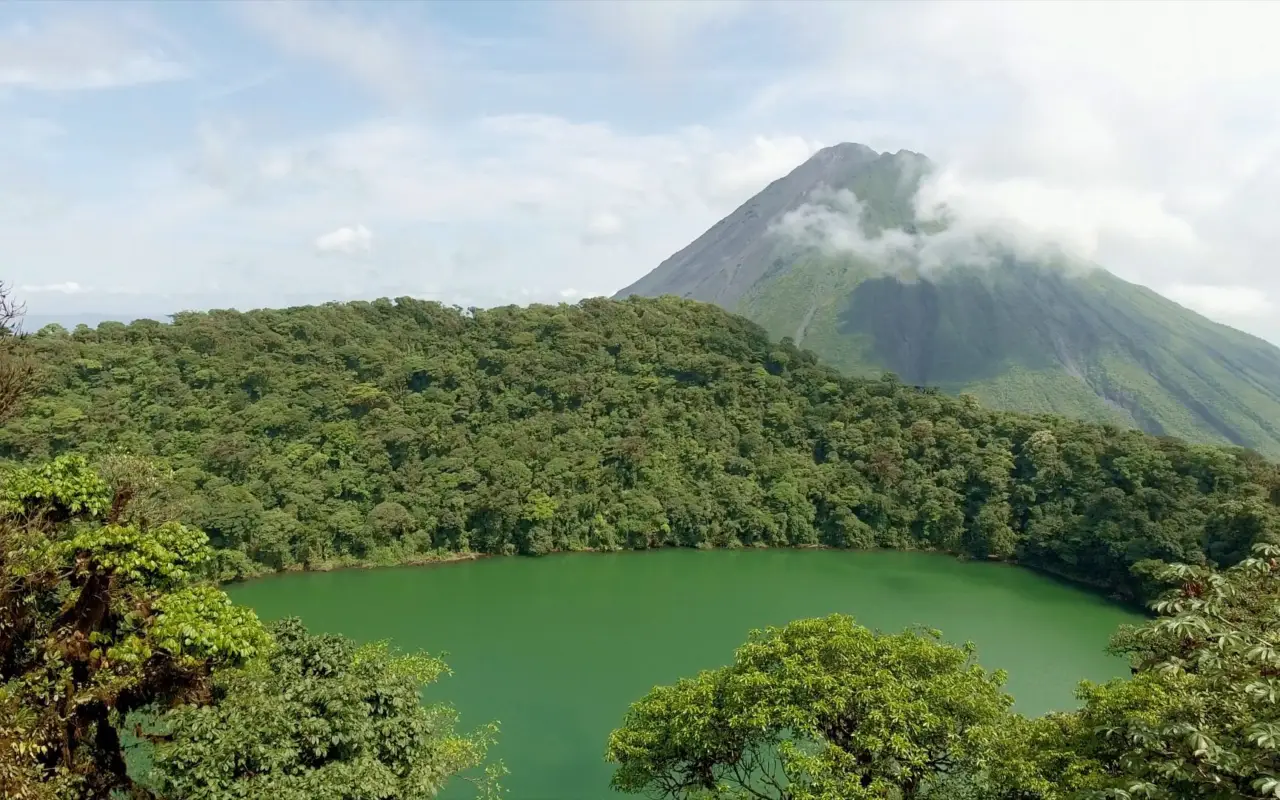
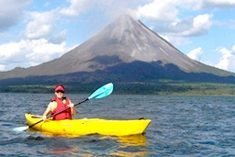

Lake Arenal, Costa Rica’s Largest Lake
Lake Arenal covers an area of approximately 87 km², making it the country’s largest lake. It is an artificial reservoir: the Sangregado Dam, completed in 1979, raised the level of the original lake by about 30 meters and submerged the villages of Arenal and Tronadora, which were rebuilt higher up under the name Nuevo Arenal. The hydroelectric complex still supplies a significant portion of Costa Rica’s power grid today.
The lake basin has been designated a Ramsar Site since March 2000 as a wetland of international importance. Its shores are ideal for boating, sport fishing, and especially windsurfing and kitesurfing: the winds that sweep through the mountain ranges make the western shore, around Tilarán, one of the most consistent spots in Central America between December and April. The boat crossing to Monteverde also remains the most scenic way to leave the region.
Arenal Volcano: A Brief Logistics Guide
Why Visit the Arenal Region?
The Arenal region is a volcanic area in the heart of Costa Rica, offering a strategic geographic location that makes it an ideal base for exploring the country. This lush region combines spectacular volcanic landscapes with exceptional biodiversity. Arenal Volcano, although currently dormant, overlooks an area of natural hot springs, dense tropical forests, and crystal-clear lakes.
The variety of activities available is remarkable: zip-lining through the canopy, hiking in the national park, nighttime wildlife viewing, suspension bridges, and, of course, relaxing in the natural hot springs. This diversity makes Arenal a destination that appeals to both adventure seekers looking for an adrenaline rush and travelers seeking tranquility in nature.
What are some potential drawbacks to be aware of?
Arenal sometimes suffers from its own tourist success, particularly during the high season when the region can lose some of its natural authenticity. This popularity leads to significant overcrowding at the most iconic sites, sometimes creating an atmosphere that is less immersive than in other, more unspoiled regions of Costa Rica.
This influx of tourists also affects prices, which can be significantly higher than in other Costa Rican destinations. Accommodations, restaurants, and activities often charge premium prices, reflecting high demand but potentially representing a significant expense for travelers. It is therefore recommended to book in advance and compare options to make the most of your budget.
What kind of traveler will enjoy Arenal?
Arenal has the remarkable advantage of catering to all types of travelers thanks to the diversity of its accommodations and experiences. Families with children will enjoy fun activities such as zip lines suitable for younger kids and relaxing hot springs. Couples will find intimate lodges with views of the volcano and natural spas for special moments together.
Adventure seekers can enjoy hiking, rafting, canyoning, and the many other adventure activities available in the region. Nature lovers and birdwatchers will be delighted by the rich local wildlife, especially in the early morning and evening hours. Seniors will find plenty to enjoy thanks to the region’s many accessible activities and well-developed infrastructure.
When is the best time to visit Arenal?
Arenal enjoys a climate that makes it a great destination year-round, with each season offering its own advantages. The dry season, from December through April, is the peak tourist season, with ideal weather conditions but also higher visitor numbers and higher prices. This is when you have the best chance of seeing the volcano’s summit, which is often clear of morning clouds.
The wet season, from May to November, offers the advantage of more lush vegetation and generally more affordable rates. Rain showers are often brief and concentrated in the late afternoon, leaving plenty of time for activities in the morning and early afternoon. This period also offers a more authentic experience with fewer tourists, allowing you to better appreciate the serenity of the surroundings.
How much time should you spend in Arenal?
A stay of 2 to 3 nights is the ideal length of time to fully appreciate the richness of the Arenal region. This allows you to experience the variety of activities on offer without feeling rushed, while still leaving time for relaxation and nature observation.
The first day can be spent settling in and getting a taste of the area with a gentle activity, such as visiting the suspension bridges or taking a stroll through the botanical gardens. The second day offers the opportunity for a more intense experience: zip-lining, hiking in the national park, or an excursion to nearby sites like Lake Arenal. The third day allows you to either relax in the hot springs or explore the surrounding area with a trip to La Fortuna Waterfall or a nighttime wildlife-watching excursion.
What activities are there to do in the region?
The Arenal region offers a wide range of activities. Hiking in Arenal Volcano National Park is the quintessential experience, with trails winding through ancient lava flows and dense tropical rainforest. Suspension bridges allow you to explore the canopy from a unique perspective, ideal for birdwatching and observing tree-dwelling wildlife.
The natural hot springs provide a perfect opportunity to relax after a day of activities. Several hot spring resorts offer different experiences, ranging from rustic to luxurious. The zip line through the forest provides an adrenaline rush while allowing you to admire the canopy.
For the more adventurous, rafting on the Balsa or Sarapiqui River, canyoning in the region’s gorges, and night hikes to observe wildlife are memorable experiences. Lake Arenal itself offers opportunities for boating, fishing, and viewing the volcanic landscapes from the water.
Where to stay in the Arenal region?
The region offers a range of accommodations to suit all budgets and preferences. Eco-tourism lodges with views of the volcano provide a premium, immersive experience, often featuring spas and gourmet restaurants. These establishments focus on blending harmoniously with the natural environment.
For those on a tighter budget, the town of La Fortuna offers family-run hotels and hostels that provide good value for the money. Rural accommodations in the surrounding area offer a more authentic experience, often run by local families who share their knowledge of the region.
How can you make the most of your budget in Arenal?
Given the region’s sometimes high prices, there are several strategies to help you make the most of your budget. Traveling during the rainy season (May through November) offers significantly more affordable rates while still ensuring a high-quality experience. Booking activities directly with local providers rather than through hotels can also lead to substantial savings.
Combining multiple activities into packages or choosing local operators that cater less to tourists helps reduce costs while supporting the local economy. For lodging, staying slightly away from the most touristy areas or opting for family-run establishments often offers better value for money without sacrificing the authenticity of the experience.
Practical Tips for a Successful Trip
The weather in the Arenal mountains can be unpredictable, so it’s essential to pack appropriate clothing: a raincoat, hiking boots, and lightweight clothing for the hot springs. Mornings generally offer the best visibility for admiring the volcano, which is often hidden by clouds in the late afternoon.
Booking activities in advance—especially during peak season—helps avoid disappointment and often allows you to get better rates. Local guides add considerable value when it comes to wildlife viewing and understanding volcanic ecosystems. Finally, setting aside some free time allows you to adapt to weather conditions and seize spontaneous opportunities to observe nature as they arise.
Arenal in 2026: What’s Changed for Visitors
Cerro Chato remains closed
The hike to Cerro Chato—a collapsed twin cone that houses a crater lagoon—has been closed by SINAC since 2017 to allow for the regeneration of soil eroded by overuse. The closure remains in effect in 2026. Private landowners in the area have opened unauthorized parallel trails: these trails have no official approval, and visitors are solely responsible for any incidents that occur there. Terra Caribea does not offer this hike.
The Poás Volcano experienced a major eruptive phase in 2025
Poás Volcano National Park was closed as a precautionary measure on March 23, 2025, following a series of eruptions and a yellow alert issued by the National Emergency Commission. It reopened to the public on July 30, 2025, with one change: tickets can now be purchased exclusively online via the SINAC website. This incident serves as a reminder that in Costa Rica, a volcanic site can close overnight, and that itineraries should always include a backup plan.
Online ticketing has become widespread, except at Arenal
Since August 2023, Volcán Tenorio and Volcán Rincón de la Vieja National Parks no longer sell tickets at the entrance: reservations must be made on serviciosenlinea.sinac.go.cr, with daily quotas. Volcán Arenal National Park is an exception and continues to sell tickets only at the ticket office on the day of visit. This difference surprises many self-driving travelers and results in visitors being denied entry to Río Celeste every season due to a lack of reservations.
Less-Traveled Alternatives for Exploring Costa Rica's Volcanoes
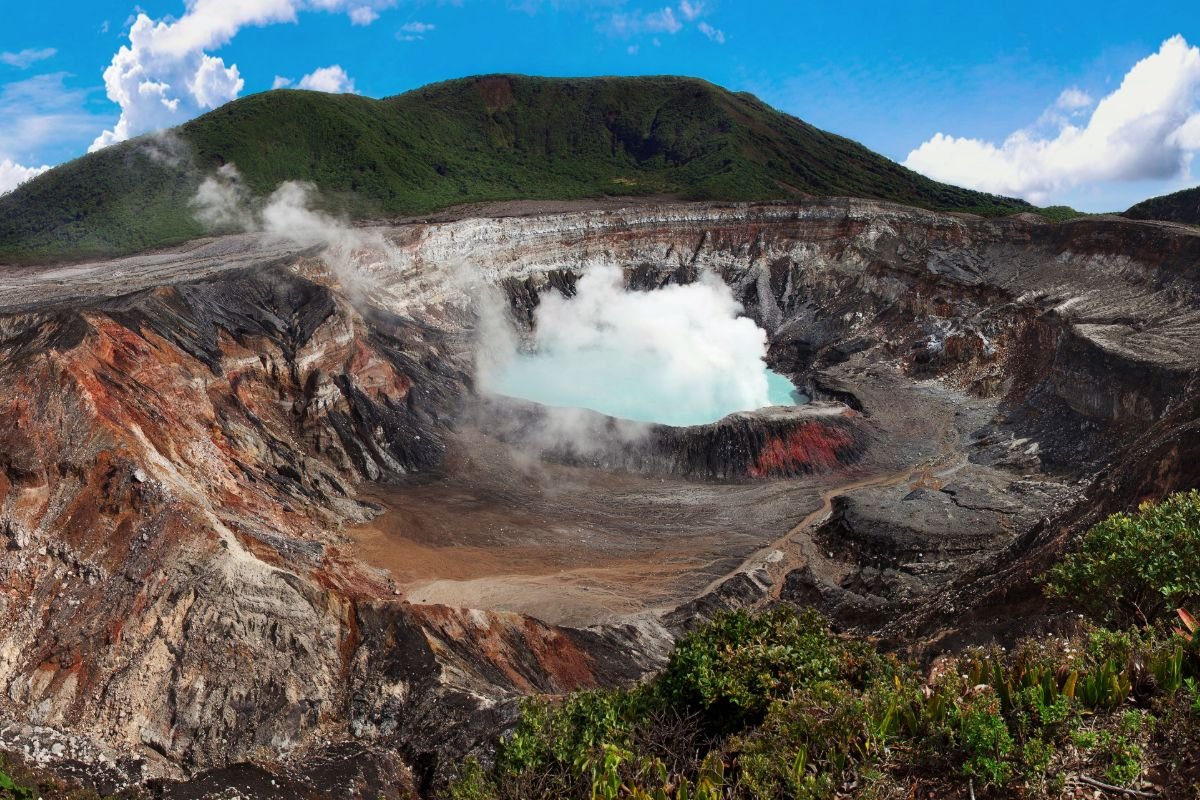
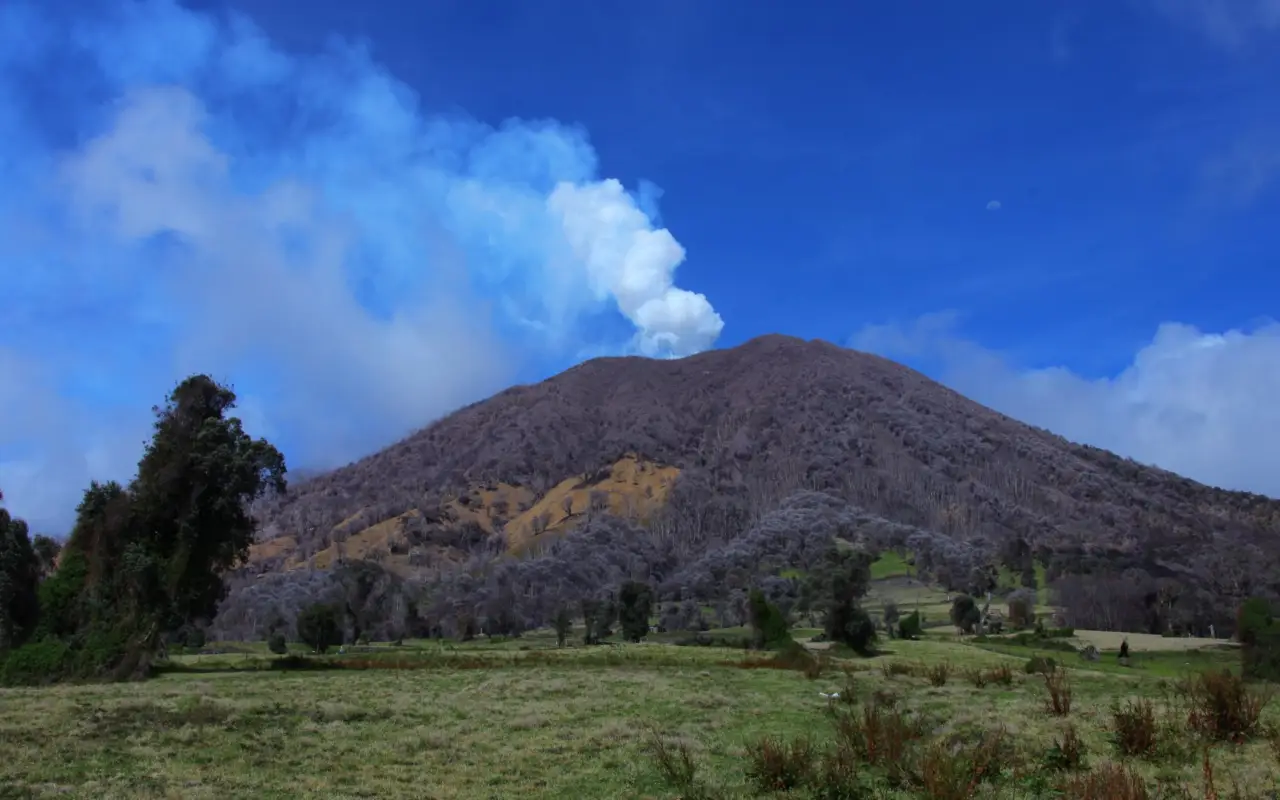
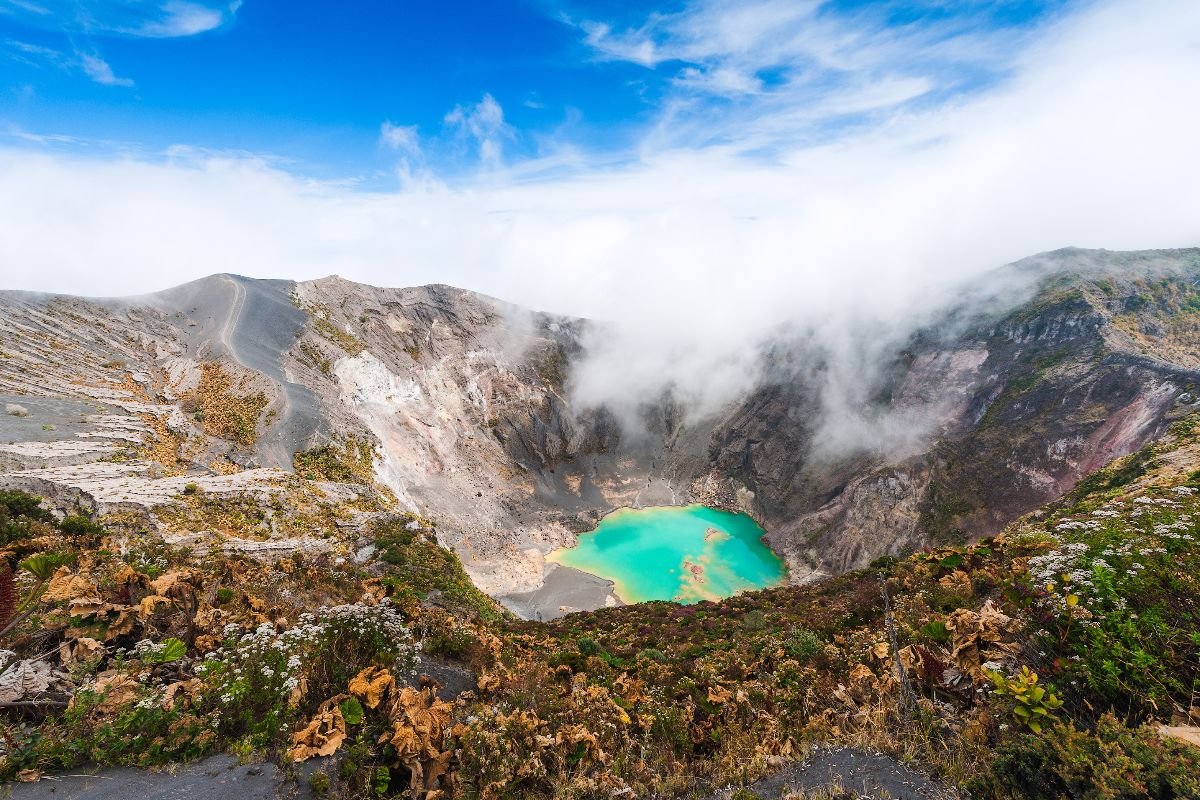
Costa Rica is deeply connected to the Earth’s volcanic history, as this history has shaped the country , which is home to no fewer than 116 volcanoes—testaments to a remarkable geological heritage. Even today, the country exhibits significant volcanic activity, with many volcanoes still active, such as the Poás Volcano, which is part of the Central Valley Volcanic Belt (surrounding the capital, San José, and the country’s major cities) and saw its activity increase in early 2024 before experiencing a major eruption in March 2025. Within this belt are volcanoes such as Barva, Turrialba, and Irazú, all accessible from the capital.
Further north lies the Arenal Volcano, one of the most impressive due to its commanding position over the surrounding valley—especially since, as it turns out, it is not alone. This is because the Arenal Volcano was once accompanied by its twin volcano, now known as Cerro Chato, which is an extinct volcano whose summit has collapsed inward. Cerro Chato now features a stunning lagoon at its heart, offering a mystical atmosphere and, on clear days, a spectacular view of Arenal and its summit (Please note: hiking on Cerro Chato is partiallyillegal… The trail has been closed by SINAC since 2017, and this closure remains
in effect as of 2026. You proceed at your own risk).
Now, if we continue heading northwest, we’ll find four other major volcanoes: Tenorio, Miravalles, Rincón de la Vieja, and Orosí in the far north. Among them, we’ll focus on the Tenorio-Miravalles volcanic duo, which frames the Upala Valley—one of my favorite regions in Costa Rica. Although the climate is often humid and characterized by winds intensified by the natural corridor formed by the two volcanoes, the Upala region offers exceptional landscapes.
Arenal, Tenorio, or Rincón de la Vieja: Which volcanic region should you choose?
| Criteria | Arenal / La Fortuna | Tenorio / Río Celeste | Rincón de la Vieja |
|---|---|---|---|
| Key Feature | Central location and the widest range of activities in the country | Río Celeste and charming accommodations, unspoiled atmosphere | Dry tropical forest, fumaroles, and mud pots |
| Drawbacks | Overcrowding and high prices during peak season | Often humid climate, few thrill-seeking activities | Crowds during the dry season, aging infrastructure |
| Ticket Office | On-site only, 15 USD | Online booking required, daily quota | Online booking required; weekly closures vary by area |
| Recommended duration | 2 to 3 nights | 1 to 2 nights | 1 to 3 nights |
| Best time to visit | All year round; the summit is clearer from December through April | All year round; avoid October, the rainiest month | Dry season for the trails, green season for the scenery |
| Profiles | All, from families to active travelers | Couples, nature lovers, travelers seeking tranquility | Families, groups of friends, geology enthusiasts |
| Distinction | National park established in 1991 | The Río Celeste’s color is of mineral origin | Part of the Guanacaste Conservation Area, a UNESCO World Heritage Site since 1999 |
The Tenorio Volcano region, an ideal destination for an ecotourism experience
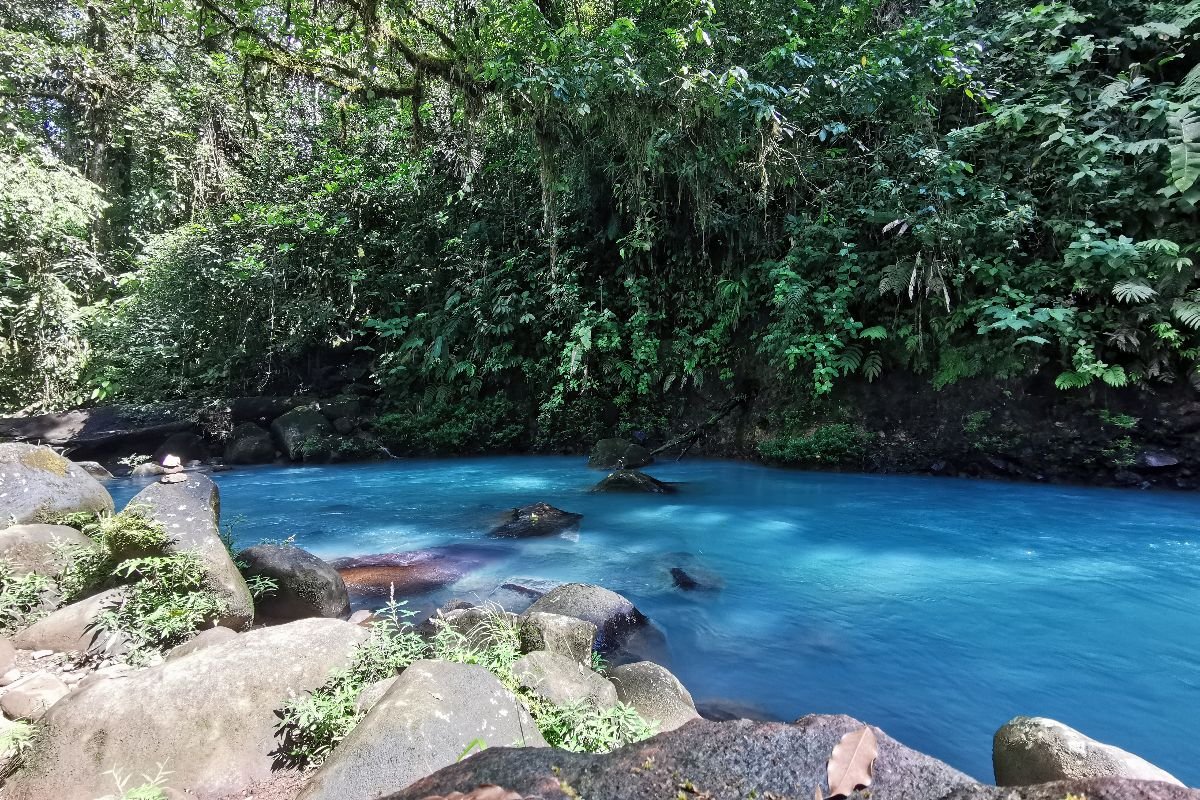
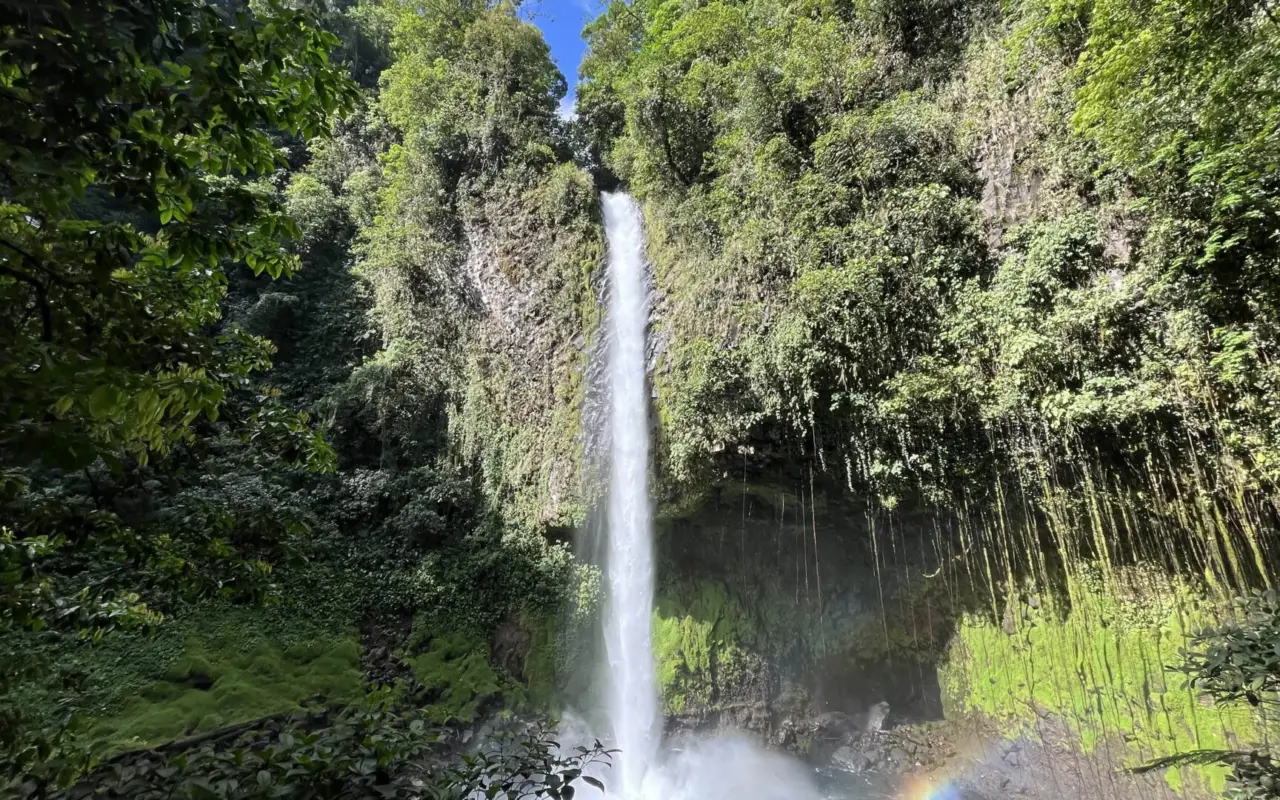
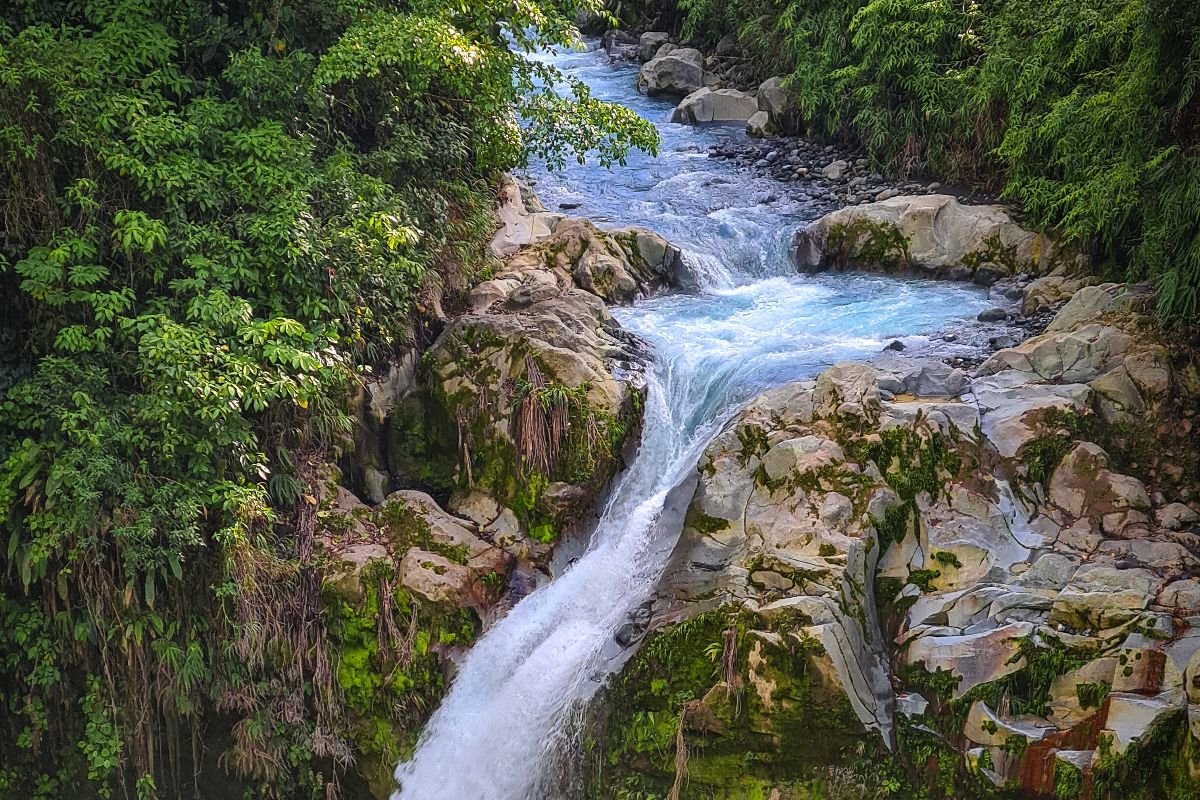
Starting with Tenorio Volcano National Park, home to the famous Rio Celeste—a river with an incredible color resulting from a natural chemical reaction. The region is also home to manyinteresting private nature reserves and, above all, high-qualityaccommodations . In my opinion, this is the region that offers the best value for money, with numerous upscale ecolodges providing an immersive experience while ensuring excellent hospitality and comfort.
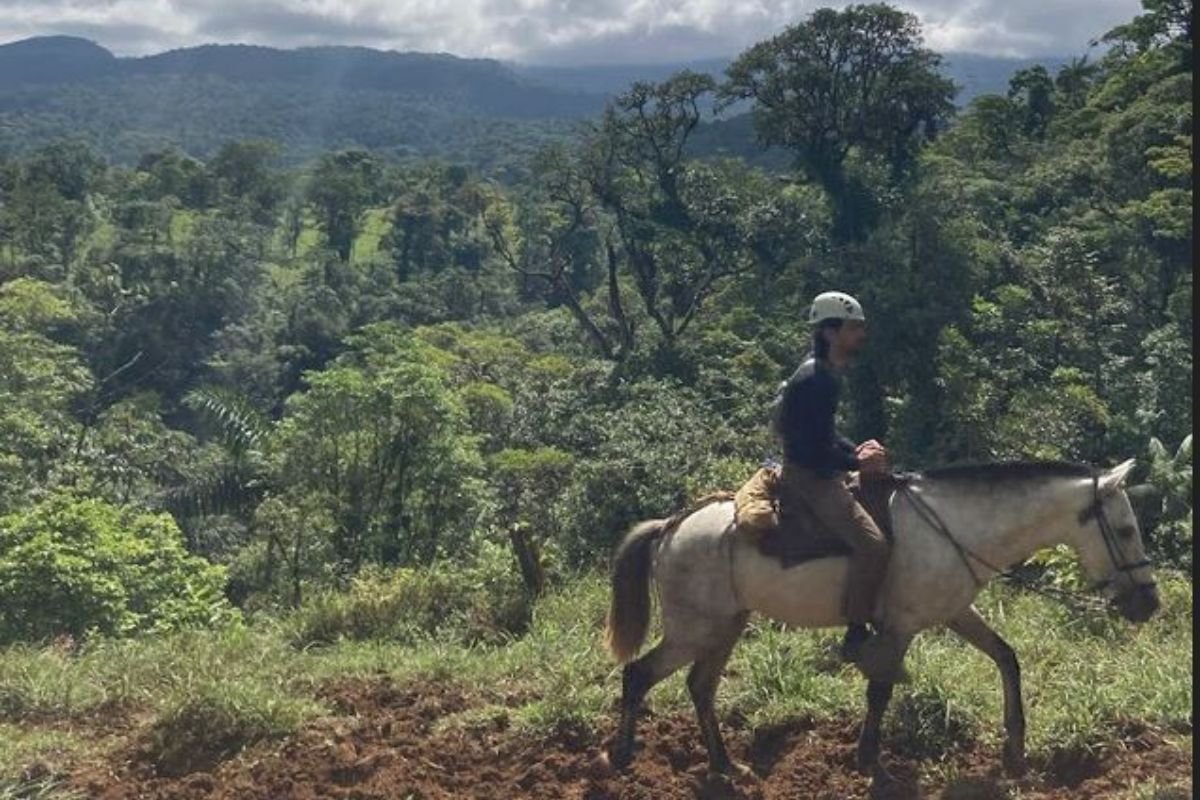
This region features hot springs, water activities such as rafting and tubing, as well as numerous excursions on foot, on horseback, or by car.
Visit the Tenorio Volcano
- Pros: a lush volcanic region, more unspoiled and authentic than Arenal
- Cons: A destination with a sometimes cool climate that offers fewer adrenaline-pumping activities
- Target Audience : The variety of accommodations and experiences caters to all types of travelers (solo travelers, couples, families, seniors, sports enthusiasts, nature lovers, etc.).
- Best time to visit: The Tenorio region is pleasant year-round, but avoid October, when rainfall is heaviest.
- Optimal length of stay : 1 to 2 nights, to discover the charms of this region from one of the many “hidden gems” in our catalog.
Rincón de la Vieja, a Less-Visited Volcanic Site
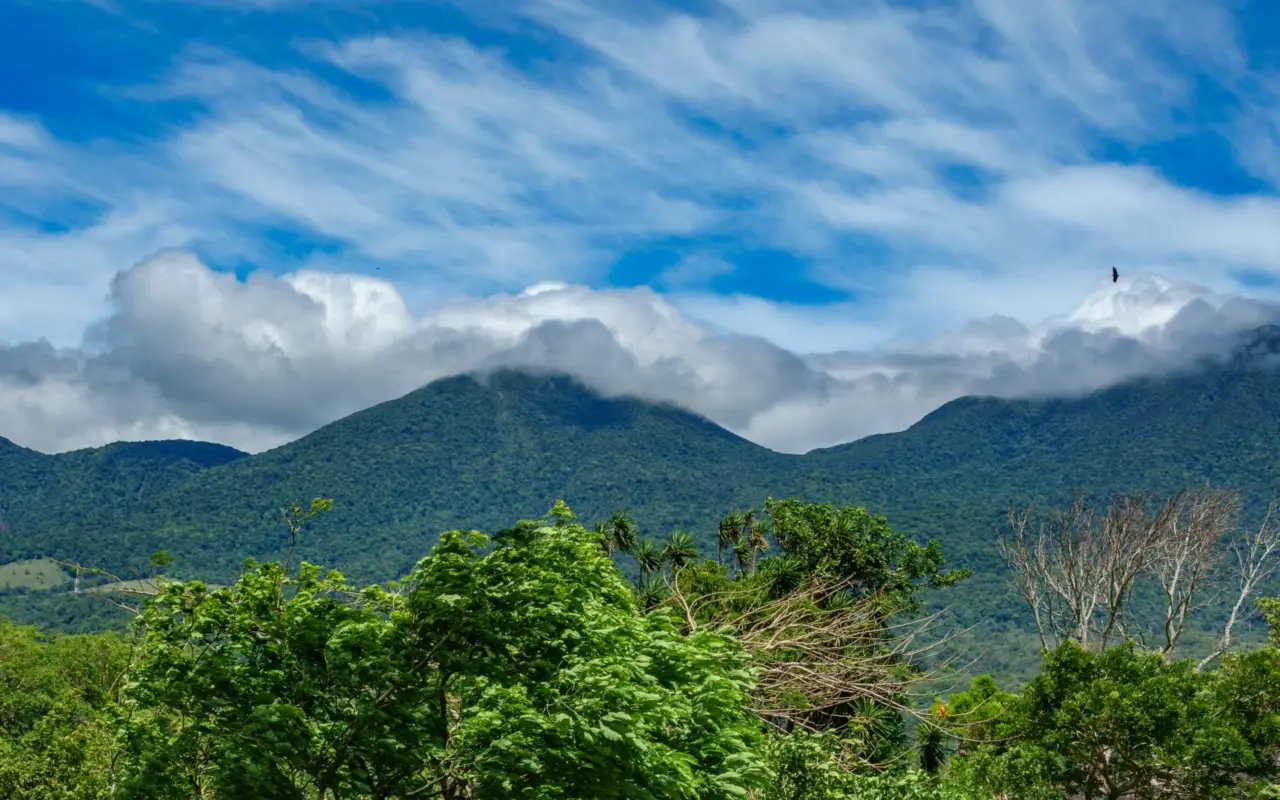
Another volcano worth visiting is Rincón de la Vieja, which is also home to a vast national park offering a variety of experiences, some of which provide insight into the significant volcanic activity in this area.
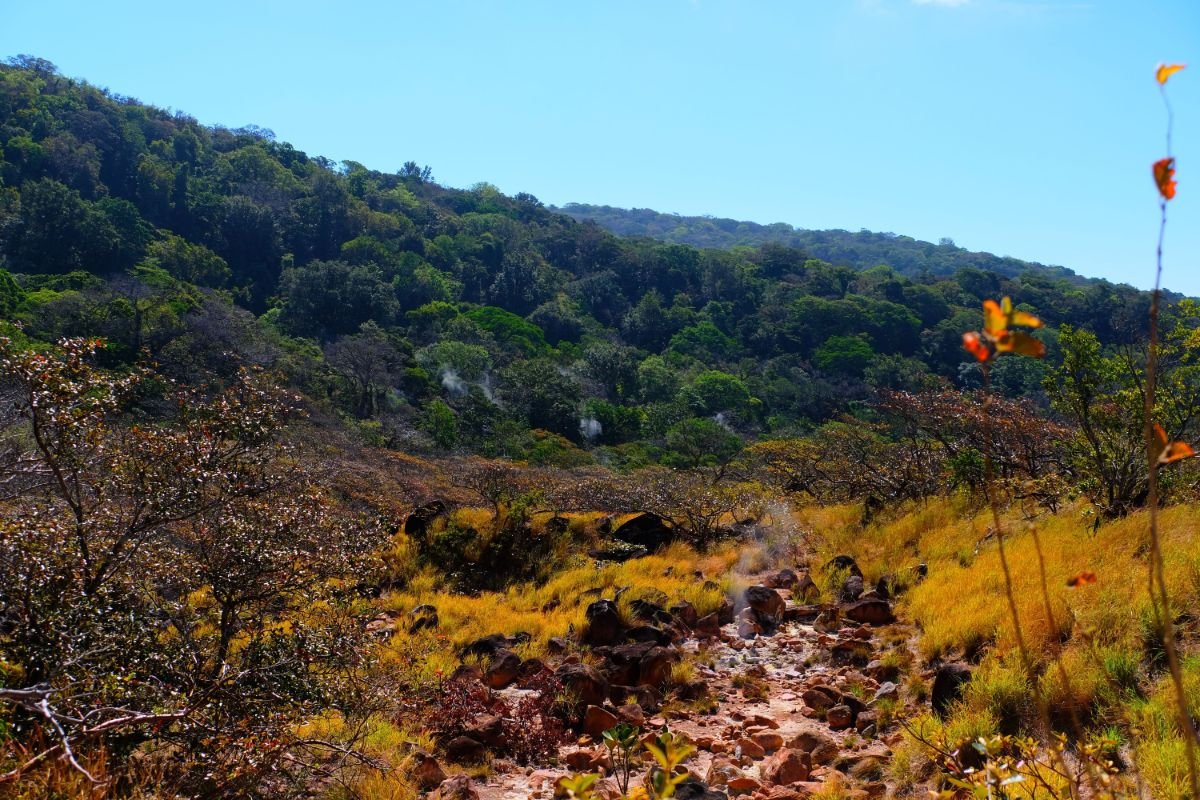
As a point of interest, this region of Costa Rica has the greatest potential for generating electricity from geothermal energy, as evidenced by the various geothermal power plants visible between the Miravalles and Rincón de la Vieja volcanoes . These are truly striking landscapes, where, right in the heart of the jungle, large metal pipes rise from the ground, surrounded by fumaroles and bearing witness to the bubbling volcanic activity beneath our feet.
Beyond this aspect, the Rincón de la Vieja region is fascinating because it is largely covered by dry tropical forests—an ecosystem with very distinctive characteristics that cause the landscape to change depending on the time of year. During the rainy season (May through November), the plains are lush and green, and the forests are vibrant with life; when the dry season sets in, the vast grasslands turn yellow, the leaves on the trees become sparse, and the animals retreat—all part of a natural cycle. Meanwhile, tourists flock to the area during the dry season, as the volcano is located in the province of Guanacaste— the most popular destination for Americans, most of whom visit between December and March.
Visit the Rincón de la Vieja Volcano
- Pros: a volcanic region with a dry tropical forest ecosystem and exceptional natural sites
- Cons: Sometimes overcrowded with aging infrastructure
- Target Audience : Given its status as a “tourist attraction,” the Rincón de la Vieja site is best suited for certain types of visitors: solo travelers, families, groups of friends…
- Best time to visit: During the dry season, expect large crowds and drier landscapes; during the wet season, prices are lower and the vegetation is lush.
- Optimal length of stay : 1 to 3 nights; depending on your preferences, the region offers many activities and distances can be significant, so a longer stay is recommended.
- More info : Rincón de la Vieja—one of Eva’s favorite regions!
Overcrowding at the Arenal Volcano site
Just like Rincon de la Vieja National Park during the dry season—which attracts throngs of tourists from the various beach resorts in Guanacaste—the town of La Fortuna and the Arenal Volcano region are sometimes victims of their own success.
This is the problem when a destination has gained a reputation that exceeds its capacity to accommodate visitors; the tourist experience itself can be compromised , thereby spoiling part ofthe trip… This is obviously something we try to minimize as much as possible at Terra Caribea by striving to be as transparent as possible. But it’s sometimes difficult to convey the benefits of choosing an alternative when travelers have planned their trip around visiting certain must-see destinations. It’s therefore a strategic choice, as you need to carefully weigh your desires and their consequences—balancing the desire to see specific places with the reality of crowds of travelers at those same sites.
In this regard, our expertise will help you planeffectively , because thanks to our experience with the most famous tourist sites, we’ve learned to offer experiences that allow you to enjoy these must-see destinations while staying in alternative accommodations that provide more privacy and a more authentic view of Costa Rica.
This approach is particularly evident in the latest itinerary we’ve published, which is directly inspired by Anaïs and Esteban’s reconnaissance trip:

Frequently Asked Questions About the Arenal Volcano
Is Arenal Volcano active today?
Arenal Volcano has been dormant since 2010. It was continuously active from 1968 to 2010, with lava flows visible at night. No lava is visible today, but the volcano is under constant monitoring by OVSICORI and is not considered extinct.
How much is admission to Arenal Volcano National Park?
Admission is $15 per non-resident adult. The park is open daily from 8 a.m. to 4 p.m. Unlike other Costa Rican parks, tickets are not sold online: they must be purchased at the ticket office on the day of your visit, either in cash or by card.
How many days should you plan to spend in La Fortuna?
Two to three nights is the ideal length of stay. Two nights allow you to combine a hike in the national park with a half-day visit to the hot springs. A third night opens the door to a day trip to Río Celeste, Caño Negro, or the Venado Caves.
When is the best time to see the volcano’s summit?
From December through April, during the dry season, you have the best chance of seeing the summit clear of clouds. Regardless of the season, morning is always the best time: clouds usually cling to the summit starting around midday. It’s not uncommon to spend three days there without ever seeing the peak.
Can you still hike up Cerro Chato?
No. The Cerro Chato trail has been closed by SINAC since 2017 to allow the environment to regenerate, and this closure remains in effect through 2026. Private access trails exist on the outskirts of the park, but they are not authorized and offer no guarantee of safety or emergency assistance.
Is Arenal too touristy?
The region does indeed see the highest volume of tourists in the country, especially between December and April, with prices above the Costa Rican average. You can avoid the crowds by choosing accommodations on the outskirts of La Fortuna, visiting sites early in the morning, or spending part of your trip in the Tenorio region.
Do you need a 4×4 to visit the Arenal region?
A standard vehicle is sufficient to reach La Fortuna, the national park, and most sites from San José or Liberia, as the main roads are paved. A vehicle with high ground clearance is useful for rural accommodations, the trails around the lake, and during the rainy season, from May to November.
What’s the difference between the Arenal and Poás volcanoes?
Arenal Volcano is a perfect cone standing 1,670 meters tall, dormant since 2010, which can be viewed from a distance along low-altitude trails. Poás Volcano, in the Central Valley, can be visited from a lookout point overlooking an active crater containing an acidic lake; access is subject to online reservations and closures due to volcanic activity.
Plan your trip to Arenal Volcano with a local agency
A successful trip to the Arenal region hinges on three key decisions. The first concerns accommodations: eco-lodges with views of the cone must be booked several months in advance for the December–April period, while family-run establishments in La Fortuna remain available later in the season. The second concerns the order of stops: arriving in La Fortuna at the start of your trip means dealing with jet lag during sports activities, whereas arriving midway through your stay allows you to enjoy them more fully.
The third decision is the most critical: should you stay in Arenal, or visit Arenal while staying elsewhere? Our itineraries often combine one night in the Arenal region with two nights near Bijagua or Tenorio, which allows you to visit the iconic sites while enjoying much quieter evenings. This is the logic behind our green season itinerary, designed based on Anaïs and Esteban’s reconnaissance trip.
Planning a trip to Arenal Volcano? Our Costa Rica-based travel advisors will tailor your itinerary to your dates, pace, and preferences—without relying on a pre-set catalog.
Sources
- SINAC — Arenal Volcano National Park, fees, hours, and trails, accessed in July 2026
- SINAC — Volcán Tenorio and Volcán Rincón de la Vieja National Parks, online reservations required as of August 1, 2023
- MINAE and SINAC — Closure and reopening of Volcán Poás National Park, March and July 2025
- OVSICORI — Monitoring of Arenal Volcano activity
- Ramsar Convention — Arenal Reservoir Basin, a wetland of international importance designated in 2000
- UNESCO World Heritage List — Guanacaste Conservation Area, inscribed in 1999