Gallo Pinto, a Costa Rican culinary tradition
All lovers of Latin American cuisine, rejoice! The delicious dish we’re featuring today is undoubtedly one of the easiest to make in Costa Rican cuisine.
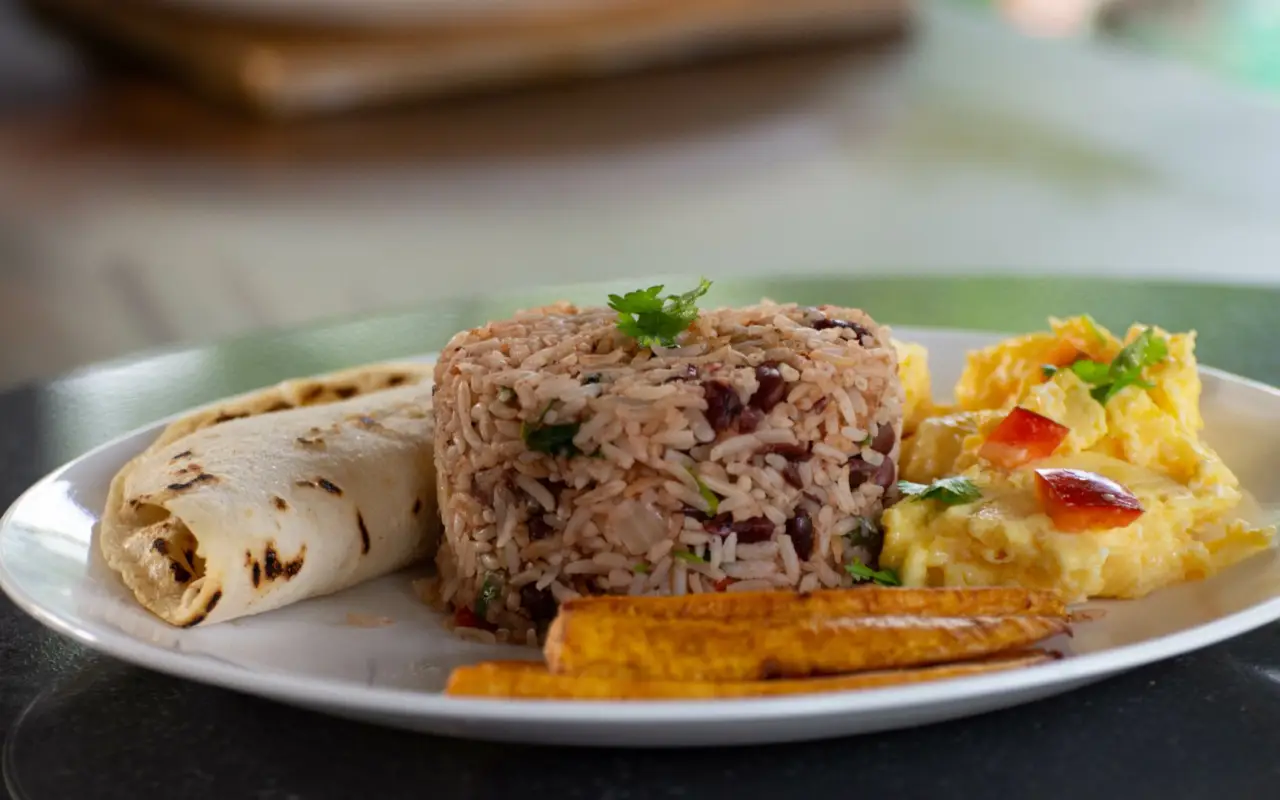
Traditionally, Gallo Pinto (or simply “Pinto”) is eaten for breakfast in Costa Rica and is made with the leftover rice and beans not used to prepare the star of local cuisine: the Casado!
Large quantities of rice and red beans are cooked all at once and prepared daily to make the casados that our Tico friends enjoy so much. Gallo Pinto is therefore made with ingredients cooked several days in advance, which gives it a flavor and texture very different from that of Casado.
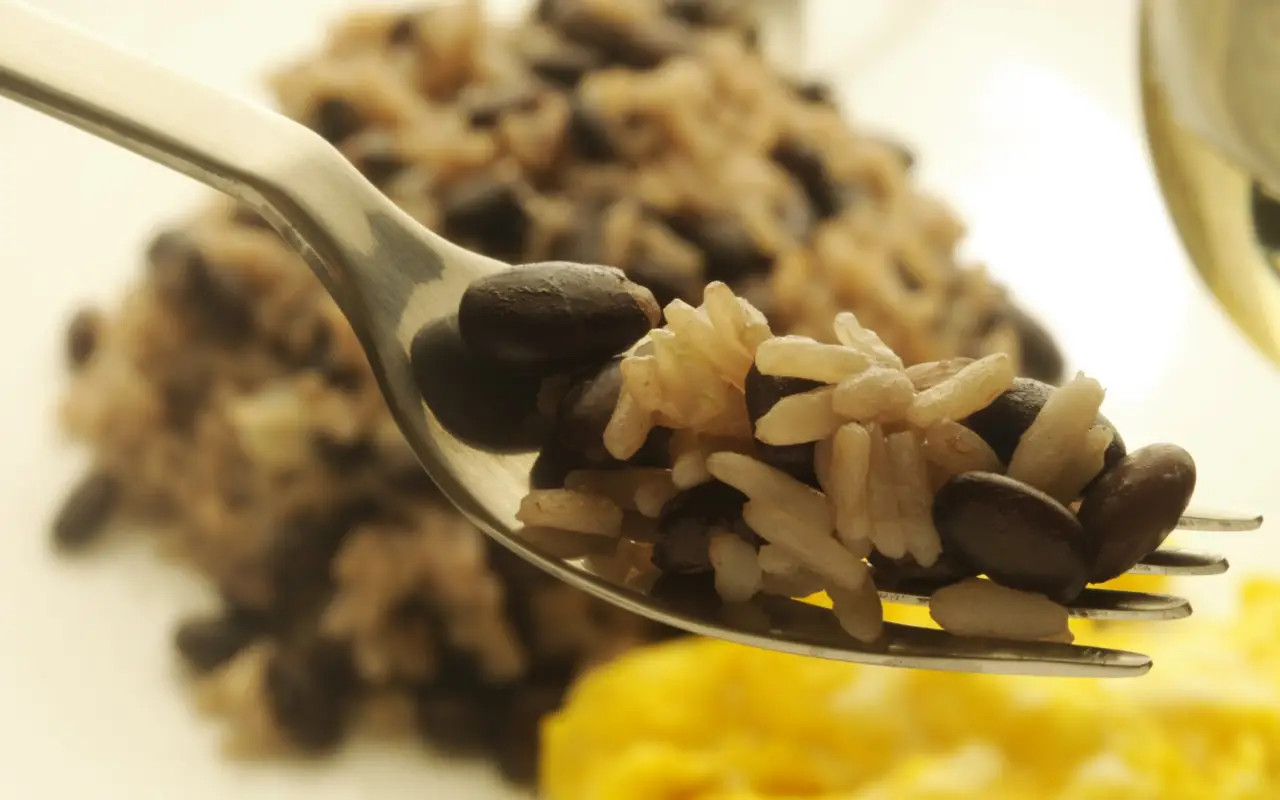
Before you start preparing it, it’s important to understand the mystical significance of Gallo Pinto for Costa Ricans. Few topics of conversation make their eyes light up quite as much as their favorite breakfast! In fact, if you happen to ask someone in conversation where they’re from, they’ll often reply,“Más tico que el gallo pinto!” ( More Costa Rican than Gallo Pinto!)
As a result, you’ll have no trouble finding Gallo Pinto on the menus at McDonald’s or Burger King across the country. They’re probably not the most authentic versions of Gallo Pinto, but they’re still Gallo Pinto! No war against globalization here—Gallo Pinto blends right in and continues to delight people of all ages. Inexpensive, filling, vegetarian-friendly, easy to make, and—not to mention—absolutely delicious, Gallo Pinto really has it all…
If I haven’t managed to convince you by now, I never will… So let’s move on to the recipe!
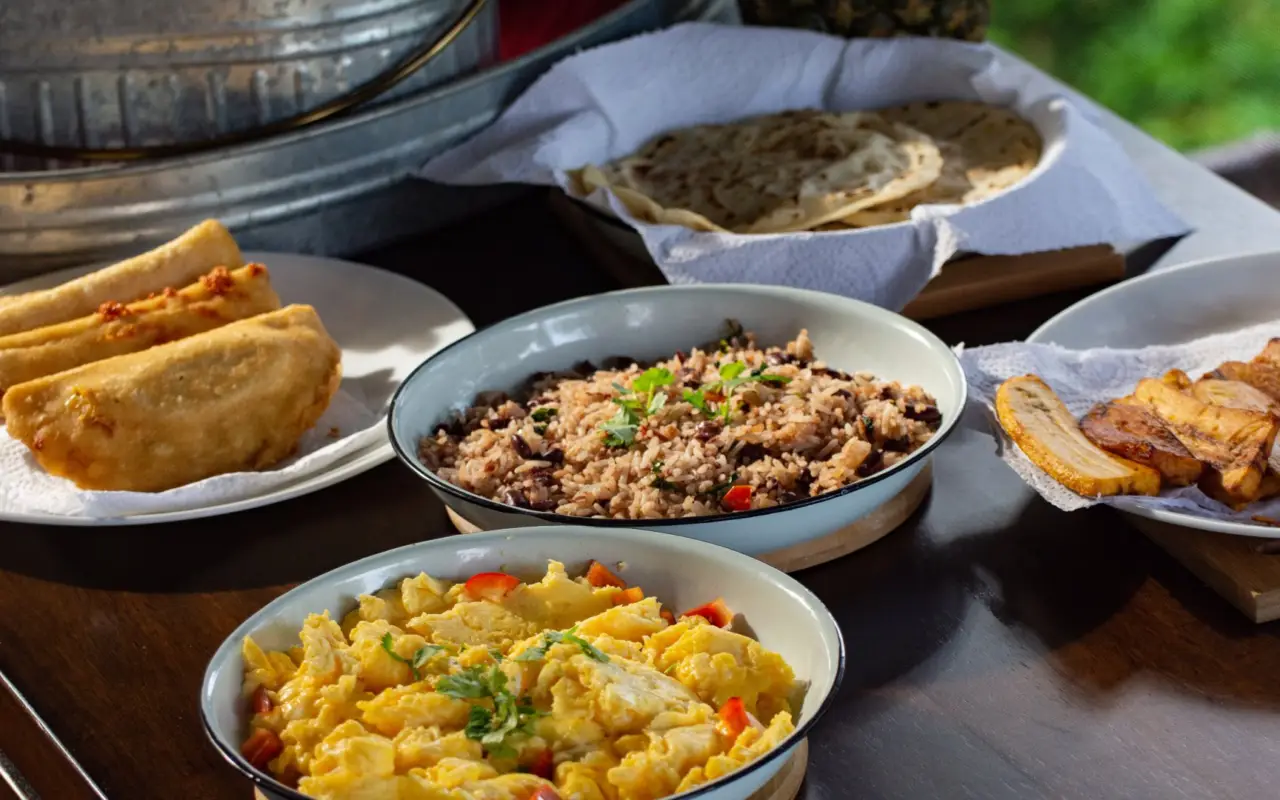
Ingredients (serves 6):
- 400g of rice
- 250 g red beans
- 50 g unsalted butter
- 1 red bell pepper
- 2 onions
- 3 cloves of garlic
- 1 bunch of fresh cilantro
- Lizano sauce (or Worcestershire sauce as a substitute)
- Dijon mustard (optional—not exactly traditional, but a tasty cultural fusion!)
- Hot sauce (optional)
Instructions
1. Soak the beans in twice their volume of water for at least 6 hours, ideally 24 hours (this helps remove certain compounds that can make them difficult to digest).
2. Cook the rice in salted water for the time indicated on the package. Rinse the beans once they’ve finished soaking, then place them in a separate pot and cover them again with twice their volume of water. Peel and quarter an onion, then add it to the pot; it will cook with the beans and break down during cooking, leaving behind only its flavor. Cook the beans, covered, for as long as it takes to make them tender to your liking. Normally, there’s no need to drain them at the end of cooking (the liquid from the beans will form the Pinto sauce) or to add water (if the beans aren’t cooked and there isn’t enough liquid, add some).
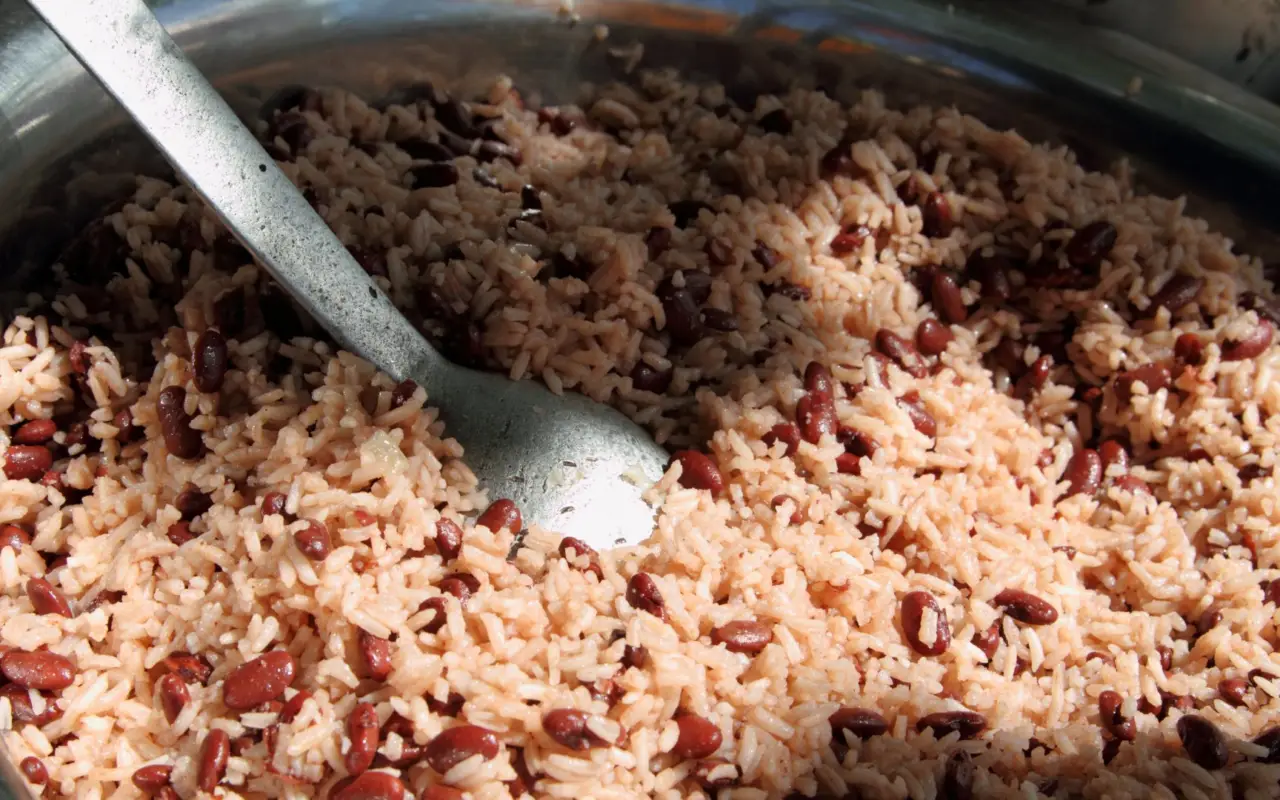
3. This step is optional but best preserves the tradition of Gallo Pinto. Let the rice and beans sit in the fridge for a few days (4 or 5) before continuing with the recipe. If you’re looking for a recipe to make for your guests tonight and they’re not willing to use their time off to try your famous Gallo Pinto, feel free to skip this step…
4. In a wok, heat the butter, and before it browns, add the onion and bell pepper, which you’ve already sliced fairly thinly. After a few minutes, add the crushed garlic and sauté.
5. Add about 20cl of Salsa Lizano and a tablespoon of mustard, and stir before adding the rice and beans (with their liquid) to this delightful mixture. Sauté for 10 minutes, just long enough to heat everything through.
6. At this point, your neighbors might come knocking to ask where that divine smell is coming from. Ignore them and pretend you’re not home.
7. Finely chop half a bunch of fresh cilantro, and after turning off the heat, add it to your pinto beans just before serving.
8. Serve with some scrambled eggs or sliced avocado, and you’re all set!
– BUEN PROVECHO –
Your local chef, Clément