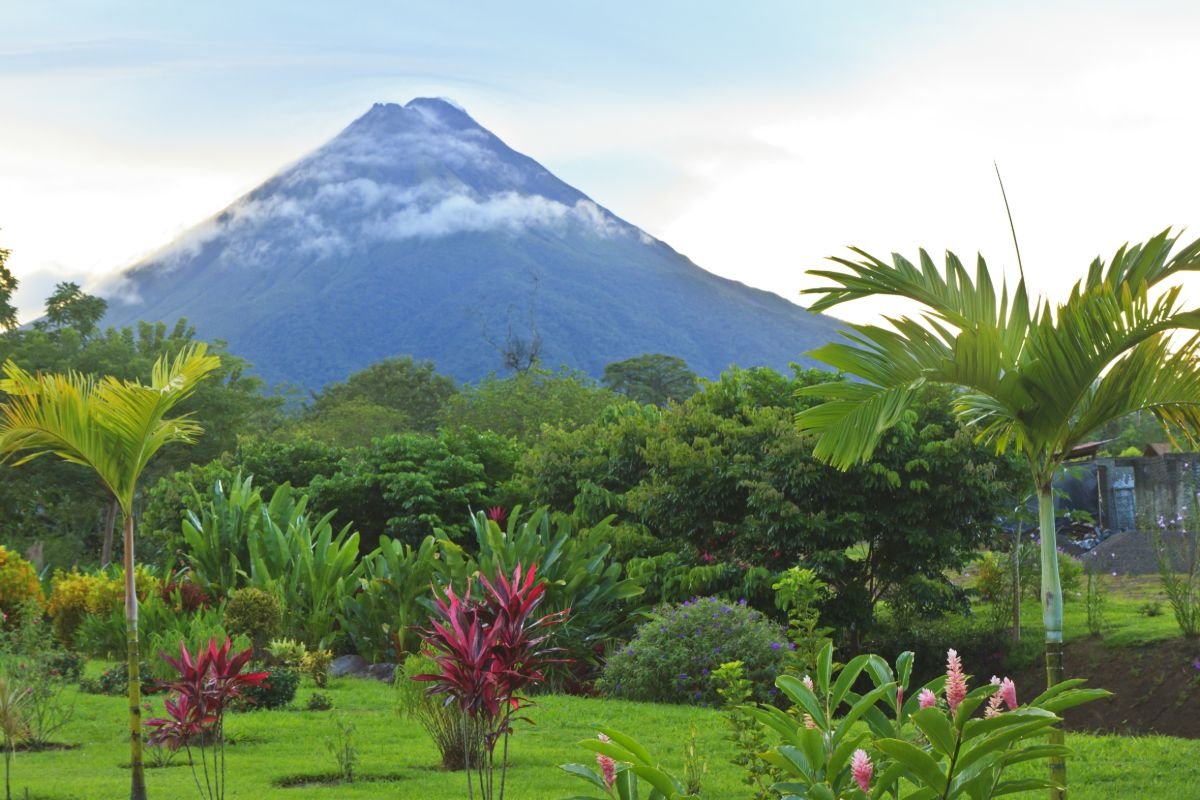
For a 15-day trip to Costa Rica as a couple, budget between €1,800 and €3,000 per person, including flights, based on an average traveler’s profile (2-star hotels, SUV rental, a few activities). A round-trip flight from Paris costs €500 to €1,000, an SUV rental costs between €60 and €110 per day depending on the season, and excursions range from $15 to $170 each. This guide breaks down each expense category to help you plan your budget based on your preferences and the length of your stay.
What’s the daily budget based on your travel profile?
Costa Rica caters to a variety of budgets. The table below provides a daily estimate per person, excluding international flights. These ranges are based on rates observed in 2025–2026 by our team on the ground.
| Expense Category | Backpacker (35–55 €/day) | Moderate (80–130 €/day) | Comfortable (150–250 €/day) | Luxury (300–500 €/day) |
|---|---|---|---|---|
| Accommodation | Hostels, dorms, cabins ($10–25) | 2-3* hotels, eco-lodges ($50–80) | 3-4* hotels, eco-lodges ($80–170) | Premium lodges, 5-star resorts ($200–500+) |
| Meals | Fast food, markets ($12–23/day) | Soft drinks + mid-range restaurants ($30–55/day) | Varied restaurants ($55–100/day) | Fine dining, resorts ($100–180/day) |
| Transportation | Public buses ($3–8/day) | Shared SUV rental ($20–$35/day) | 4×4 rental ($35–55/day) | Premium 4×4 + private transfers ($60–120/day) |
| Activities | National parks, beaches ($5–15/day) | Parks + 1 excursion every 2 days ($15–$30/day) | Regular excursions ($30–$60/day) | VIP experiences, private guides ($60–$150/day) |
These estimates cover on-site expenses. International flights and travel insurance are in addition to the daily budget. We break these down in the following section.
The 5 Expense Categories to Anticipate
International flight: the top budget item
The cost of a flight to Costa Rica often accounts for 30 to 50% of the total budget, especially for a short trip. Air France offers direct flights from Paris CDG to San José (SJO) two to three times a week, with fares ranging from €500 to €1,000 in economy class. Flights with layovers in Madrid, Amsterdam, or the United States may be cheaper, but they extend the travel time and sometimes require a transit visa (ESTA for the U.S., $21).
Prices vary depending on the time of year. During peak season (December–April, French school holidays) sees fares 20 to 40% higher. To get the best price, book 4 to 8 months in advance and compare offers from Paris, as well as from Madrid or Lisbon—flights from those cities are sometimes significantly cheaper and can be combined with a train trip.
Accommodations: The Most Variable Expense
Costa Rica offers a wide range of options, from hostels at $10 a night to lodges at $500+. The price depends on three factors: the quality of the establishment, the region you’re visiting, and the season.
For a couple traveling by car, eco-lodges and 2–3-star hotels offer the best value for money. Expect to pay $50 to $100 per double room, including breakfast. Less-visited regions (Boca Tapada, Turrialba, the South Pacific) charge rates 20 to 40% lower than Arenal or Manuel Antonio for comparable service quality.
One point not to overlook: solo travelers pay the price of a double room at most Costa Rican hotels. This “single supplement” significantly increases the budget. Specifically, where a couple pays $50 each for a $100 room, a solo traveler pays the full $100—which is double the per-person rate. Over 15 nights, this represents an additional cost of $750 to $1,500, depending on the type of accommodation. The same principle applies to car rentals: an SUV at $80 per day costs $40 per person for a couple, but $80 for a solo traveler. Overall, a solo trip to Costa Rica costs 40 to 60% more per person than a trip as a couple or in a small group. This is a point we systematically discuss with our solo clients to find solutions—suitable rooms, joining others for certain activities, and an optimized itinerary to minimize mileage.
Local Transportation: Car Rental or Bus?
A self-drive tour in a rental car is the most common and flexible way to get around in Costa Rica. An SUV or 4×4—recommended for unpaved roads—costs between €40 and €70 per day during the low season (May–November) and €80 to €120 per day during the high season (December–April), including insurance. Add $8 to $12 per day for fuel for an average trip.
Public buses are an economical alternative (less than €1 for a local trip, €5 to €15 for long-distance trips), but they have fixed schedules and do not serve all areas. Shared tourist shuttles (€30–60 per trip) offer a good balance between affordability and convenience.
For families or groups of 3 to 6 people, splitting the rental costs makes a 4×4 very competitive: divided by 4, the cost per person drops to €15–30 per day.
Activities and Excursions: The Real Fun Budget
In Costa Rica, almost all activities require a fee. National parks, waterfalls, trails, hot springs—everything has an entrance fee. Here are the approximate prices for the most popular excursions:
| Activity | Price per person (approximate) |
|---|---|
| National Park Admission (Manuel Antonio, Poás, Arenal…) | $10–$18 |
| Arenal Suspension Bridges | $30–$40 |
| Coffee plantation tour (Monteverde) | $40–$55 |
| Zip line / canopy tour | $50–90 |
| Horseback riding (3 hours) | $55–80 |
| Guided wildlife tour | $45–$120 |
| Floating safari (Boca Tapada) | $55–75 |
| Hot Springs + Combo Activity | $50–$100 |
| Pacuare Rafting (1 day, from San José) | $120–$170 |
| Snorkeling at Isla del Caño | $130–$170 |
| Day Trip to Corcovado (from Drake or Uvita) | $130–$180 |
Our recommendation: Alternate between days with paid activities and days spent at the beach, hiking on your own, or exploring villages. Some free experiences are worth checking out—the natural hot springs in La Fortuna (a free-access hot river), the beaches of the South Pacific, or trails outside the national parks.
Meals: A manageable expense
Eating in Costa Rica suits every budget. By dining at sodas (local family-run restaurants) and shopping at fruit markets, you’ll spend $12 to $25 per day. If you alternate between sodas and mid-range restaurants, expect to spend $30 to $55. For more details on meal prices, check out our guide to the cost of living in Costa Rica.
How much does a 10-, 15-, or 21-day trip to Costa Rica cost?
The table below summarizes the estimated total budget per person, including international airfare, for a couple traveling by car. The amounts are calculated based on a round-trip flight costing €700 (average price) and low-to-high price ranges depending on the traveler’s profile.
| Duration | Backpacker | Average Traveler | Comfortable | Luxury |
|---|---|---|---|---|
| 10 days | 1,050–1,250 € | 1,500–2,000 € | 2,200 – 3,200 € | €3,700 – €5,700 |
| 15 days | €1,225 – €1,525 | €1,900 – €2,650 | €2,950 – €4,450 | 5,200–8,200 € |
| 21 days | €1,435 – €1,855 | €2,380 – €3,430 | €3,850 – €5,950 | €7,000 – €11,200 |
These estimates include airfare, lodging, car rental (except for backpackers), meals, and an average of 2 to 3 activities per week. They do not include travel insurance (€30–120 depending on coverage) or souvenirs.
One point that’s often overlooked: the longer your stay, the more the cost of the flight is spread out. Extending your trip from 10 to 15 days increases the total budget by only 25–30%, while giving you a much more complete experience of the country.
How can you reduce the cost of a trip to Costa Rica?
There are several ways to significantly lower the cost of your trip without sacrificing the quality of the experience.
Travel during the green season (May through November). Accommodations lower their rates by 20 to 40%, car rentals cost nearly half as much, and tourist sites are less crowded. The rains, which are concentrated in the late afternoon, don’t prevent you from enjoying the mornings and early afternoons. Some experiences are even exclusive to this time of year: humpback whale watching in the Pacific (August–October), sea turtle nesting in Tortuguero, and whitewater rafting on the Pacuare River.
Opt for regions off the beaten path. Boca Tapada offers an experience comparable to Tortuguero at a lower cost. The Nicoya Peninsula (Sámara, Nosara Village) is more affordable than Tamarindo. The southern Caribbean coast (Puerto Viejo, Cahuita) offers significantly cheaper accommodations and restaurants than the northern Pacific coast.
Book early. That’s the simplest and most effective tip. By booking 4 to 6 months in advance, you’ll get the best rates on flights, accommodations, and car rentals. The most popular establishments fill up very quickly, especially during peak season. For activities, booking 2 to 3 weeks before your desired date guarantees better prices than buying on-site—and the certainty of securing a spot, especially during busy periods.
Eat at the sodas. A casado for $5–$8 versus a meal for $25–$40 at a tourist restaurant: over 15 days, the difference adds up to hundreds of euros. Sodas offer hearty, local cuisine that’s often better than the chain restaurants geared toward tourists.
Split costs as a group. Traveling with 4 or 6 people lets you split the cost of car rental, a driver-guide (if you hire one: $200–300/day for the group), and sometimes family rooms, which are often much cheaper per person than a double room.
High season or green season: how does this affect your budget?
| Season | High season (Dec. – April) | Off-peak season (May–Nov.) | Estimated savings |
|---|---|---|---|
| Round-trip flight from Paris | €700–1,000 | 500–750 € | 15–30% |
| 3-star hotel (double room/night) | $80–$150 | $50–100 | 25–40% |
| SUV/4×4 rental (per day) | €80–120 | €40–70 | 40–50% |
| Activities | Standard price | Standard price (occasional promotions) | 0–10% |
| Meals | Standard price | Standard price | 0% |
For a 15-day trip for two, the difference between high season and off-season can range from €600 to €1,200 per person. The off-season is a great option for anyone who wants to explore Costa Rica at a lower price without compromising on the richness of the experience.
Two transitional periods are worth noting: July–August (the “Veranillo,” with often mild weather) and the first few weeks of December (before the Christmas rush). These windows offer a good balance between weather and budget.
Why use a local travel agency for your trip to Costa Rica?
Organizing a trip to Costa Rica on your own is entirely feasible. However, once you reach a certain level of comfort and itinerary complexity, a local travel agency makes all the difference—both in terms of budget and the quality of the experience.
One intermediary, no double commissions
When you book through a travel agency in France or Quebec, that agency typically uses a local operator to organize your trip on the ground and then adds its own markup. This means you end up paying two commissions. By contacting Terra Caribea directly—a local travel agency based in Costa Rica—you cut out this middleman. The same applies to booking platforms (such as Evaneos and Comptoir des Voyages), which charge a commission on every reservation. Booking directly with the local travel agency allows you to save 10 to 20% on the total cost of your trip for equivalent services.
Negotiated rates unavailable to individual travelers
Our team has been working for over ten years with a network of local partners—accommodations, activity providers, and car rental companies. These long-standing business relationships give us access to negotiated rates, often 15 to 25% lower than the prices listed to the public or on online booking platforms. This is especially true for activities (rafting, Corcovado tours, boat trips) and for small accommodations that aren’t listed on Booking or Expedia.
An optimized itinerary = fewer unnecessary expenses
A traveler planning their first trip to Costa Rica on their own often makes costly mistakes: traveling too many kilometers per day (which means more fuel and fatigue), stopping in overcrowded areas where prices are inflated, booking repetitive activities, or staying at poorly located accommodations that require paying for additional transfers. An advisor who knows the area inside and out designs a cohesive itinerary, free of unnecessary detours, incorporating our “hidden gems”—properties offering remarkable value for money that you won’t find in traditional guidebooks.
Handling the unexpected, at no extra cost
Roadblocks, hotel cancellations, activities shut down due to weather: in Costa Rica, the unexpected is part of the journey. A solo traveler would have to figure things out over the phone, in Spanish, to find a solution—often paying top dollar at the last minute. With Terra Caribea, our team is available on-site and handles these situations immediately, at no extra cost to you. It’s a safety net that, beyond just peace of mind, represents real savings in case of a hiccup.
For detailed pricing information and to understand what’s included in a trip organized with our team, visit our dedicated page: The Cost of a Trip with Terra Caribea. You can also contact us directly for a customized, no-obligation quote.
Frequently Asked Questions About the Cost of a Trip to Costa Rica
What’s the minimum budget for a 2-week trip to Costa Rica?
If you’re traveling backpacker-style (hostels, public buses, sodas), expect to spend around €1,200 to €1,500 per person, including flights. This budget allows you to visit the country’s major attractions but requires compromises in terms of comfort and flexibility. For a comfortable self-drive tour with ecolodges and regular activities, plan on spending €2,000 to €2,800.
Is Costa Rica an expensive destination compared to the rest of Central America?
Yes. It is the most expensive country in the region, about 30 to 50% more expensive than Guatemala or Nicaragua. This difference is due to its ecotourism model, environmental taxes, and a higher local standard of living. Costa Rica is more comparable to Panama than to its northern neighbors.
Is it absolutely necessary to rent a 4×4?
An SUV with good ground clearance is sufficient for 80% of tourist routes. A true 4×4 is essential only if your itinerary includes difficult trails (access to Monteverde via certain roads, the Nicoya Peninsula during the rainy season, or very remote areas). During the off-season, a 4×4 offers added safety on muddy roads.
What are some free activities in Costa Rica?
All beaches are public and free. The natural hot springs at Tabacón (free access; not to be confused with the paid resort) are a classic destination. Hiking trails outside national parks are free. Some villages host farmers’ markets on weekends. Ask the locals (Ticos) for their recommendations: they often know about waterfalls and scenic overlooks that aren’t very crowded.
How to pay in Costa Rica: cash or card?
Credit cards are accepted at most hotels, restaurants, and shops in tourist areas. However, sodas, buses, and some small businesses only accept cash. Plan to withdraw colones regularly from ATMs. Note: To rent a car, a credit card (not a debit card) is required.
Is it better to book in advance or upon arrival?
During peak season, booking in advance (4–6 months) is essential for popular accommodations, car rentals, and certain activities (national parks through SINAC, rafting, and excursions to Corcovado). During the off-season, you have more flexibility, but the best rates are still available for advance bookings.
How much extra should you budget for a driver-guide?
Expect a surcharge of $200 to $300 per day for the group (not per person). This option becomes worthwhile for groups of four or more travelers: divided by four, it works out to $50–75 per person per day. The driver-guide handles all the logistics, enriches the tour with their on-the-ground knowledge, and facilitates interactions with the local population.
Is the budget significantly different for families with children?
Children under 12 receive discounted rates at national parks and for many activities. Some hotels offer family rooms (2 adults + 2 children) at a per-person price well below that of separate rooms. However, you’ll need to rent a larger vehicle (such as a Tucson or minivan), which increases this expense. For a 15-day trip, a family of four can expect to spend between €5,500 and €9,000 in total (moderate to comfortable standard), including flights.
Plan your budget, enjoy the trip
Costa Rica isn’t the cheapest destination in Latin America, but the richness of the experience—from volcanoes and rainforests to exceptional wildlife and a welcoming population—justifies the investment. The key to a successful trip at a fair price can be summed up in three words: plan ahead, compare options, and be flexible. By booking early, choosing the right time of year, and balancing your activities between guided tours and independent exploration, you can enjoy a remarkable trip without breaking the bank.
Planning a trip to Costa Rica? Contact Terra Caribea for a customized quote. Our team, based in Costa Rica, designs personalized itineraries tailored to your preferences and budget—with rates negotiated directly with our local partners.
Article updated in March 2026. The prices listed are estimates based on our on-the-ground experience and available data. Contact us for an up-to-date quote tailored to your trip.