Was it the “discovery” or the “invasion” of the Americas by Christopher Columbus and then by the Spanish? Whatever your answer, one thing is certain: they left behind a great many traces of their passage—to say the least. Racial mixing, cultural and religious syncretism, economic activities—every aspect of the indigenous people’s daily lives was affected.
The Romería, which takes place every year around August 2, is one of the most beautiful Costa Rican celebrations of this Spanish heritage. Without the colonists, there would be no Catholicism. Without Catholicism, there would be no religious syncretism. Without religious syncretism, there would be no Juanita Pereira finding a Black Madonna in the jungle—one who appeared and then disappeared—and showing her to her village priest. And so, inevitably, there would be no basilica, no pilgrimage.
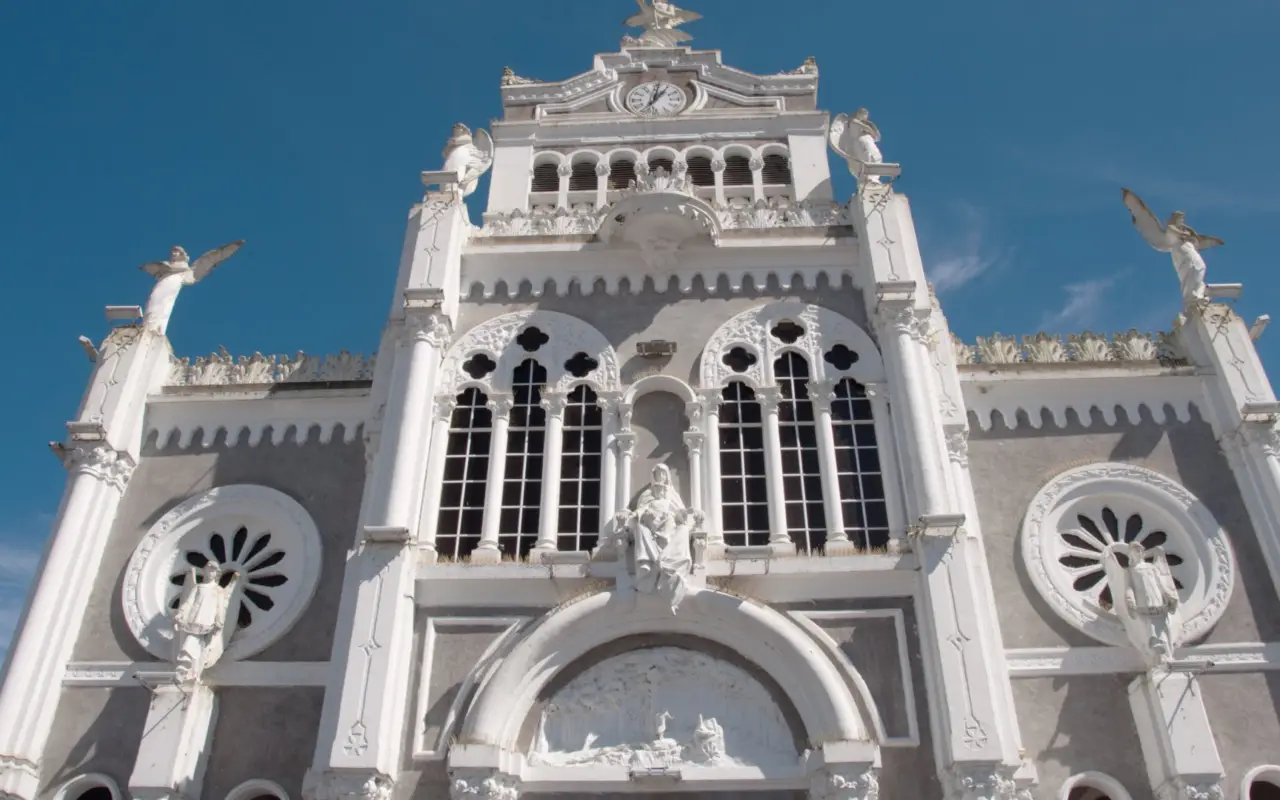
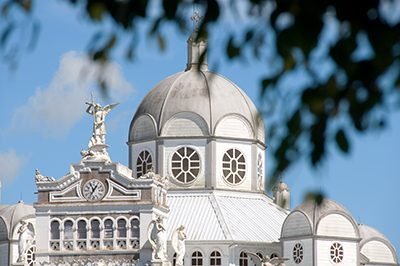
To ask for favors and forgiveness from the famousBlack Virgin—nowthe patron saint of Costa Rica— two million people—nearly half the population—come from all corners of the country, on foot, running, or on their knees, toCartagoand itsBasilica of Our Lady of the Angels, built on the site where the Virgin is said to have been found.
The Romería, so named after the first pilgrims, the “romeros” whose goal was to reach Rome—has thus become Costa Rica’s largest pilgrimage and a tradition so deeply rooted that it has taken place every year—with the exception of 2009—for 234 years!
What a sight it is to see the Ticos walking along the side of the highway, all heading in the same direction, entering the Byzantine-style Basilica on their knees, and coming out in tears, thanking the Virgin for the “miracles” she has performed or the graces she has granted. Take it from us—you don’t want to miss this!