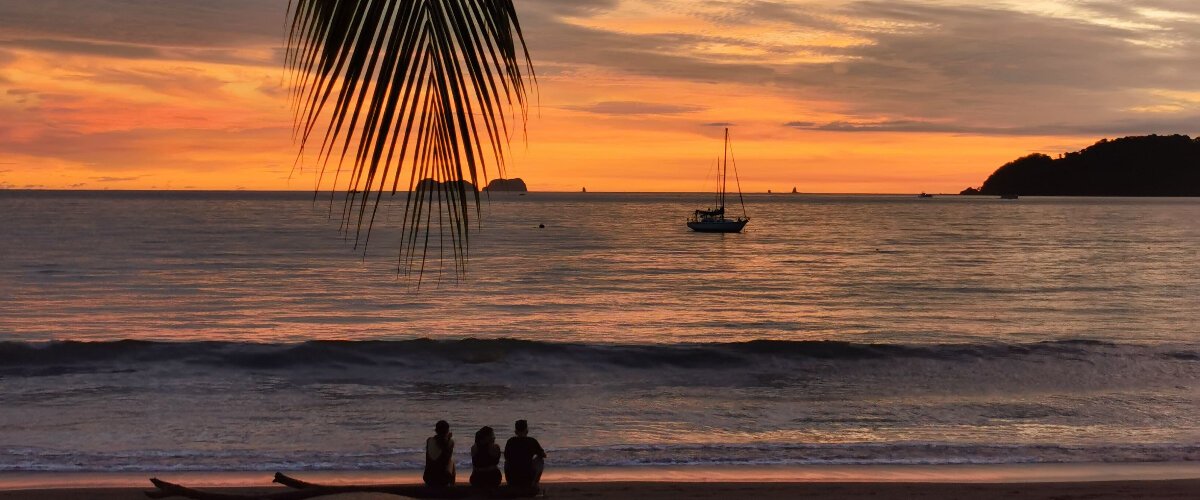
The origins of the project: “Exploring Guanacaste in a Different Way”
Article written by Cristo De Franceschi, a contributor to Terra Caribea from 2022 to 2024
Why did I take a reconnaissance trip to Guanacaste?
I wanted to explore Guanacaste—this large province located in the northwest of the country, covering a significant portion of the Nicoya Peninsula— from a different perspective than the one I’d been presented with up to that point.
Guanacaste had been presented to me as an area associated with mass tourism, with streams of North American tourists flocking to resorts—an experience radically different from the one we’d like to offer our clientele. This image is particularly evident in Tamarindo—nicknamed“Tamagringo” by locals—one of Costa Rica’s most party-oriented beach resorts .
However, isn’t it possible to have a more authentic experience in Guanacaste, a province with undeniable charms and numerous exceptional natural sites?
After all, for some, Guanacaste’s coastline is the most attractive in Costa Rica for a beach vacation. This reality has inevitably led to early—and at times uncontrolled— tourism centered around these renowned beach destinations, which stands in contrast to the image we’d like to have of the “Land of Green Gold.”
With that in mind, the goal of my fact-finding trip was toexplore Guanacaste to discover destinations and service providers more in line with our vision of tourism.
That is, tourism that aims to be authentic, more responsible, in harmony with the environment and local communities—in a word: sustainable.
Pre-trip preparation and strategic choices:
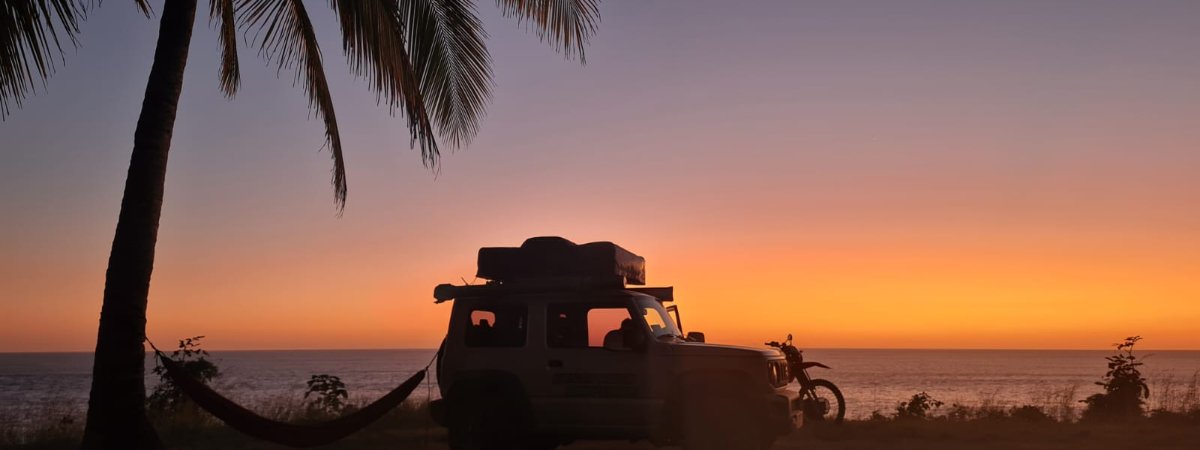
So I selected specific stops along the way to ensure a more immersive experience within the local ecosystems and culture. To make this expedition to Guanacaste a reality, I made a specific choice regarding transportation: I used an all-terrain vehicle converted into a campervan, provided by our partner Costa Rider Campervan.
On that note, I can already tell you that the vehicle was just perfect and allowed me to truly venture off the beaten path in Costa Rica.
As you can imagine, designing an itinerary for a reconnaissance trip is quite a complex process, where you have to balance various factors—such as revisiting existing service providers, discovering new ones, testing certain activities and routes, all while staying within your budget… In short, a reconnaissance trip requires meticulous planning. And it’s planned in collaboration with tourism stakeholders in the region we’re exploring, who hope to be featured among the new “hidden gems” in our supplier catalog.
So,in mid-November, I set out to explore Guanacaste on this road trip adventurein Costa Rica.
On the itinerary: nights in a campervan, stunning beaches, dry but still lush tropical forests(at the end of the rainy season), luxurious hotels and ecolodges, non-profit lodges, and nature reserves…
All of this while traveling through Guanacaste from north to south, from the border with Nicaragua and the Bahia Salinassite to the Playa Coyote area, passing through well-known destinations such as Papagayo, Las Catalinas, Potrero, Ostional, Nosara, and the Karen Mogensen Reserve .
You’ll find these different stops in the suggested itinerary I put together after my trip, which you can view via the link below.
Now it's time for the story of my trip to Guanacaste!
Step 1: A nature and wellness getaway in Bagaces, at the foot of the Miravalles volcano
Rio Perdido, a superb hotel in an ideal location:
The drive from San José to Santa Cruz is quite long, although the stretch between Puntarenas and Liberia has recently been upgraded to a beautiful highway.
So, I’ve planned to make my first stop near Bagaces. This small town, nestled in the foothills of theMiravalles volcano near Palo Verde National Park, is located in a region largely off the beaten path of traditional tourist routes and offers a wellness retreat, with numeroushot springs resorts—including what is undoubtedly one of the most exclusive: the Rio PerdidoHotel .
It’s clear that this hotel ranks among my hidden gems in Costa Rica, as it offers a luxurious, comprehensive, and sophisticated travel experience, all with a remarkable ethical approach that fosters harmony with the local community.
Notably, the main building is nestled in a lush green setting, and this grove is the result of a reforestation program that is now bearing fruit. As a result, you feel truly immersed in this dry tropical forest landscape—a fragile ecosystem unique to this part of the world and possessing such distinctive characteristics.
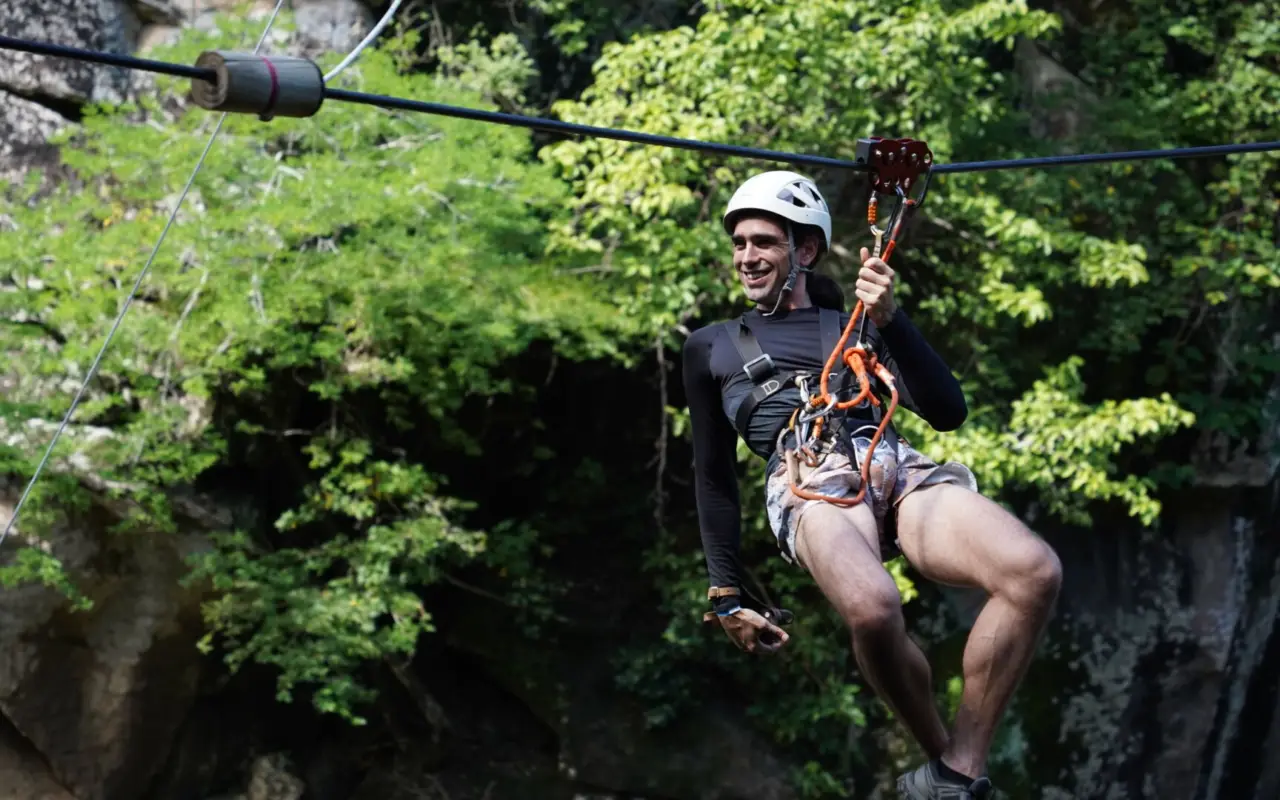
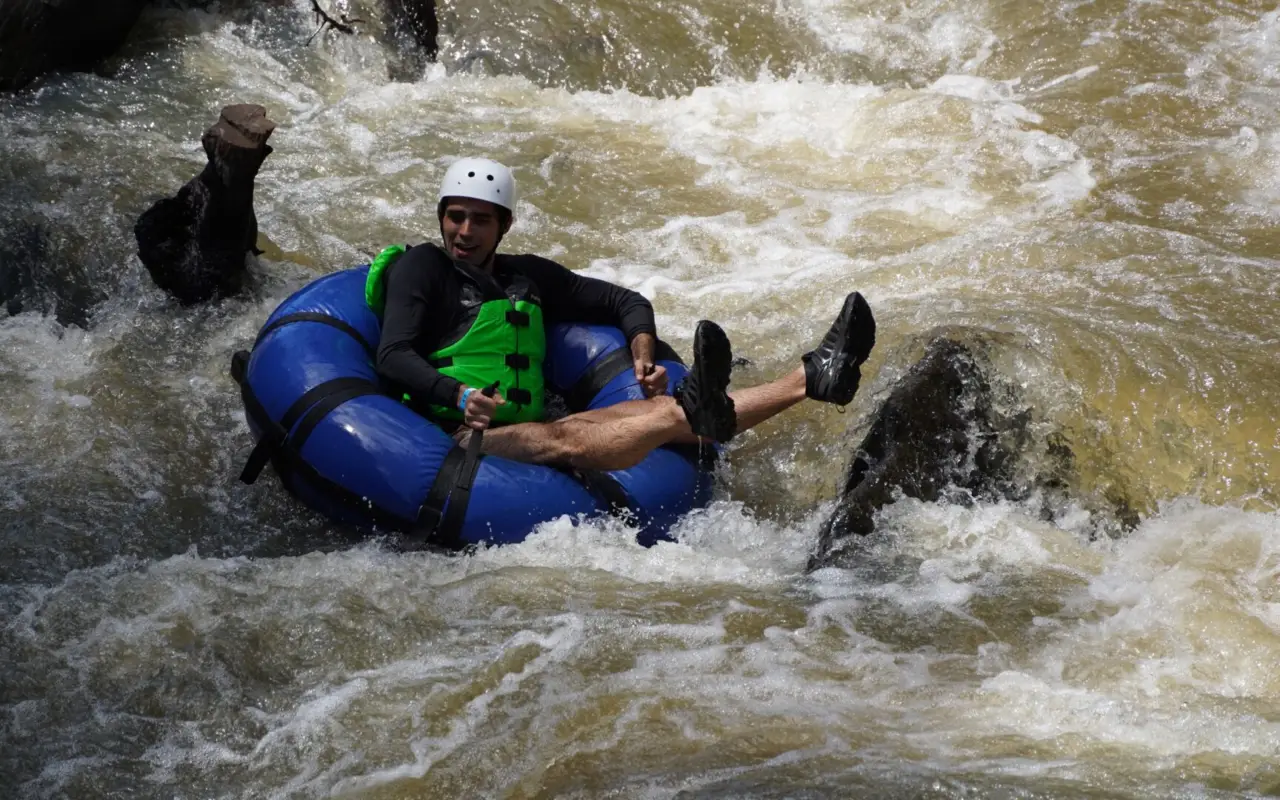
I loved this hotel, where I was able to try out various outdoor activities(tubing, zip-line courses, hiking) as well as their excellent restaurant, which puts a fresh spin on Costa Rican culinary classics.
An authentic region, perfect for a stop off the beaten path
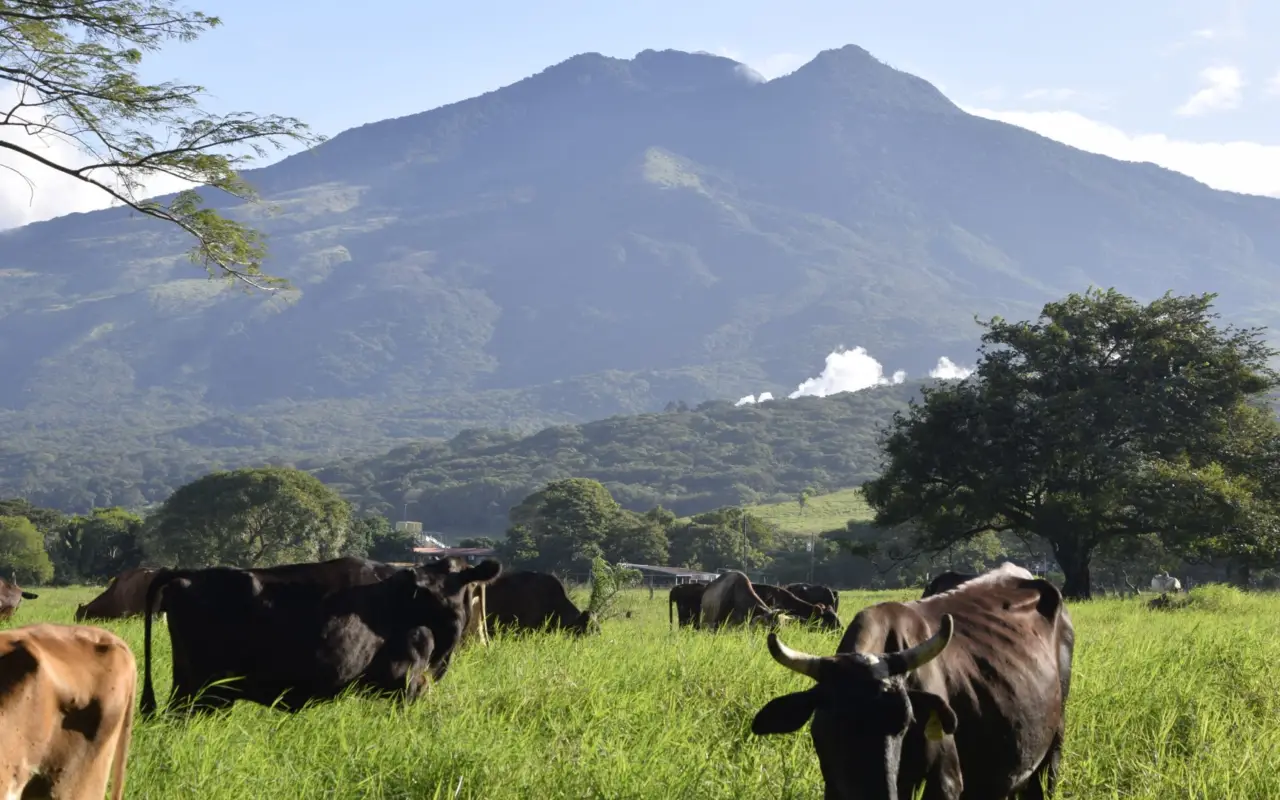
But above all, I loved the region as a whole, shaped by significant volcanic activity, which gives the landscapes a unique atmosphere. Landscapes I discovered after a wonderful night spent at Yoko Hot Spring, a traditional spot that, in all humility, offers an ideal campsite for a campervan, with access to beautiful thermal pools and an exceptional view of the Miravalles volcano, which is definitely one of my favorite volcanoes in Costa Rica.
Indeed, although this volcano is less popular than its counterparts —Arenal, Rincón de la Vieja, or Tenorio—it has its own unique charms, with a particularly lush region that perfectly matches the image most people have of Costa Rica. But there are also some surprises, such as the numerous geothermal power plants that blend into the surrounding jungle.
Step 2: Bahia Salinas, Bahia Junquillal, and Santa Rosa National Park—an authentic glimpse of Guanacaste?
Bahia Salinas, Costa Rica’s kitesurfing paradise!
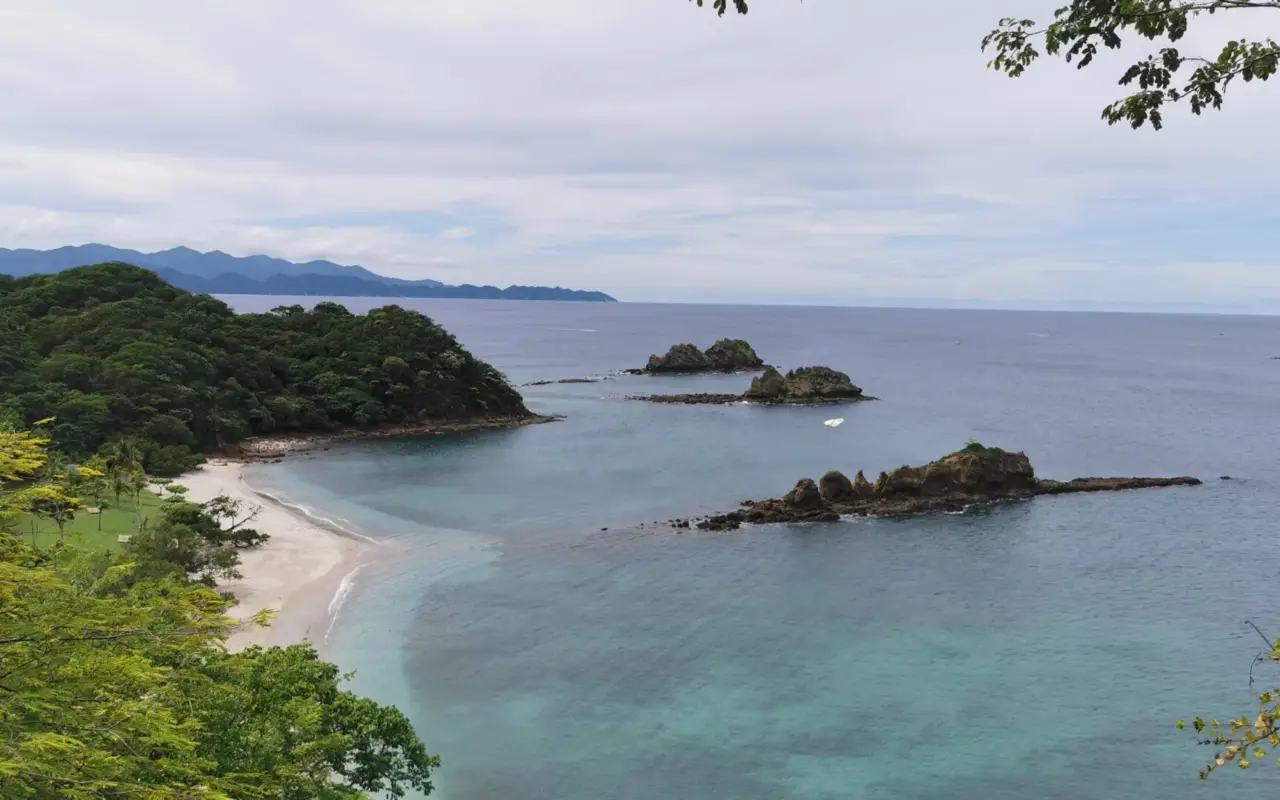
The destination of the trip is Guanacaste, so let’s head to this province, with our first stop being the exceptional site of Bahia Salinas —a spot you can admire from an impressive overlook just outside Santa Cruz.
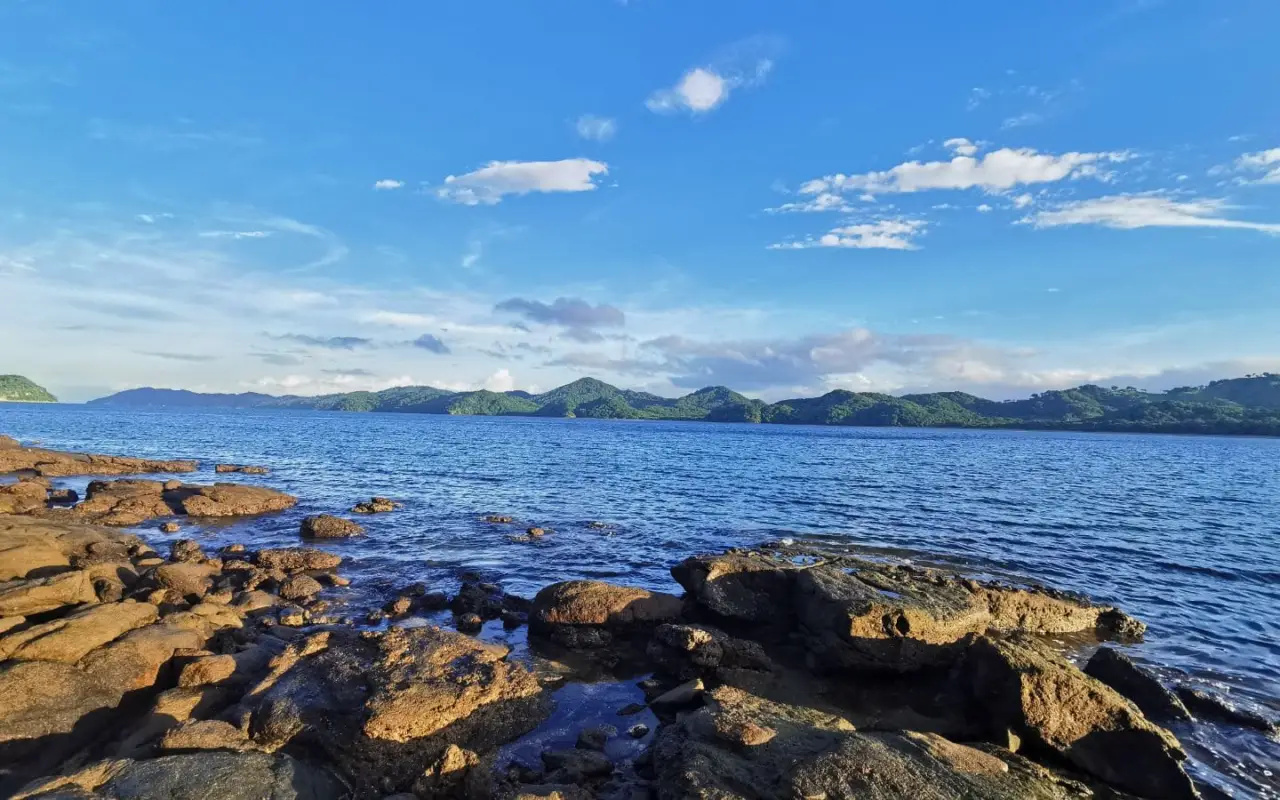
What initially caught my attention about Bahia Salinas and its surroundings is that the area remains relatively undeveloped for tourism, with only a few hotels scattered across a vast territory, offering great opportunities for activities and access to beautiful beach destinations.
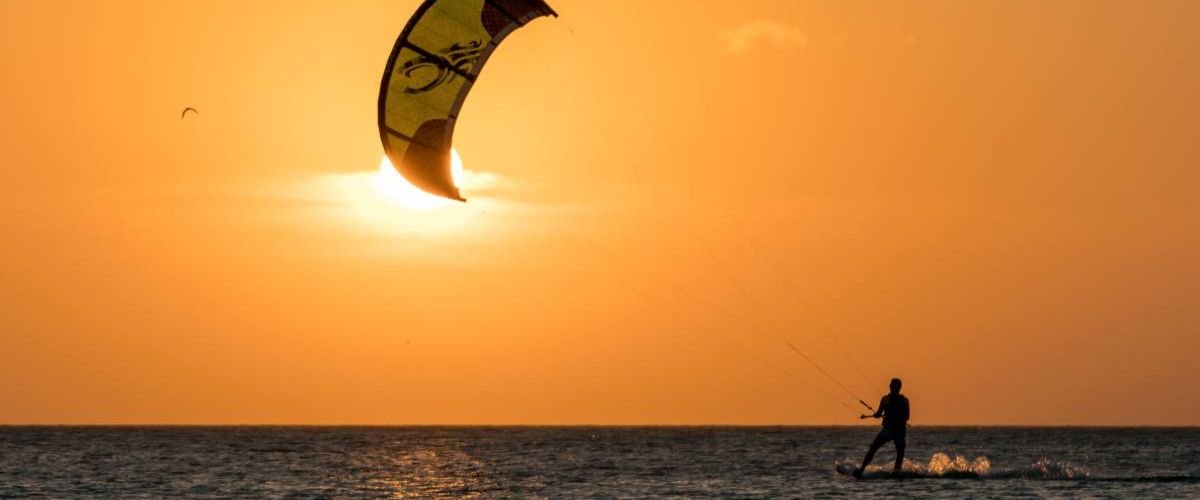
Namely, the main attraction in Bahia Salinas is kitesurfing: it’s a world-renowned spot that offers exceptional conditions for this sportbetween December and May. This characteristic of the region is linked to the thermal winds, which are amplified by the presence of Lake Nicaragua “Cocibolca” further north (Central America’s largest freshwater reservoir), which influences the region’s climate by generating these steady winds for much of the year.
I got my start in kitesurfing with Costa Kite, a group of enthusiasts who’ve been based in the area for many years and with whom we can offer you a variety of services!
You’ll also find other water activities in Bahia Salinas, with beautiful beaches perfect for snorkeling —like Playa Rajadita (a total favorite)—or kayaking trips, for example, to Bolaño Island in the center of the bay, as well as whale-watchingexcursions.
The Guanacaste Conservation Area: Santa Rosa National Park, Rincón de la Vieja National Park, and other reserves
While water activities are well-developed, don’t forget the many national parks, which are everywhere in this region.
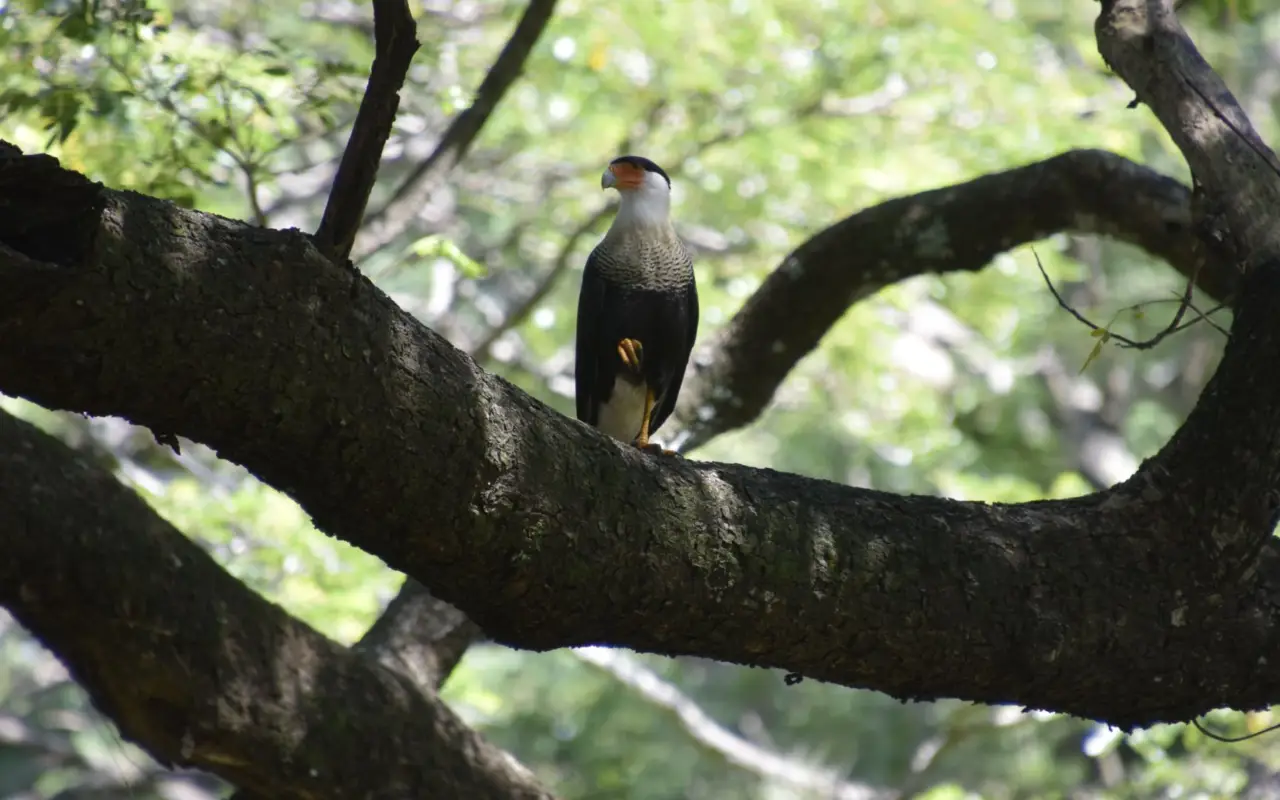
These parks make up theimpressive Guanacaste Nature Reserve, a corridor of vegetation that has made it possible—if you will— to preserve a unique ecosystem: the dry tropical forest I mentioned earlier.
In fact, a large portion of Guanacaste’s territory is therefore subject to a policy of preserving its natural areas, notably including Santa Rosa National Park—one of the country’s largest national parks—which is primarily a strict nature reserve, thus prohibiting all tourist activities to ensure the preservation of the dry tropical forest.
As a result, from a tourist’s perspective, Santa Rosa National Park holds little appeal, as it doesn’t allow for much exploration… On the other hand, there’s the Junquillal site, a little further north of Santa Rosa, which features a reserve that offers a better exploration experience, with the option to camp overnight in a tent or campervan to enjoy a night of camping in a completely secluded and authentic setting.
Step 3: The Papagayo Peninsula and Playa Hermosa—Costa Rica’s most exclusive destination!
The Papagayo Peninsula: A Luxurious Getaway!
In Guanacaste, there are upscale destinations that have made the region famous, and the Papagayo Peninsula is one of them.
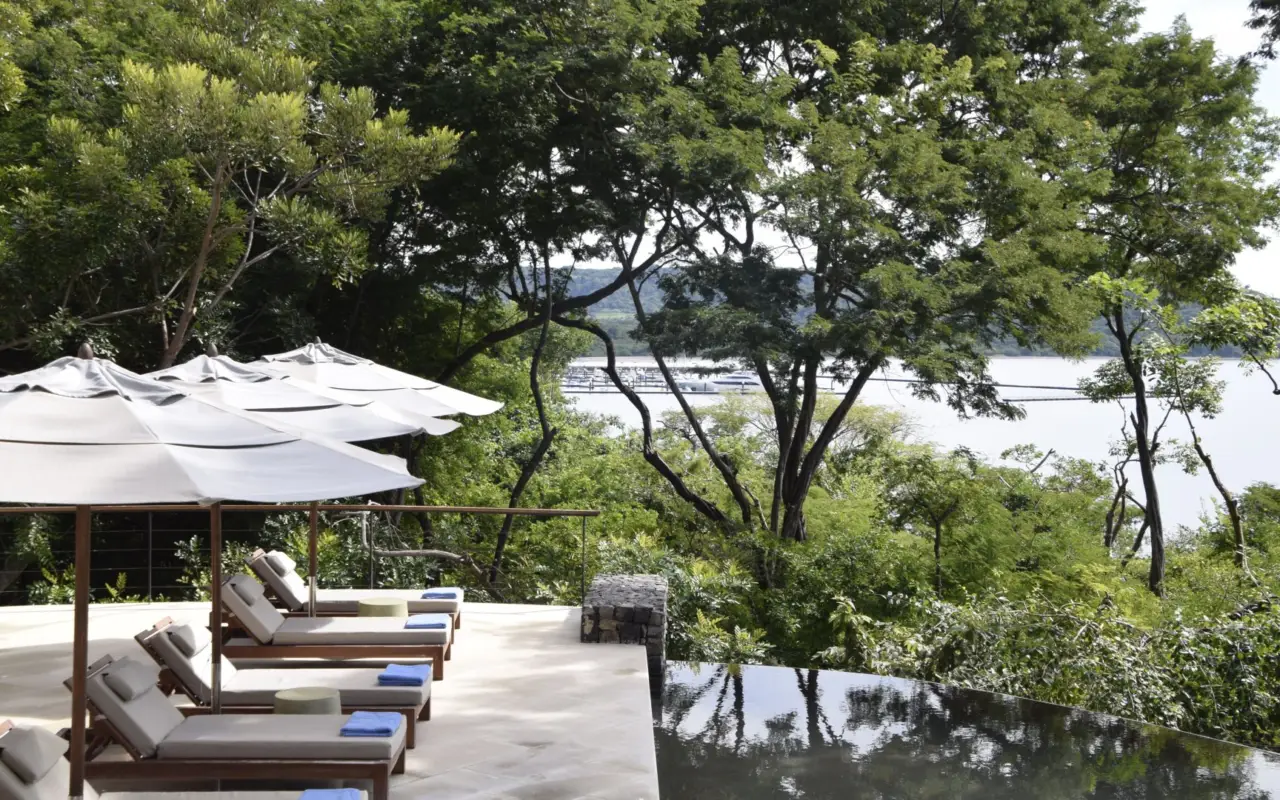
It is undoubtedly one of the most exclusive destinations Costa Rica has to offer, with a resort area dedicated to luxury beach tourism. Indeed, the Papagayo Peninsula is home to top-tier hotels , such as the Four Seasons—one of the most expensive properties in the country—and the “One and Only Papagayo,” currently under construction, which is set to become the country’s most luxurious resort.
In short, as you can see, Papagayo is a destination in a class of its own, catering to a very specific audience—those accustomed to luxury accommodations.
Moreover, the Papagayo area offers several advantages in terms of accessibility: the peninsula is located just about 20 minutes from Liberia International Airport; it features a marina perfectly equipped to accommodate even the largest vessels; and each hotel has its own helipad.
Once you’re there, everything is designed so you can enjoy all that Costa Rica has to offer without ever having to leave the peninsula… While this doesn’t quite align with our positioning, it’s clear that theexperience is truly exceptional.
In this case, I had the opportunity to visit the Andaz – Hyatt hotel, a beautiful property that offers the full Papagayo luxury experience, but with rates intended to be more affordable than those of its main competitors. I really liked the design of their rooms and the sophistication of their service, which aims to be as comprehensive as possible.
The Playa Hermosa location is perfect for being right on the water:
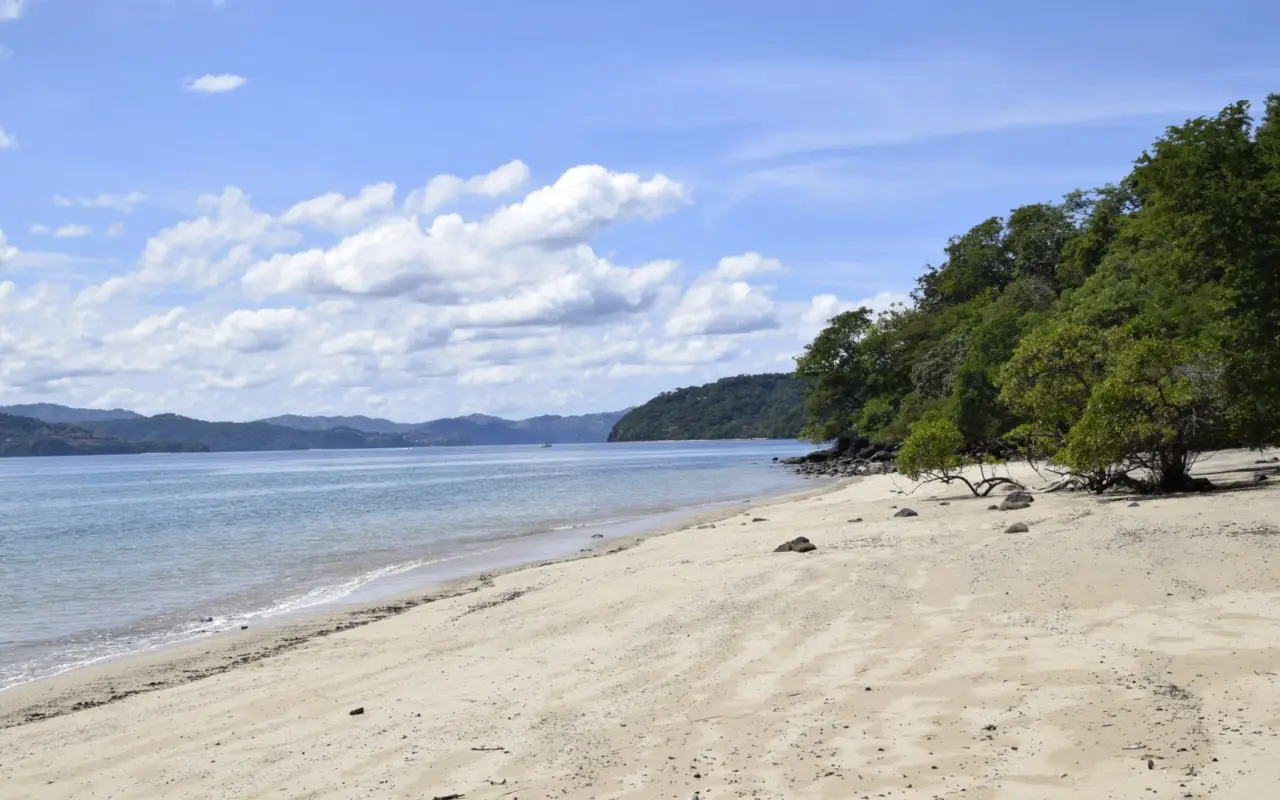
Now, on the other side of “Bahia Culebra” —which separates the Papagayo Peninsula from the rest of the province—you’ll find high-end beach resorts, notably “Playa Panamá” but especially “Playa Hermosa,” two splendid beaches that are home to some interesting resorts, including the Bosque del Mar, a hotel we’ve been working with for many years.
This 4-star property is a beachfront hotel in Playa Hermosa, offering exclusive access to this beautifulGuanacaste beach. If you’re looking to treat yourself toa luxurious beachgetaway , this is an excellent choice. Especially since the hotel has undergone major renovations over the past two years and now featuresmodern décor that blends perfectly with the hotel’s lush garden —one of its greatest assets, aside from its idyllic location.

Step 3a: Sardinal de Carillo, to explore the interior of Guanacaste
Le Suitree: A Unique and Unconventional Experience in Guanacaste
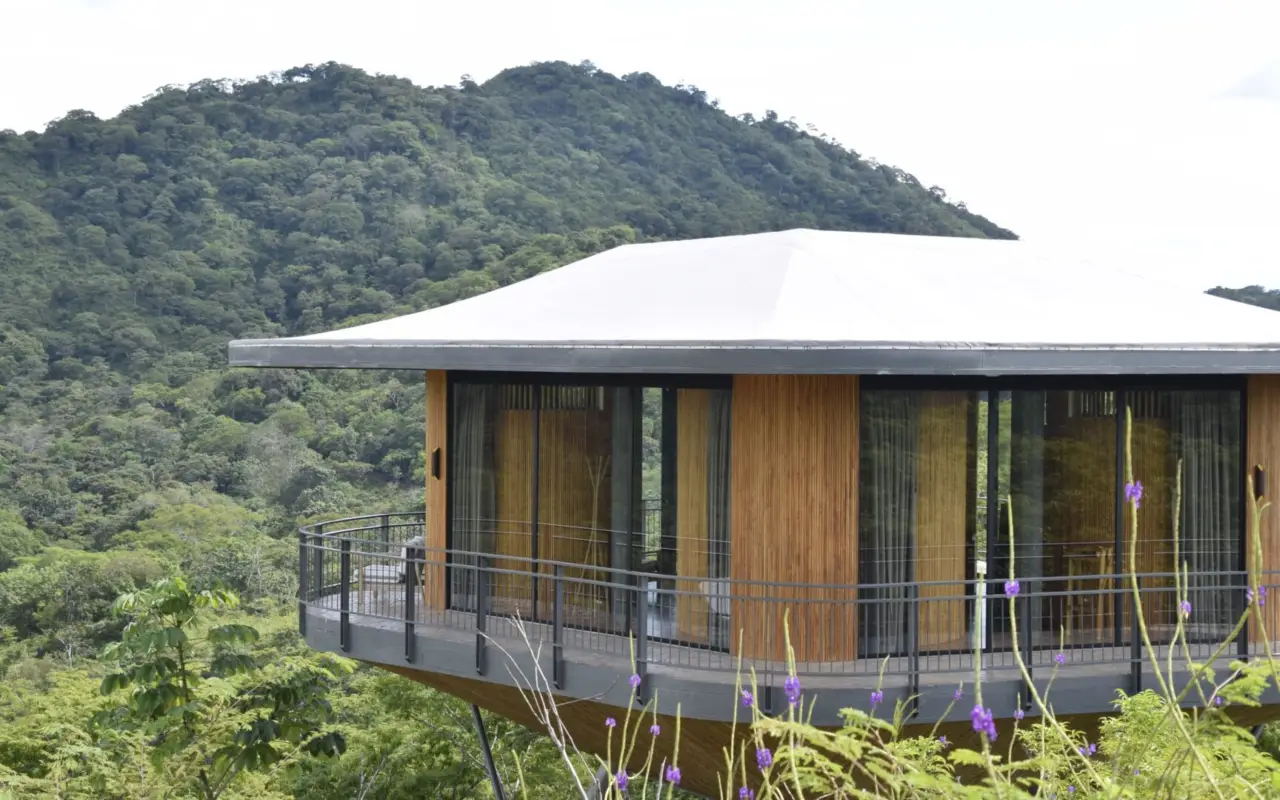
Finally, in the same area, there’s a recently opened hotel with a uniquedesign , located further inland toward the small town of Sardinal, which I had the chance to visit: The Suitree Experience Hotel.
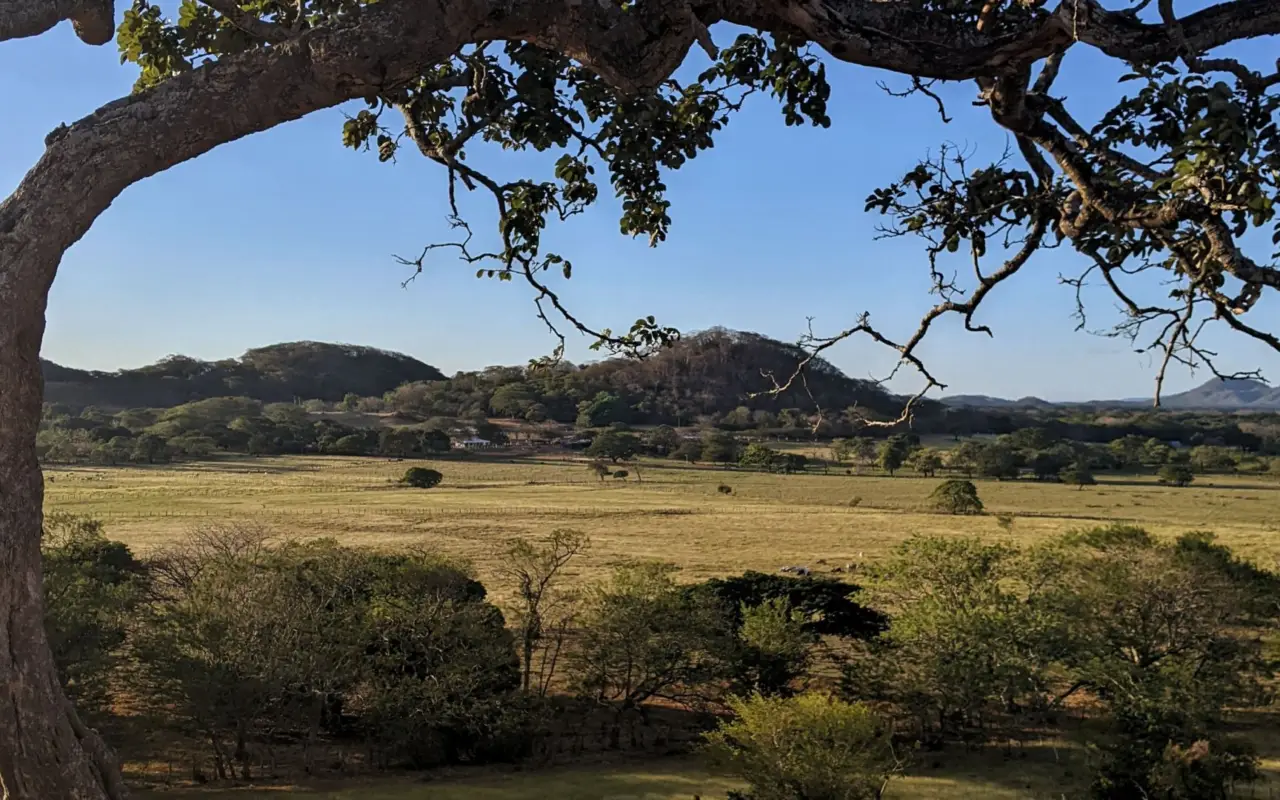
This hotel offers a unique style for a luxurious and unusual experience that is sure to delight those who want to discover the other, more authentic side of Guanacaste—best embodied by itsdry tropical forest landscapes.
The hotel’s various villas all feature a 360°panoramic view of the surrounding mountains. This allows you to take in the region’s distinctive landscapes from above, with a special mention for the observation deck located at the top of the hill overlooking the hotel— the perfect spot to feel like you’ve stepped into another world.
Whether it’s the villas or the hotel’s common areas (restaurant, pools, viewing platform…), every space reflects a meticulous attention to detail, a harmonious balance of colors, and thoughtful use of materials… It’s truly a favorite of mine.
Step 4: Playa Potrero and the village of Las Catalinas: for a romantic getaway in the land of green gold!
Playa Potrero, an iconic beach in Guanacaste known for its stunning sunsets!
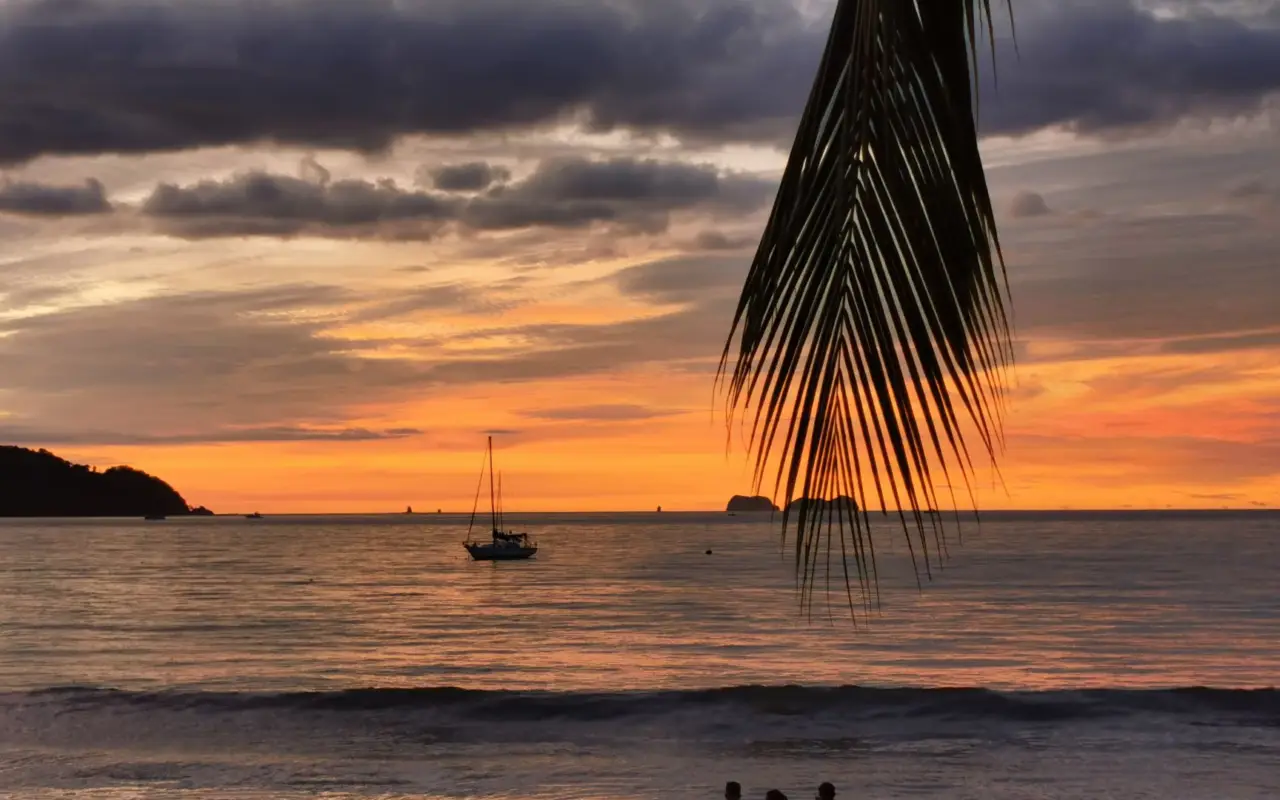
Potrero is one of Guanacaste’s many attractive beach destinations, featuring a vast stretch of fine sand. Itswest-facing orientation makes it the perfect spot to watch the famous, fiery sunsets of the Pacific Coast.
I was lucky enough to spend a night there at a beachfront hotel, which, as it turned out, wasn’t the best choice. However, the spectacle is well worth the trip, with the Flamingo Peninsula (another beach resort) in the background, which glows as the sun sets.
But this spot is best known for its proximity to the islands and the village of Las Catalinas, another upscale tourist destination renowned in particular for diving and exploring the seabed, as well as the secluded beaches accessible from the village.
The village of Las Catalinas: La Dolce Vita in the land of Pura Vida!
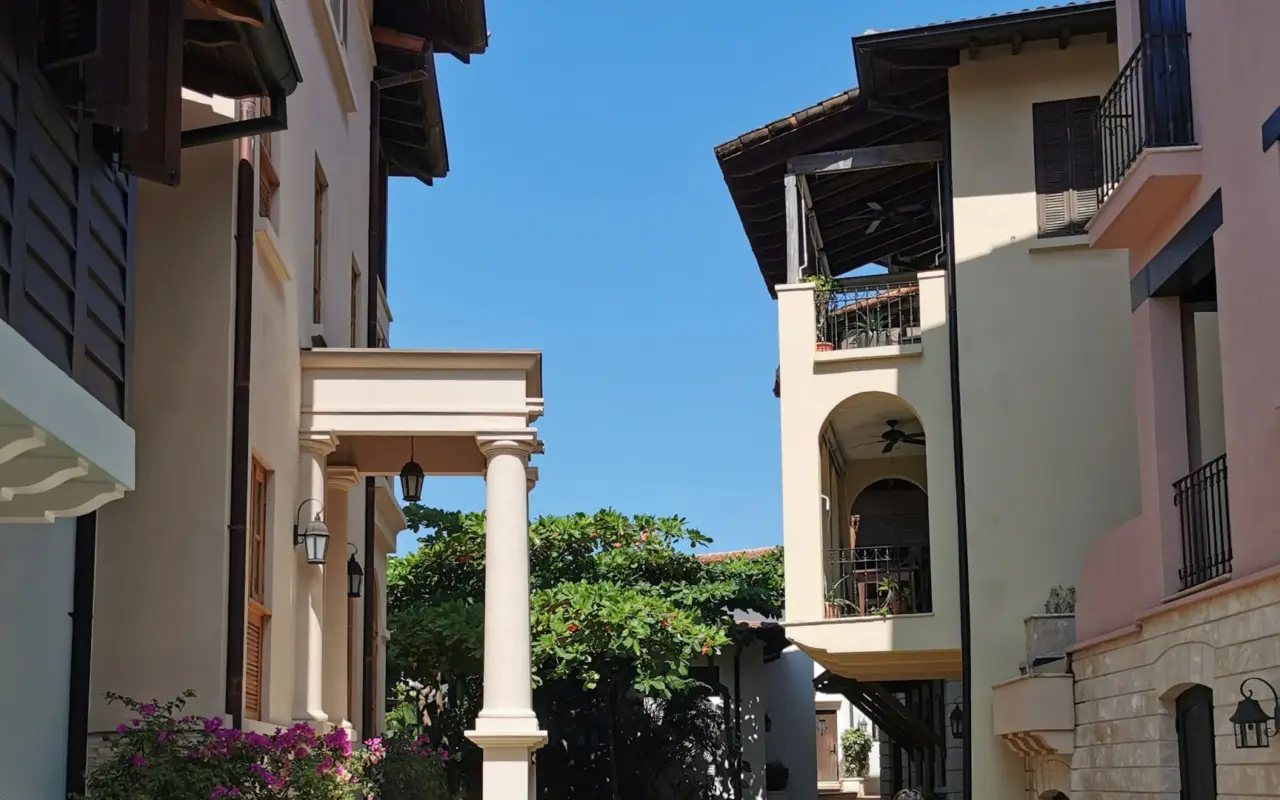
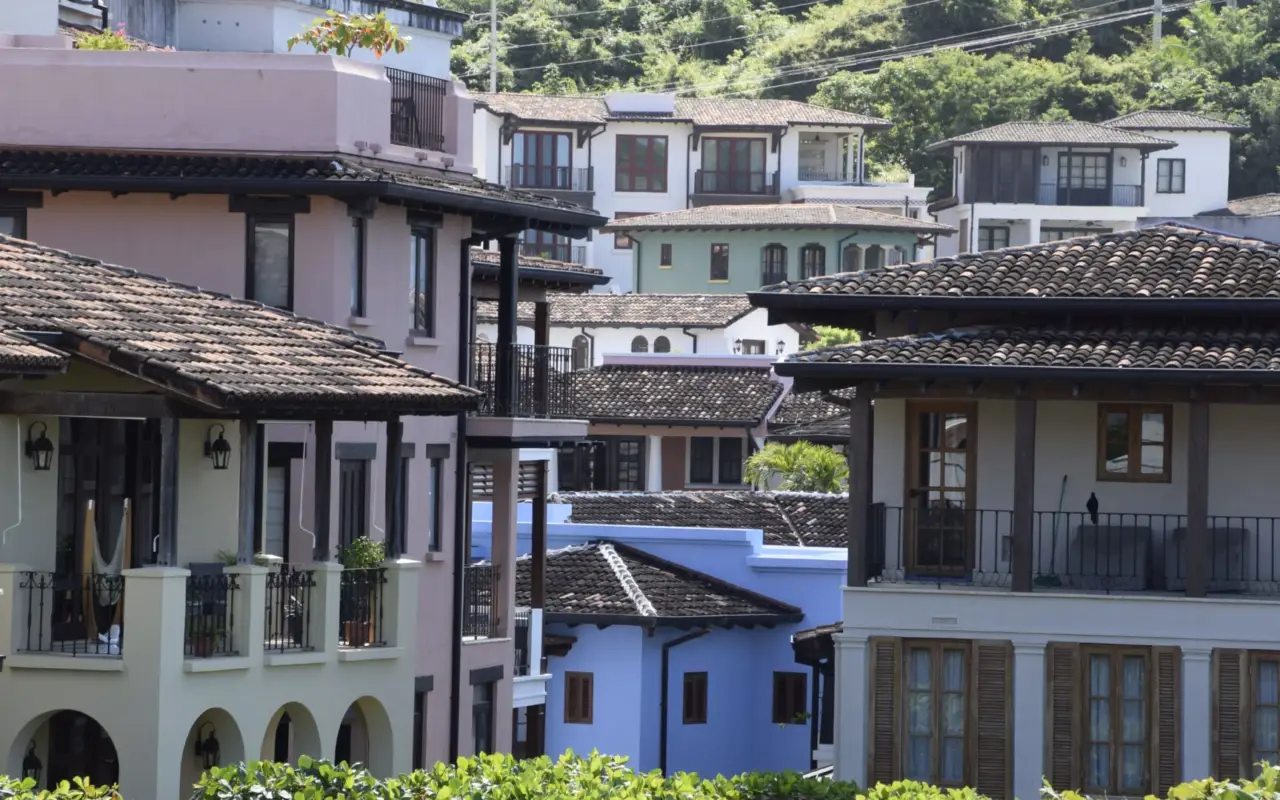
When I say “village,” it’s not just a figure of speech, because the“village of Las Catalinas”is a concept unique to Costa Rica. It’s a vast luxury real estate development that sought to recreate a Mediterranean-inspired village in an exceptional natural setting in Guanacaste.
Completed in 2007, this massive project deserves credit for avoiding the “fake” look—the main flaw of real estate projects of this type—and for offering a beautiful vacation destination. Now, it’s clearly not the most authentic site in Costa Rica, but it’s still worth a visit because of its unique atmosphere, and the beaches in this area are truly exceptional.
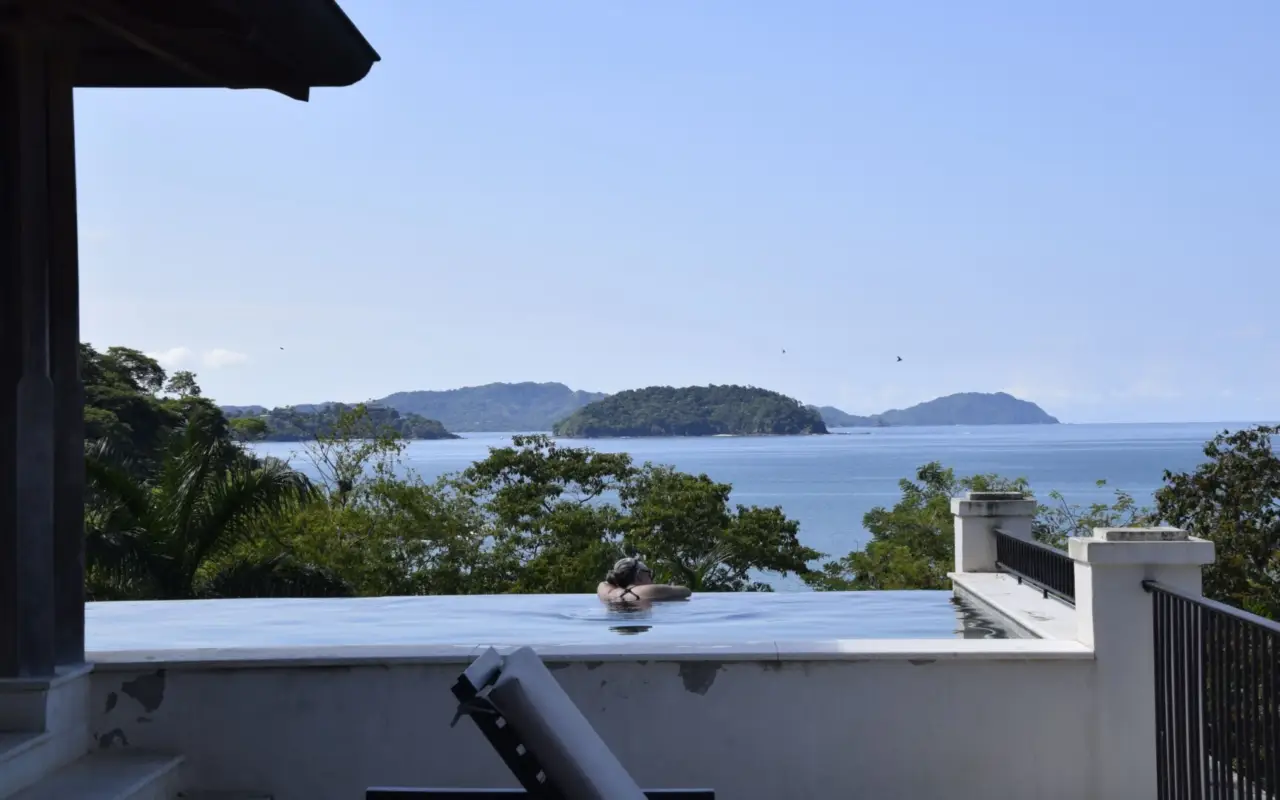
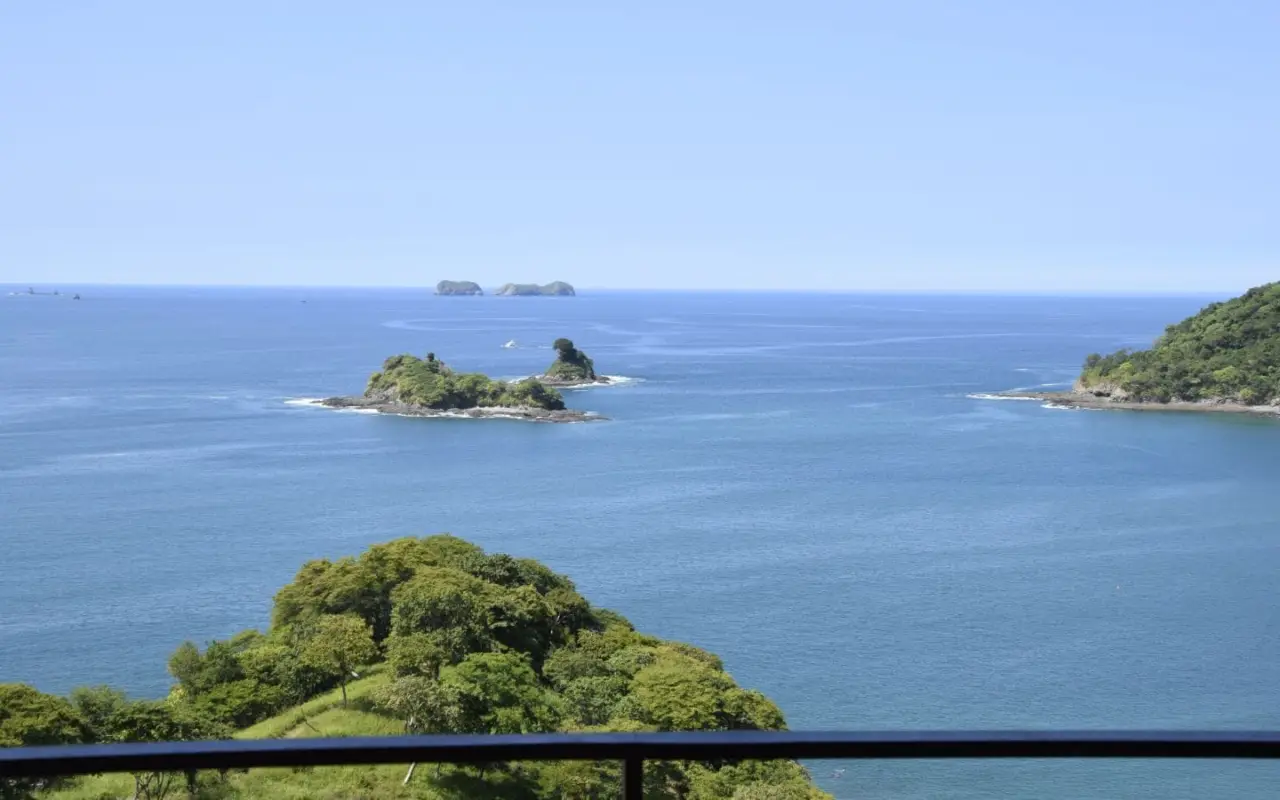
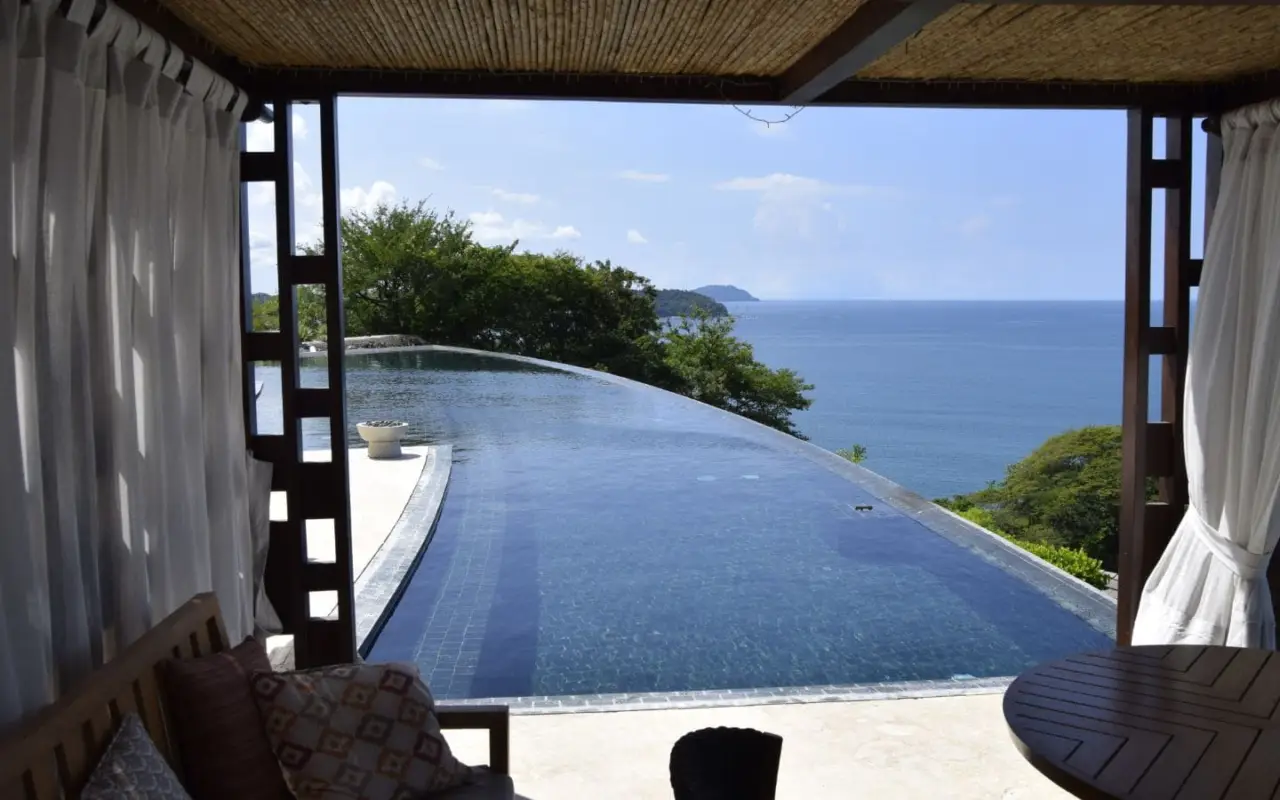
The village of Las Catalinas is home mainly to vacation homes, but if you’d like to stay there, you can at the 4-star Santarena Hotel , located in the center of the village. It’s a beautiful, fairly new hotel that offers the full village experience with a high-end feel. While I really liked the hotel’s style, with its refined decor, I was disappointed by a few details. That said , the rooftop pool, with views of the rooftops and the Catalinas Islands in the background, is truly delightful.
Right next to the village, you’ll also find the 4-star Casa Chameleon hotel , which overlooks the village. This hotel is particularly renowned in Costa Rica; it holds the Relais & Châteaux designation and, in my opinion, is the ideal hotel for a honeymoon: an exclusive dinner, a room with a private pool, an incredible sunset, and excellent customer service—everything is designed to offer you a romantic getaway.
Step 5: Nosara, the "surf, yoga, and chill" destination!
Off to Nosara, a luxurious and hedonistic beach destination!
This exploratory trip continued as I kept traveling south along the Pacific coast of Guanacaste.
I set out for Nosara, another renowned beach resort in Guanacaste, particularly popular with North American visitors. But it has a different vibe than Tamarindo or Flamingo, and it also differs from Papagayo—while luxury is certainly everywhere, it’s less flashy and more exotic.
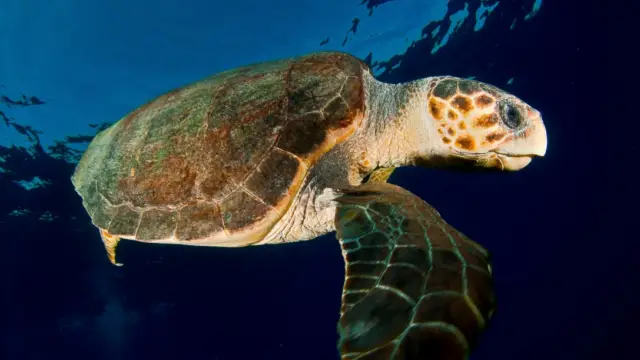
To get to Nosara from Potrero, I decided to take the road that runs along the coast (despite Waze’s instructions to take a different route). This route allowed me to pass near Playa Ostional and its national park. It’s an exceptional site, as thousands of turtles regularly come to this beach to lay their eggs. Be warned, though—it’s a challenging road that requires a good all-terrain vehicle.
Highlights of Nosara, a beach resort in the southern part of the Nicoya Peninsula
I spent two nights in Nosara to thoroughly explore the area, as it’s a destination with many attractions, but one we promote very little at Terra Caribea…That’s why we neededto update our knowledge, and I can already tell you that we’ll be working to feature this stop more prominently. Because, in my opinion, it fits perfectly into our vacation packages—especially as a final beach stop—while still offering a sense of “immersion in nature”.
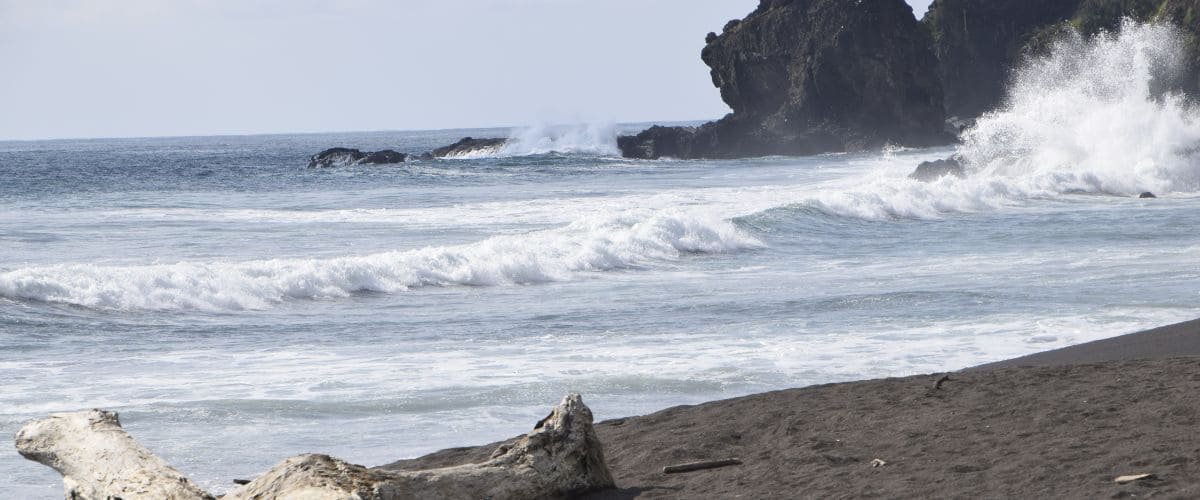
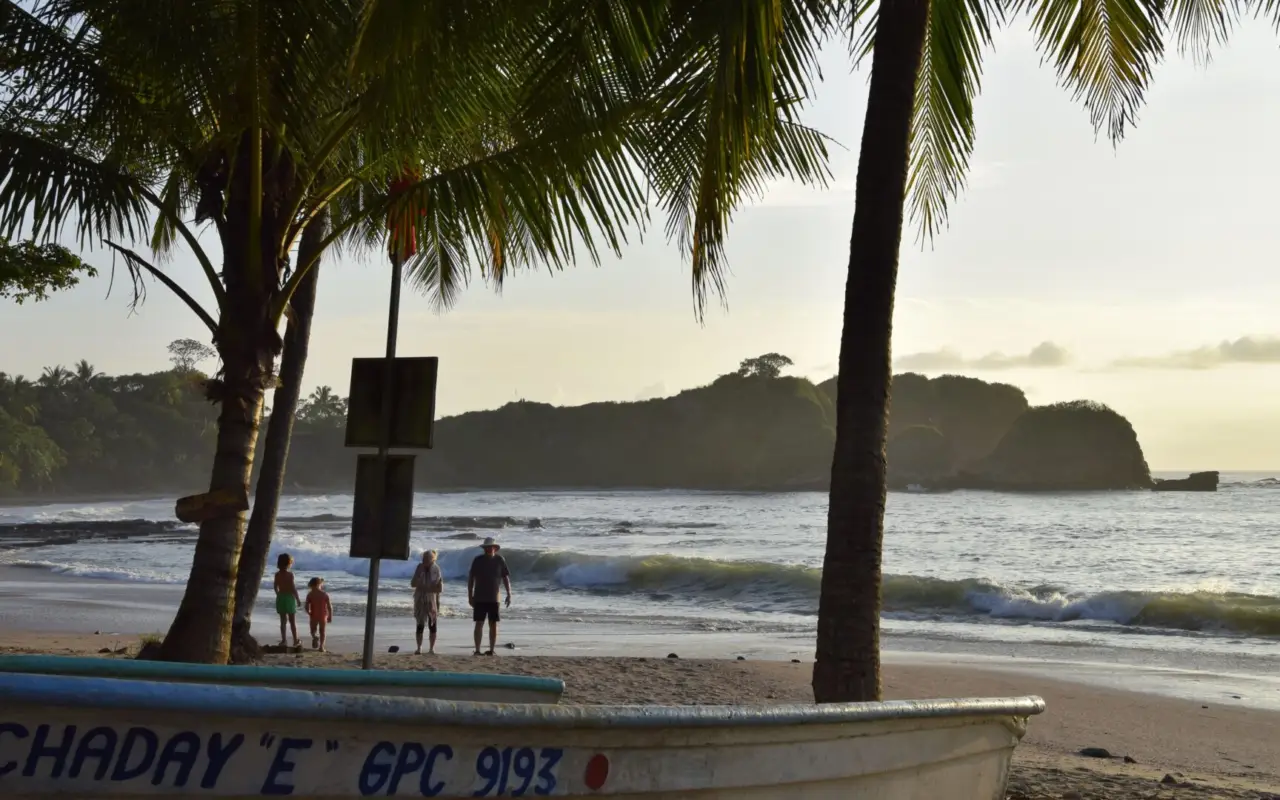
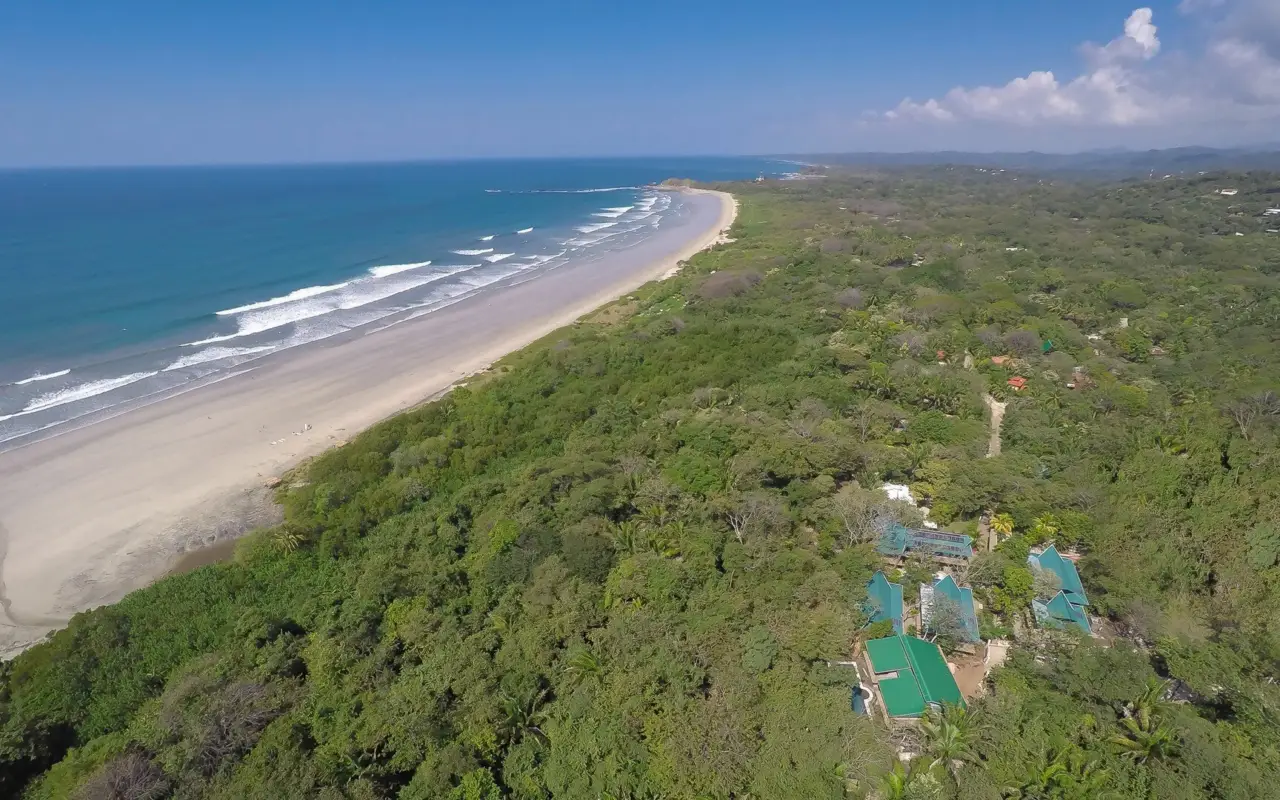
In fact, unlike other beach resorts—such as Samara, for example—Nosara doesn’t have direct access to the ocean, since it’s located within Ostional National Park, which requires respect for the coastal zone, consisting mainly of mangroves. This aspect offers a completely different perspective on what a “beach resort” might typically be like. However, Playa Guiones ( Nosara’s main beach) is easily accessible from the various hotels in Nosara, featuring a beautiful beach and several surf spots.
As a result, Nosara is just as focused on nature as it is on the ocean. And this is consistent with the destination, as what most characterizes this spot is its Zen vibe. Indeed, here, everything revolves around relaxation, yoga, and connecting with nature—but also surfing, which shares this hedonistic outlook on life. That said, it’s also an exclusive destination, as most accommodations are high-end and come with steep prices (much like Guanacaste).
My “favorites” in Nosara:
I visited many places during this leg of the trip, but I’d like to highlight two hotels that are among my favorites, as well as an activity I was able to enjoy:
The first hotel I want to highlight is the 4-star Tierra Magnifica, located in the hills above Nosara. I was lucky enough to stay at this sumptuous “boutique-style” hotel, which—thanks to its panoramic setting, its commitment to sustainability, the quality of its services, the richness of its cuisine, and the subtle elegance of its decor—provided me with an exceptional experience.
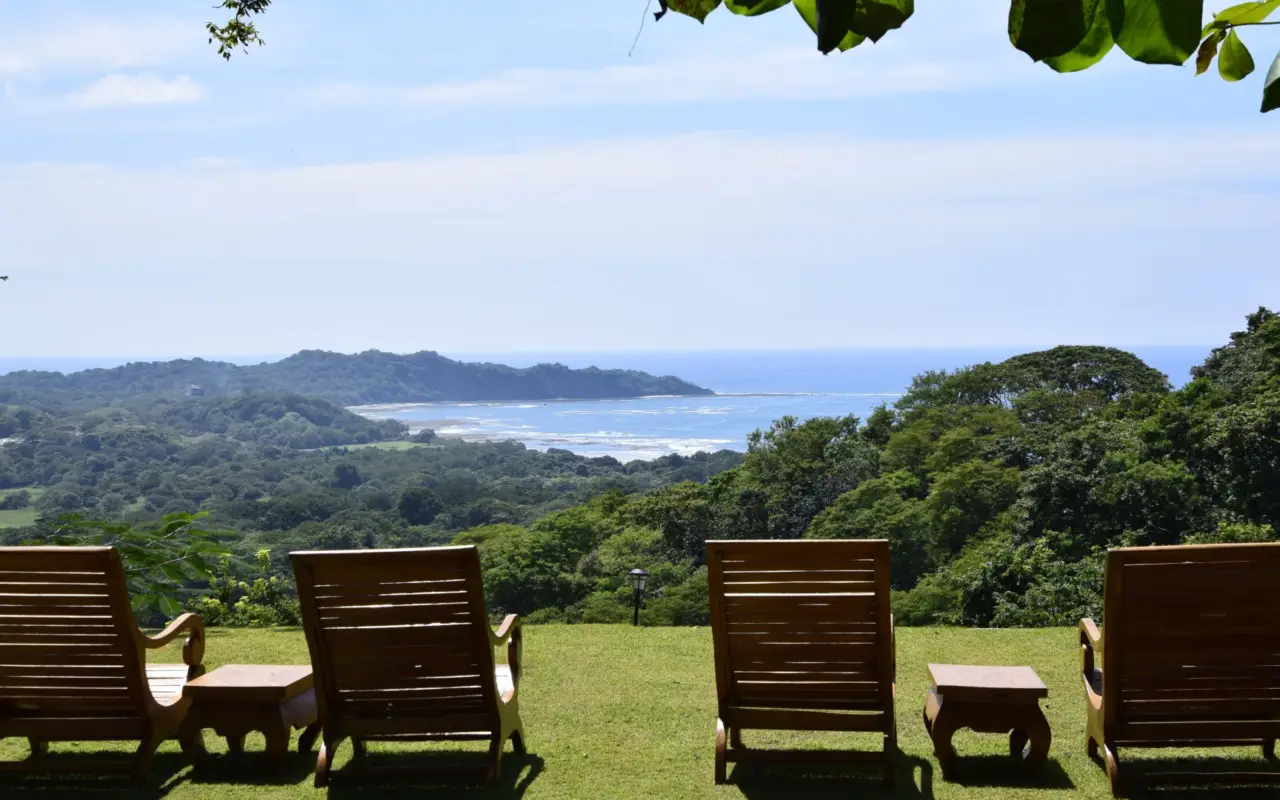
It offers all the attention to detail you’d expect from a property of this caliber, while also fostering a close rapport with the staff, who are particularly warm and welcoming. All of this really helps you feel relaxed, so you can fully enjoy your stay. What charmed me most about Tierra Magnifica was the stunning view from the restaurant and the yoga platform overlooking Playa Guiones, as well as the design of the rooms and the furniture.
That said, I also really liked the 3-star Olas Verdes hotel , which is actually located right next to Playa Guiones. As a result, this small property is one of the few hotels in the area with exclusive access to the ocean, featuring a trail directly accessible from the hotel that leads to one of the region’s best surf spots. This hotel won me over with its simplicity and the quality of its services.
It features minimalist yet tasteful decor and is strongly committed to more sustainable tourism, implementing numerous best practices while providing excellent customer service. It’s a top choice for families or groups of friends looking for a beautiful beachfront hotel that avoids the typical beachfront resort cliché .
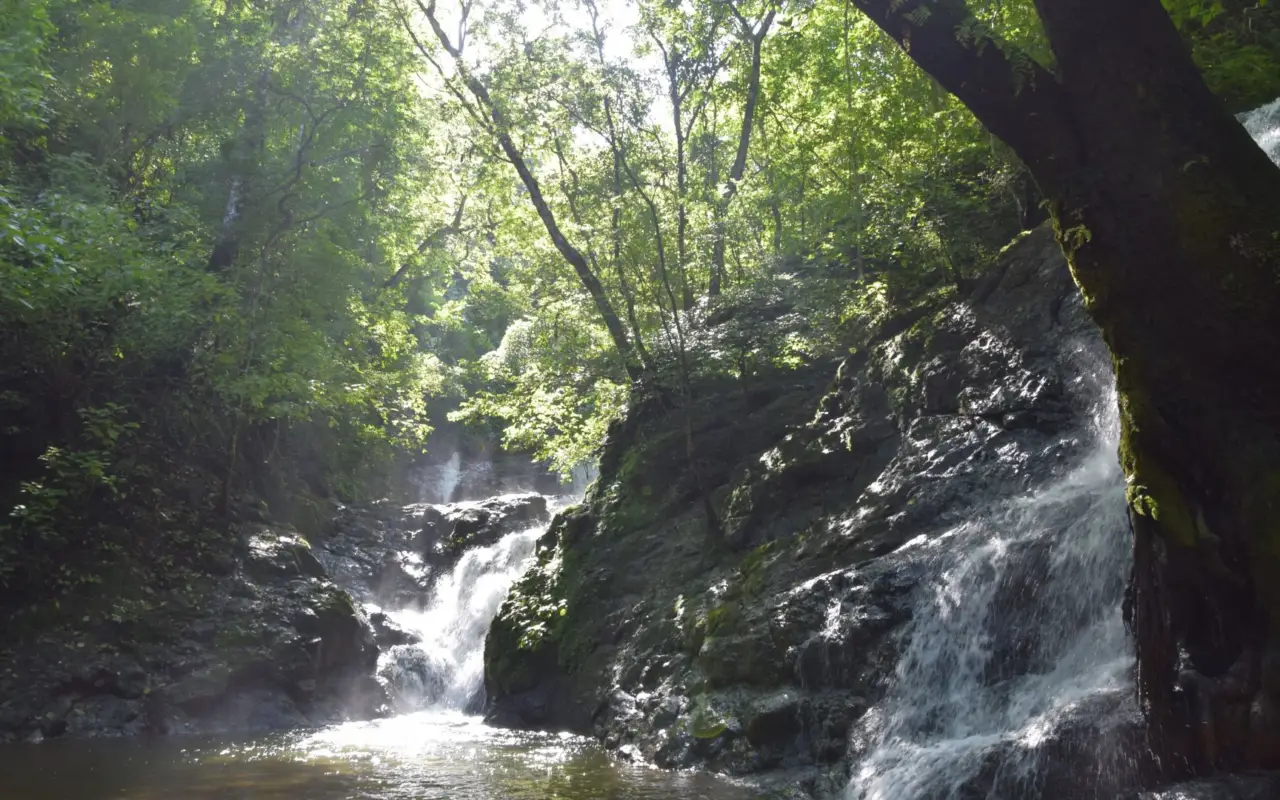
Finally, I had the chance to take a guided hike to the Malanoche Waterfall, a beautiful natural site located upstream from the village of Nosara. Access to the waterfall is through private property, which local guides are authorized to enter, but not the general public.It’s an interesting spot to visit near Nosara; you can get there by entering “Malanoche parking” into your navigation app to request access on the spot, even if it means paying an entrance fee. But this will always be less expensive than booking a tour with a tour operator to visit the waterfall (between $50 and $90). In reality, it’s a quick hike that doesn’t require a guide to get there.
Step 6: Playa Coyote, a stop off the beaten path in Guanacaste!
A little-explored area of the Nicoya Peninsula on the way to Santa Teresa!
It’s time to leave Nosara behind and continue our journey further south along the Nicoya Peninsula, heading toward “Playa Coyote” (near San Francisco de Coyote, a small village typical of the region).
This area was described to us as one of the few regions in Guanacaste that’s still off the beaten path ( it’s actually located on the border between the provinces of Guanacaste and Puntarenas). It was therefore an ideal stop on my trip compared to my initial plan, with the hope of finding, in particular, beautiful spots for campervan nights on more secluded beaches.
After one last visit to Nosara, I took the coastal road again, passing through the town of Samara, another well-known beach resort with a large community. Then I stopped for a delicious burger ata food court (the chef was French, as is the case at many establishments in Samara, which explains the quality of the dish—Cocoricoooo).
I then drove through Punta Islita, another beach resort featuring luxury hotels. From that point on, the road turned into a dirt track and became increasingly challenging… But our awesome Suzuki Jimny never showed any signs of weakness—no matter the climbs, the potholes, or the streams we had to cross, I was always able to keep moving forward!
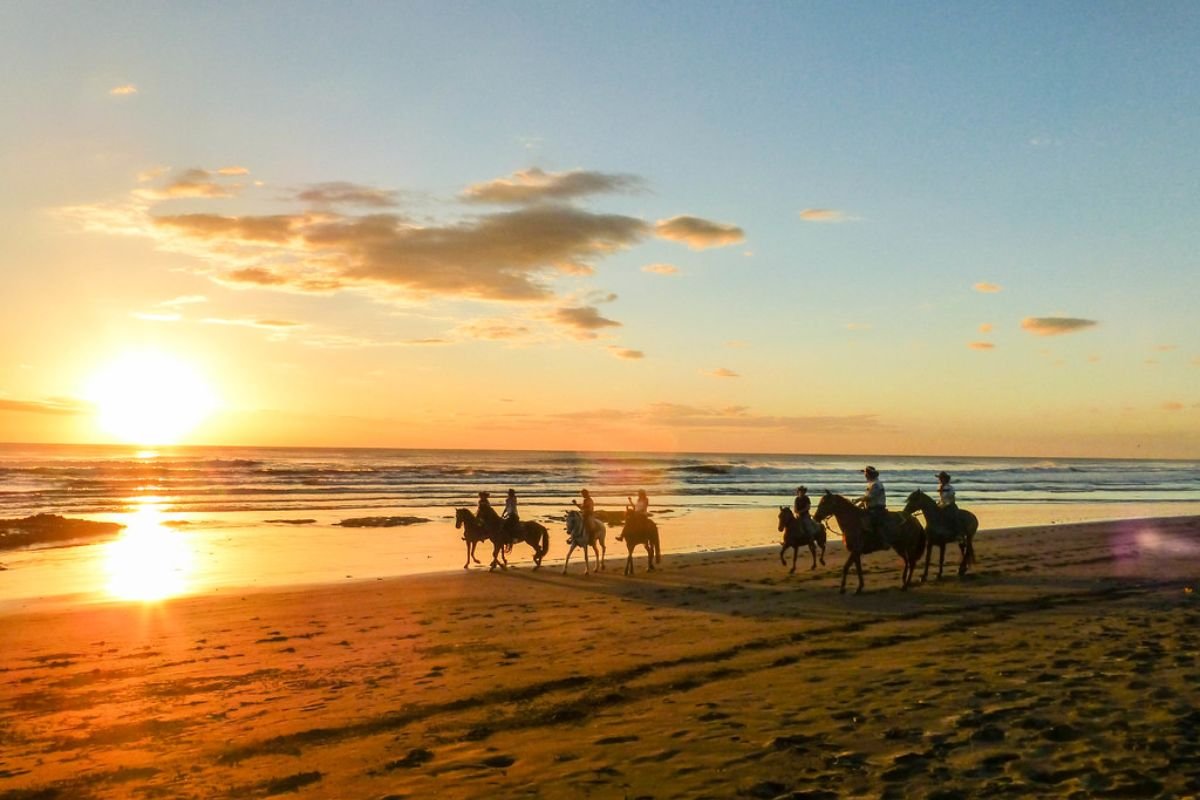
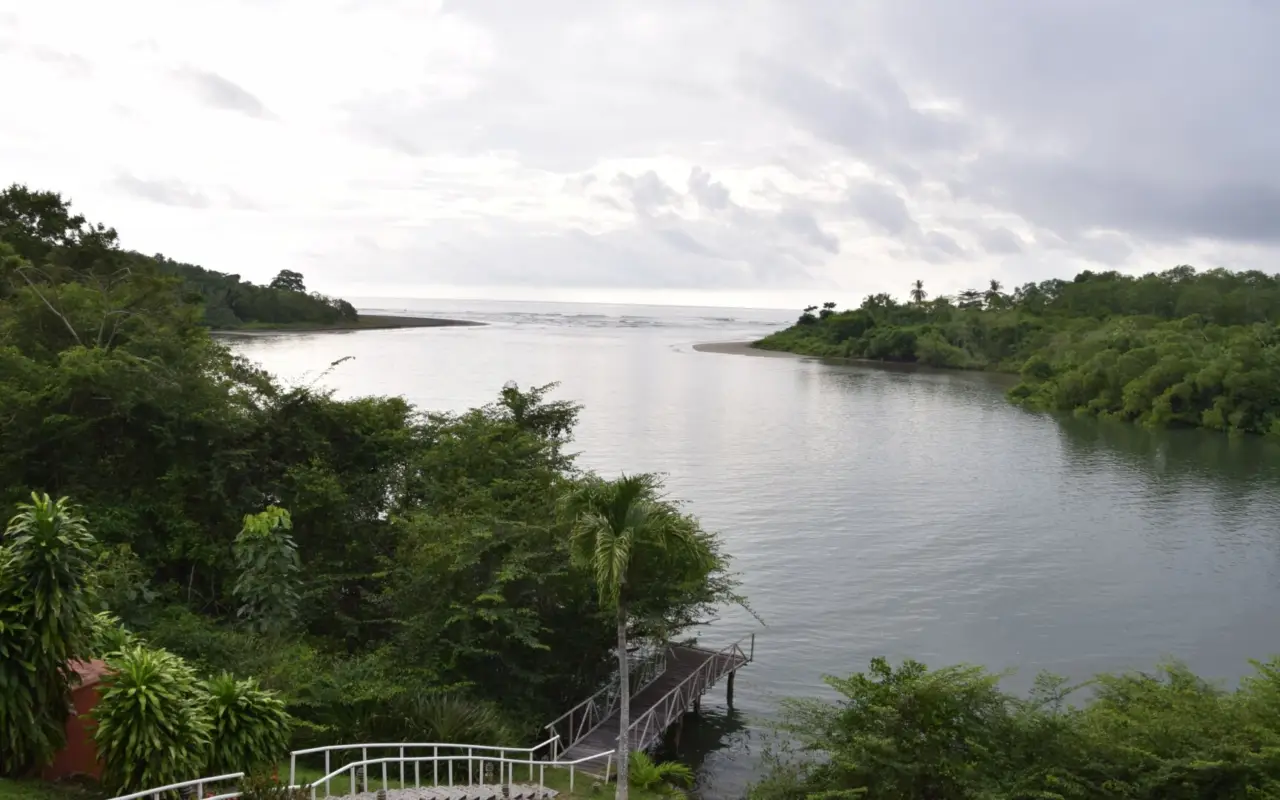
Until we finally arrived at Playa Coyote, a place that exudes tranquility, especially at this time of year, which marked the beginning of the dry season. Among the places I visited, I really enjoyed the 2-star Casa Caletas hotel, a historic property that used to be a ranch and is now a charming little hotel—perfect for an authentic beach getaway. The hotel offers superb horseback rides, while the area is home to many surf spots that are still relatively undiscovered. It’s a place that appeals both to visitors seeking peace and relaxation and to adventurers looking for new places to explore—especially in a campervan , which is perfectly suited to this area.
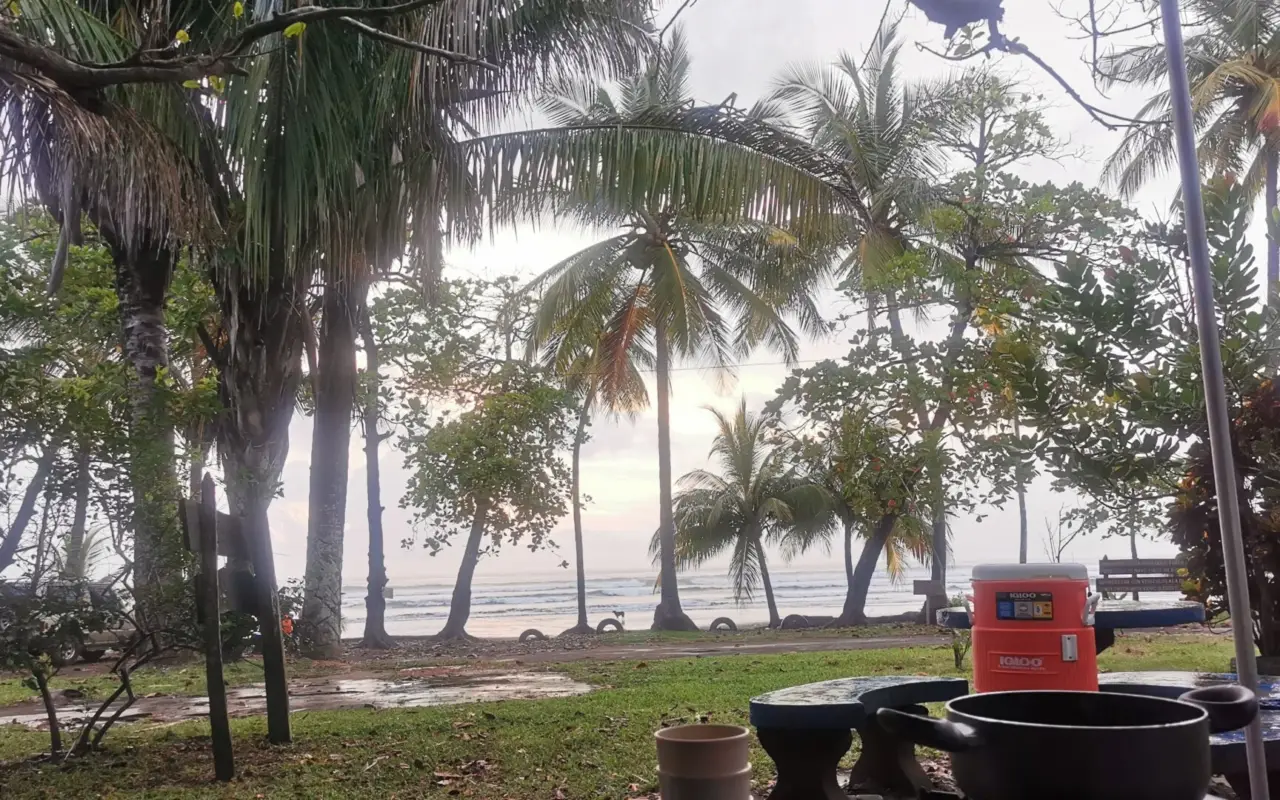
In fact, I spent a pleasant night wild camping in the parking lot at Playa Coyote, which, thanks to its distance from the most touristy sites, allows you to set up camp informallyand take full advantage of your campervan’s capabilities to treat yourself to a night where the sound of the waves and the sea air lull you to sleep.

Step 7: The Karen Mogensen Reserve—for a total immersion in the dry tropical forest!
A unique experience in the southern part of the Nicoya Peninsula—the perfect way to wrap up this reconnaissance trip!
Time has flown by—a sign of a successful fact-finding trip, rich in discoveries—because it’s already time to head back to San José…
But before that, there’s one last stop: the Karen Mogensen Reserve.
I was eager to explore this very unique tourist site, which I’d come across during my previous research. Then, during preliminary discussions with the director of the association in charge of managing this private nature reserve, I realized that the experience they offer could be truly interesting for our clients!
Well, I have to admit that when I woke up that day, I felt extremely tired and couldn’t eat anything right away—which was a significant detail given the schedule that awaited me… The Karen Mogensen Reserve’s shelter is accessible only on foot, with an initial hike lasting at least 1 hour and 30 minutes that involves a significant elevation gain. The hike starts from the reserve’s parking lot, which is actually the yard of a local resident, where you’re welcome to park your vehicle. To reach the parking lot, you’ll need to cross two small streams, which posed no problem at all for our Jimny.
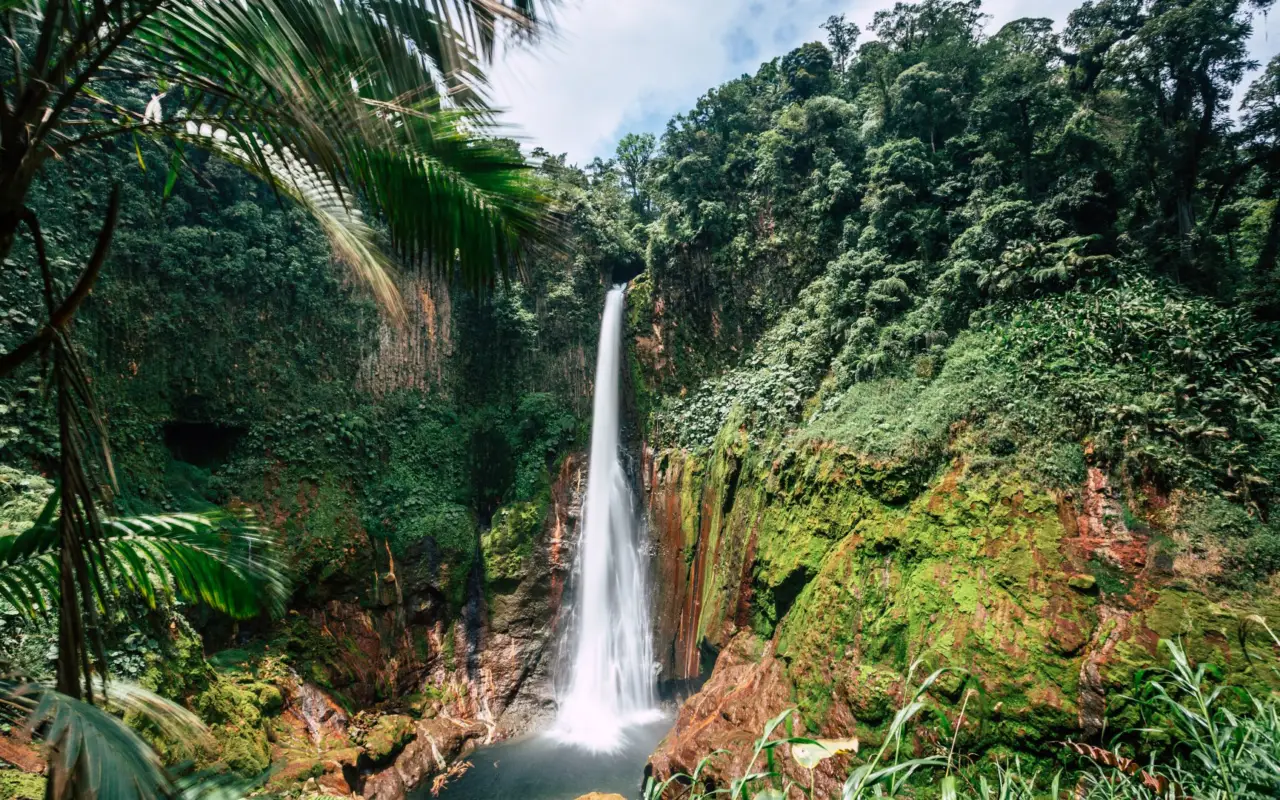
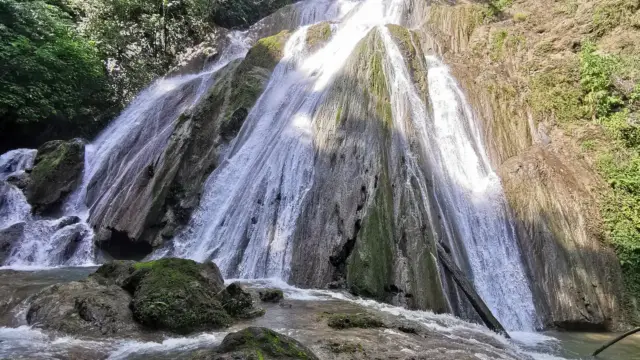
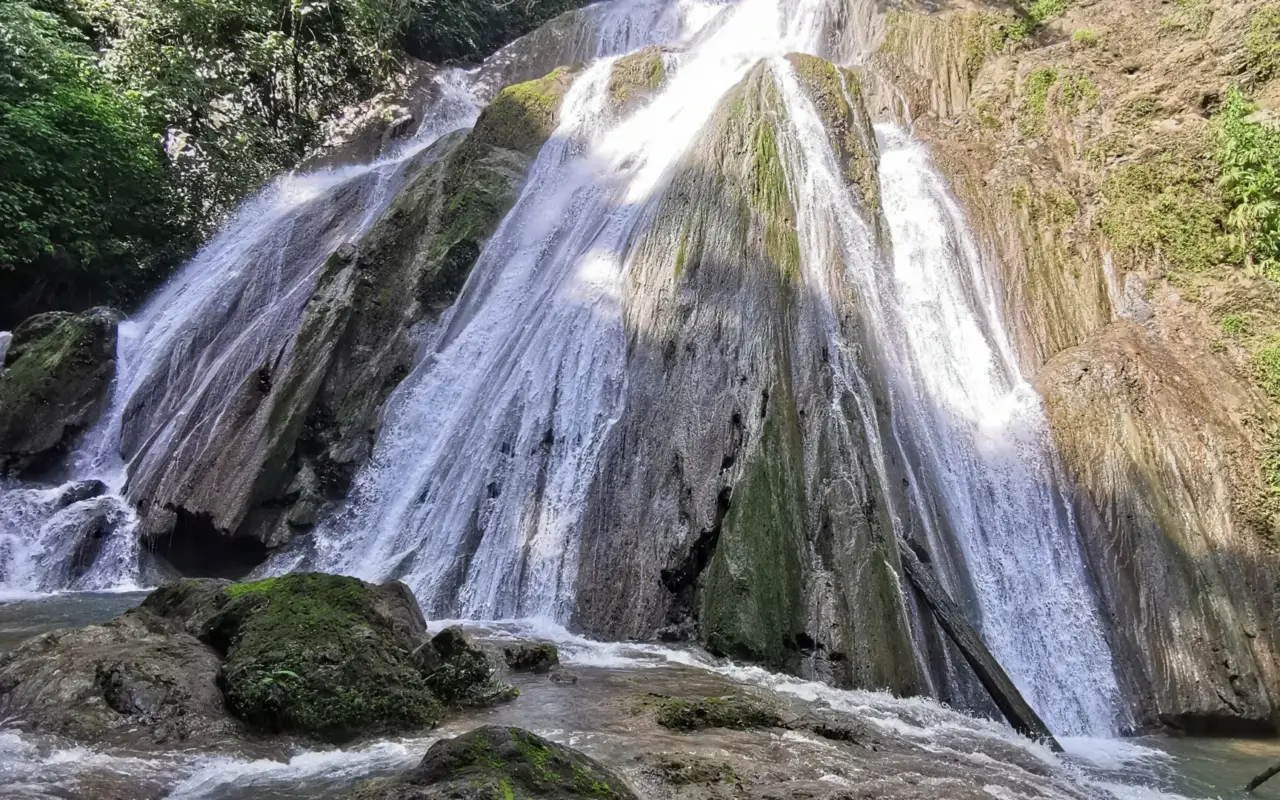
During this first hike, you’ll stop to admire an impressive waterfall —one of the reserve’s most famous sights—along with a stream that offers a stunning palette of emerald huesand numerous“pausas,”that is, natural pools where you can cool off. This first hike consists mainly of uphill climbing, which is made even more challenging by the stifling heat at this time of day. So, as you can imagine, with an empty stomach and feeling tired from the last few days of travel, it wasn’t exactly a walk in the park… But the kindness of the young guide who was with me and the beauty of the landscapes we passed through helped me push through (as did the lure of the food waiting for us further up).
A lush little paradise tucked away in the Nicoya Mountains
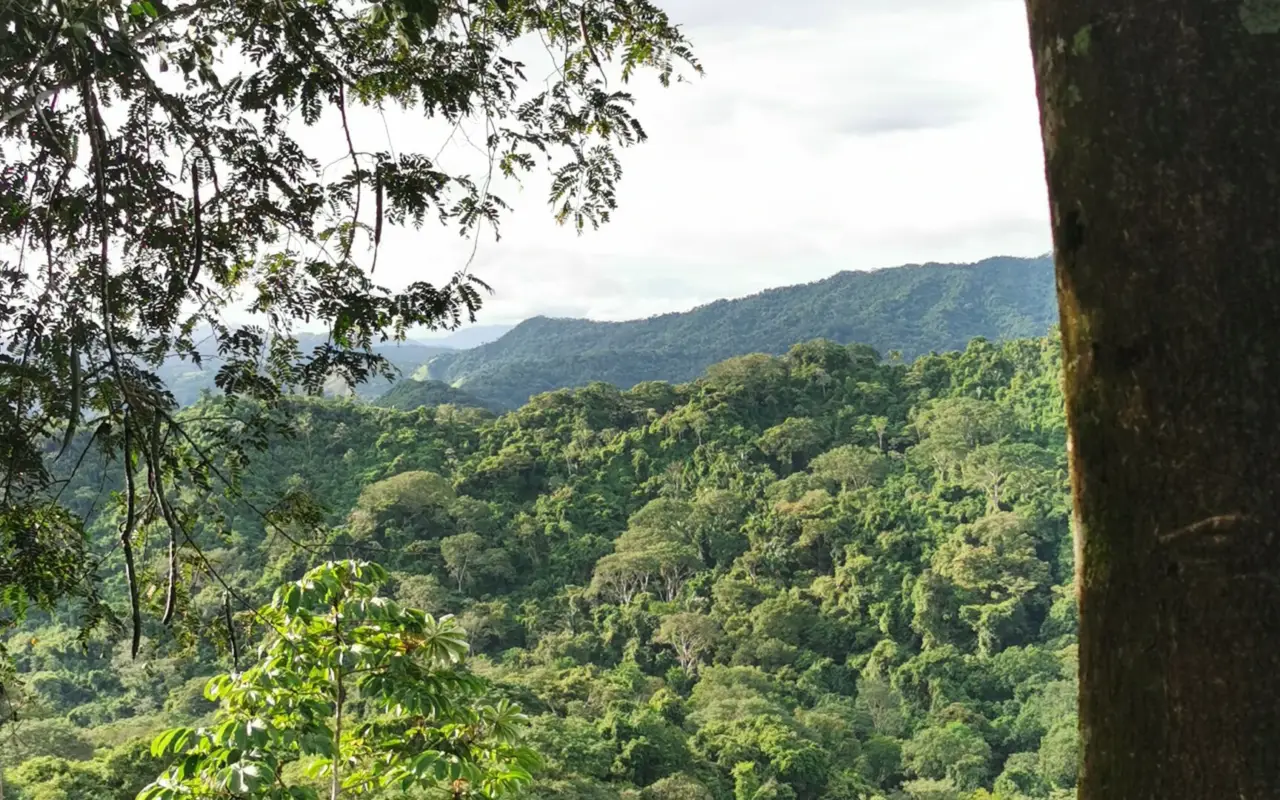
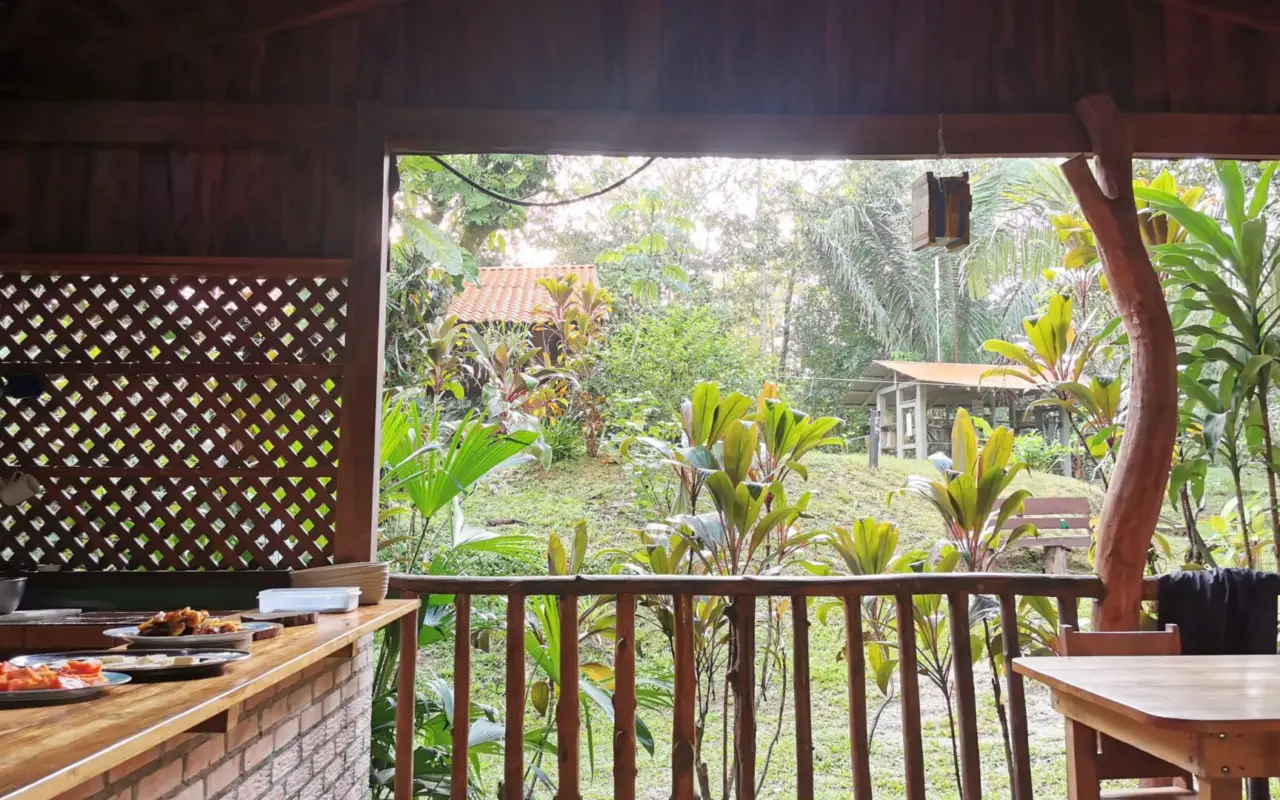
And what a joy it was once we arrived, because while the waterfall was an interesting discovery, the refuge itself was just as fascinating. Although rustic, it feels welcoming, with a refreshing breeze thanks to its high elevation, but above all, the lush vegetation that surrounds you.
What really charmed me about this project was the close connection I felt with the on-site team—both the two guides ( especially the younger one, who was always willing to accompany me on all the trails around the lodge) as well as the refuge’s cook, who was always smiling and treated me to delicious meals throughout my stay—with a special mention for the impromptu pancakes served at coffee time after a good hike.
At the moment, not all of the reserve’s trails have been restored yet, including the most important one: the “Italians’ Trail, ” which would connect the small town of Paquera to the refuge by crossing the entire mountain range. Those that are currently accessible nevertheless offer a satisfying exploration of the region and can provide at least a full day of hiking. In particular, you’ll have the chance to explore the unique features of the dry tropical forest, which is best experienced between December and February—when most of the trees are in bloom, giving the entire forest a golden hue.
We’re still fine-tuning some details to offer you the best possible conditions for exploring this project, but I sincerely hope we’ll soon be able to offer this option, which I believe is a top choice for hiking enthusiasts seeking experiences off the beaten path.
Conclusion: Yes, Guanacaste can be an authentic destination that holds some wonderful surprises!
If the goal of this trip was to explore Guanacaste in search of more authentic experiences in this highly touristic region, then I’d say it was a success, because I truly felt like I was having a unique and different experience.
First of all, the timing helped keep tourist crowds to a minimum at all the sites I visited— even the most popular ones—since November truly marks the start of the high season (most prices change during this month). In terms of rainfall, I was really lucky, as there were only three rainy evenings out of ten days of travel—just enough to keep the vegetation lush and prevent the roads from getting too dusty.
Plus, traveling in a campervan—an all-terrain vehicle capable of handling all the roads in Guanacaste—allowed me to truly get off the beaten path and take small roads not typically recommended for tourists. This immediately adds another dimension to your trip, with a sense of adventure that stayed with me throughout the entire stay.
Finally, the stops and accommodations we selected (or campsites) allowed for a well-rounded experience, in line with the vision of tourism we strive to offer our clients. Most of the service providers offered an exclusive, high-quality experience, often with a notable ethical and ecological commitment, and are located in areas less prone to mass tourism.
If this travelogue has inspired you and you’d like to have a similar experience, I invite you to check out the suggested itinerary below, which is directly inspired by my own journey. I simply changed the order of the stops, as it seemed more interesting to start with the Karen Mogensen Reserve, then head up the Pacific coast, and finish with some relaxation at Rio Perdido!
Cristo, a writer for Terra Caribea and adventure lover!