Learn about Costa Rica’s history through the Bellavista Mural in San José!
Article written by Cristo De Franceschi, a contributor to Terra Caribea from 2022 to 2024
At the startof 2024, as I was enjoyingthe “Art City Tour” of San José for the first time and visiting the Bellavista Fortress at night with friends, I thought it would be interesting to present Costa Rica’s history in detail through a guided tour of this museum. After all, this site has become essential to the country’s heritage and history.
The project quickly took shape and was incorporated into the redesign of the“The Country at a Glance ” page , which allowed me to take a historical approach to Costa Rica—one that was further enriched by this series of videos filmed at the National Museum of Costa Rica on March 15.
For the occasion, I was joined by my Costa Rican colleague Esteban, a true expert on his country’s history, with whom I enjoyed wandering the aisles of the Cartel de Bellavista and exploring its various exhibits chroniclingthe history of the “Green Gold” country.
As you can see, the idea is to bring you a vlog,with individual videos illustrating the major periods and events in Costa Rica’s history. We’ll coverthe Pre-Columbian era, moving through the Conquest and then Spanish rule, before focusing on the modern era, which began with Independence and the founding of the nation of Costa Rica, and will conclude with more recent events such as the Civil War of ’48 and the economic crisis of the 1980s.
Enjoy the read—the Terra Caribea team!
The official promotional video for the National Museum of Costa Rica
1. Introduction to the Bellavista Cartel - National Museum of Costa Rica
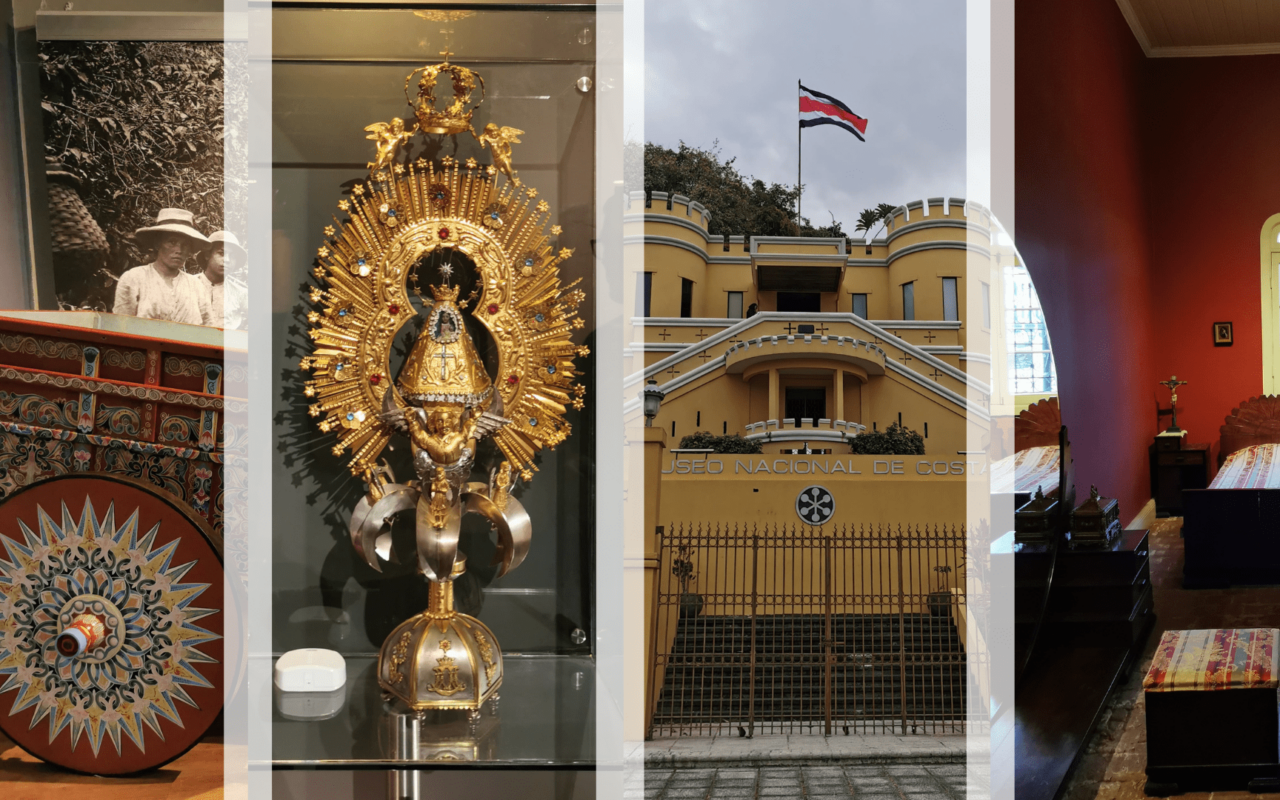
First, as a follow-up to the previous video, we’d like to introduce you to the Bellavista Cartel, a symbolic landmark of the city of San José that houses the National Museum of Costa Rica—the perfect place to explore the history of this smallCentral American country.
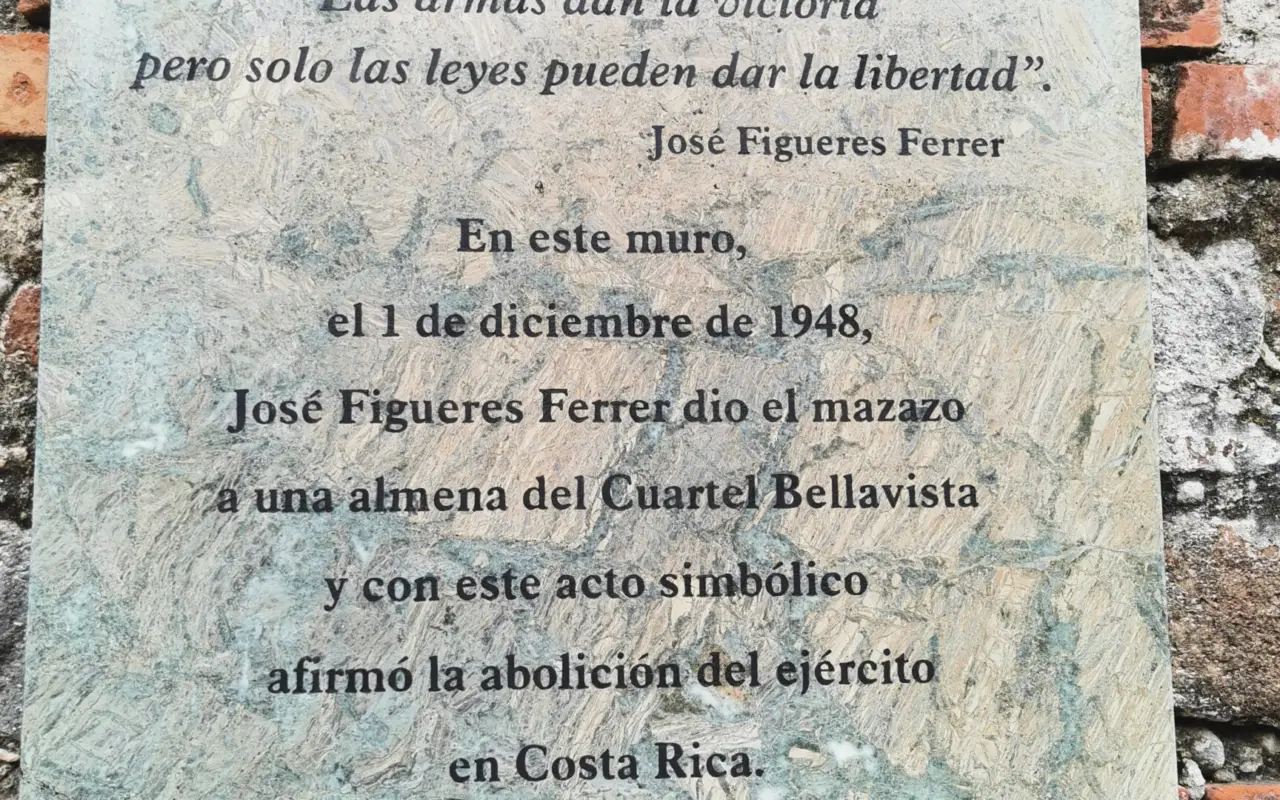
A veritable fortress located in the heart of the capital, this building originally served a military purpose as the headquartersforthe Costa Rican army. However, as you know, one of Costa Rica’s defining characteristics is that it abolished its national army, and this event is directly linked to the history of the Cartel. In fact, it was here that a section of the fort’s wall was symbolically demolished to represent the fall of the army.
This landmark event followed the 1948 civil war, a tragic moment in history that claimed thousands of lives—and traces of the bullets fired during that time are still visible in various parts of the fort… Notably on the eastern slope, from which this first video was filmed, introducing the site and its historical role as the ideal place to come and commemorate the cultural heritage ofthe Ticos!
Sorry about the audio sync issue—this was the first video in the series, but it gets better from there!


2. Introduction to the Bellavista Cartel - Inside the National Museum of Costa Rica
Let’s continue our exploration of the Bellavista Cartel and the interior of the National Museum of Costa Rica. This second video also introduces you toEsteban, a travel agent at Terra Caribea since 2023 and a native of Costa Rica. If you’d like to learn more about Esteban, I invite you to read his personal profile on the Our Team page.
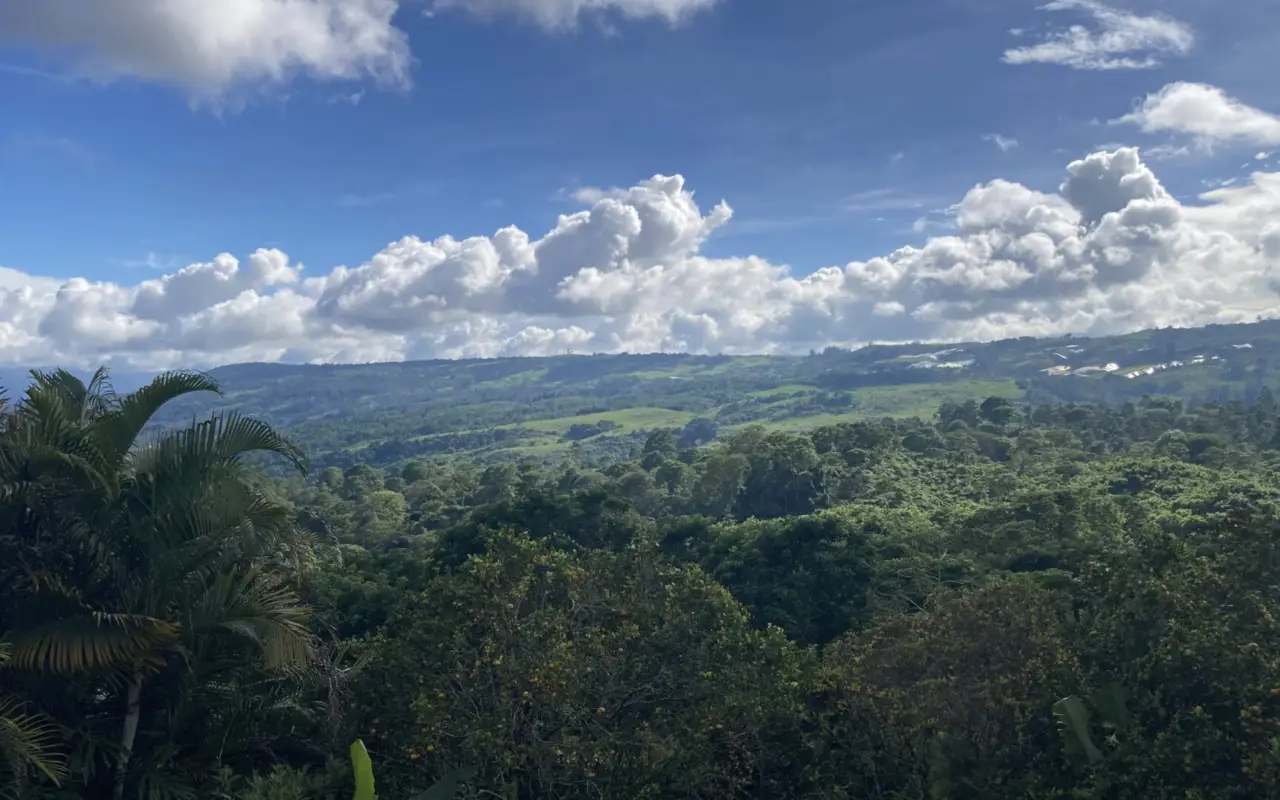
In this video, Esteban gives you a glimpse of “Bellavista”—the panoramic view of the Central Valley visible from the Cartel’s central courtyard. This strategic location was, of course, the reason the fort was built here, to provide a commanding view of the capital.
3. Pre-Columbian Era in Costa Rica—Stone Spheres
Starting with this episode, we’ll delve into the details of the country’s historical timeline, beginning with the pre-Columbian era—a vast historical period spanning from prehistory to Christopher Columbus’s discovery of the Americas in 1492.
You might say that such a long period doesn’t really make sense historically speaking, and you’d be right… After all, treating such a vast span of years as a single, homogeneous period is essentially a simplification—a consequence of a lack of knowledge and research on pre-Columbian civilizations in Costa Rica, which prevents us from truly capturing the nuances of this vast chapter of history.
However, one fact worth highlighting is the transition from nomadic to sedentary populations, which were organized around the figure of the cacique—the village chief—who held administrative, spiritual, and military roles. This model took hold during the first millennium and persisted until the arrival of European colonists in the 15th century.
The main archaeological remains in Costa Rica that provide insights into the country’s pre-Columbian cultures are the stone spheres, which are very common along the southern Pacific coast—one of the cradles of indigenous populations ( see the Boruca people). Today, a large number of stone spheres of this type can be found throughout the country; in fact, they are quite common. While not all of them are necessarily from that era, it is intriguing that the scientific community has still not reached a unanimous consensus on either how these spheres were made or what their purpose was.
To learn more, I invite you to read this National Geographic article: https://www.nationalgeographic.fr/histoire/le-mystere-des-spheres-de-pierre-du-costa-rica
4. Pre-Columbian Era in Costa Rica—The Crafts of Ancient Tribes
We continue our exploration of the pre-Columbian era with a gallery dedicated to the rich tradition of craftsmanship and everyday objects of Costa Rica’s indigenous peoples.
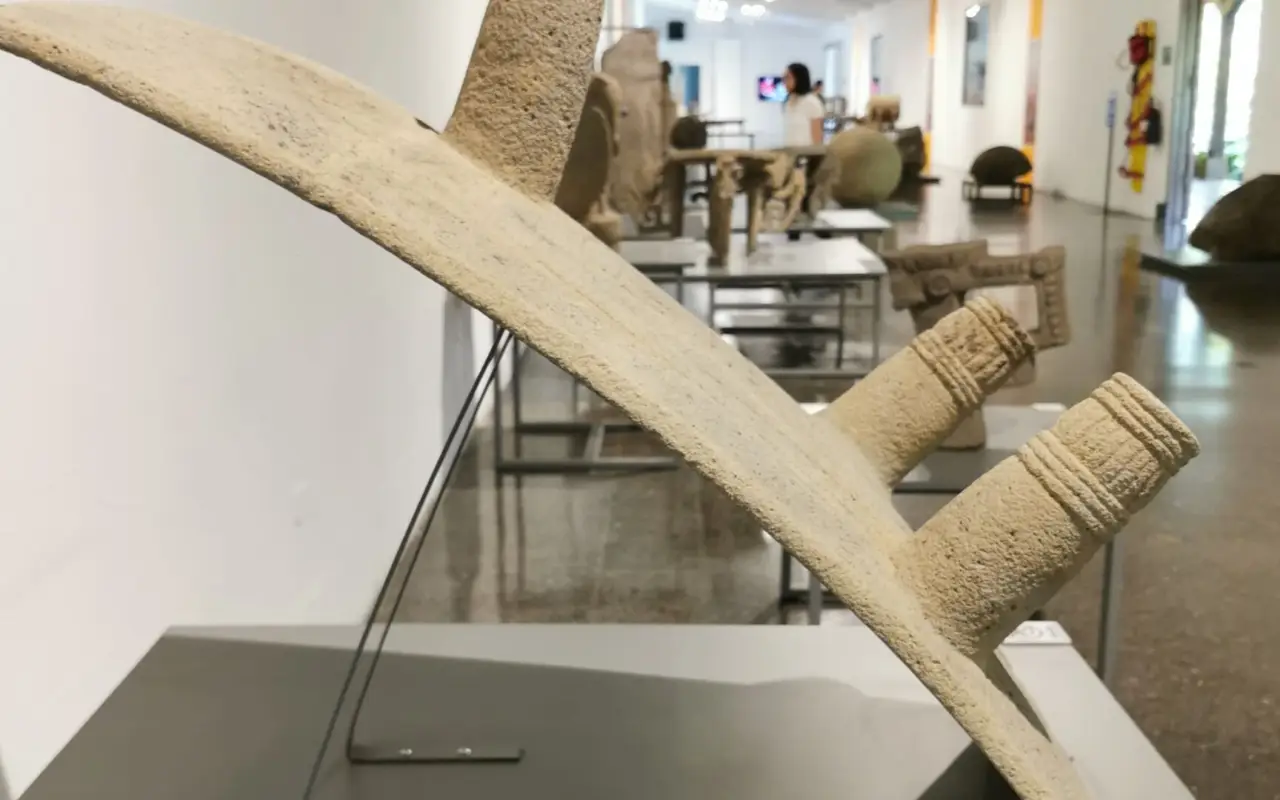
We will focus in particular on a metate, an essential object for Mesoamerican peoples, one of the original centers of settlement in Costa Rica. Indeed, due to itsgeographical location as an isthmus, the country has always been a crossroads between influences from the peoples of South America (whose history of stone spheres is more closely linked) and those of Central and North America, where the major traditional Mesoamerican societies developed.
These societies used“metates” to grind various types of grains, particularly corn—an essential crop for the local cuisine that has been used since time immemorial to make tortillas, which are consumed daily in this part of the world (the equivalent of bread for Europeans).
5. The Conquest Era: The Conquistadors
As I mentioned earlier, we’re going to take a leap back in history, moving directly to the period of the Conquest, which began with Christopher Columbus’s discovery of the Americas and was followed by numerous expeditions that allowed Europeans to explore this “New World”!
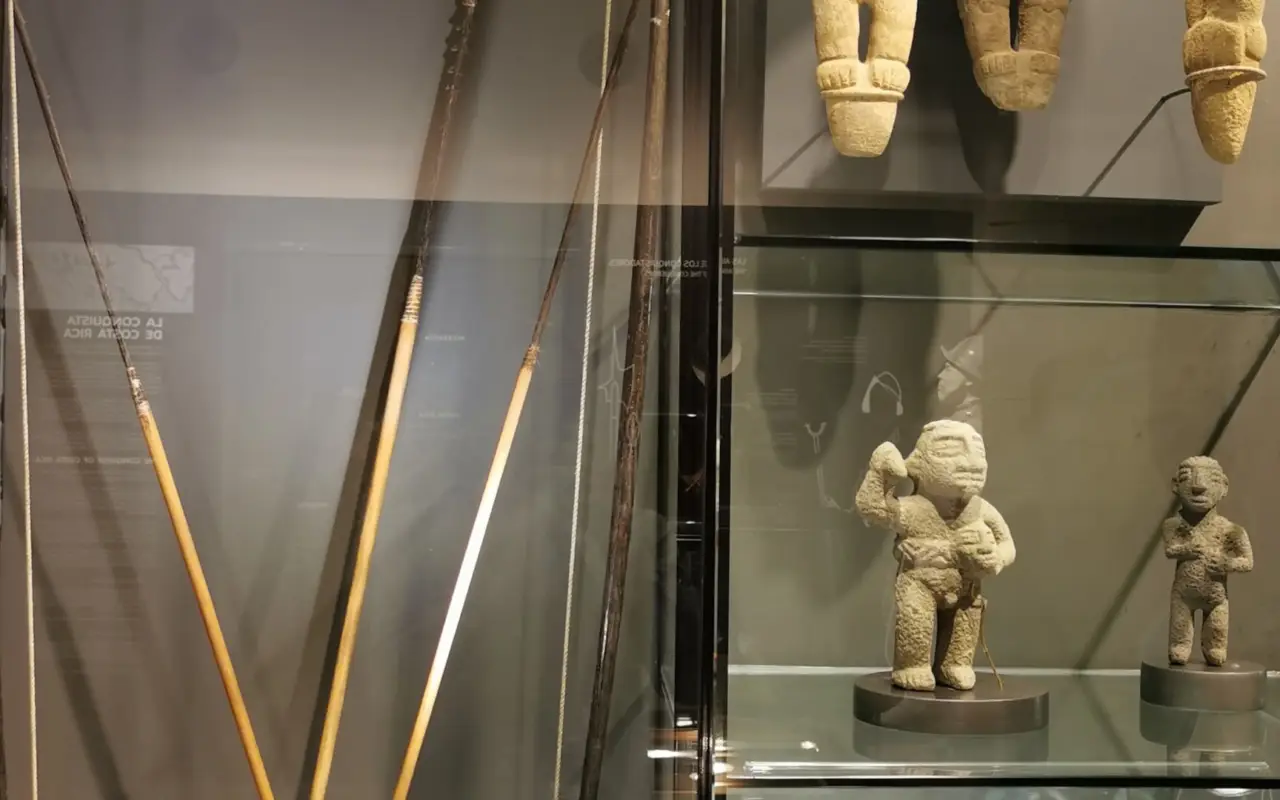
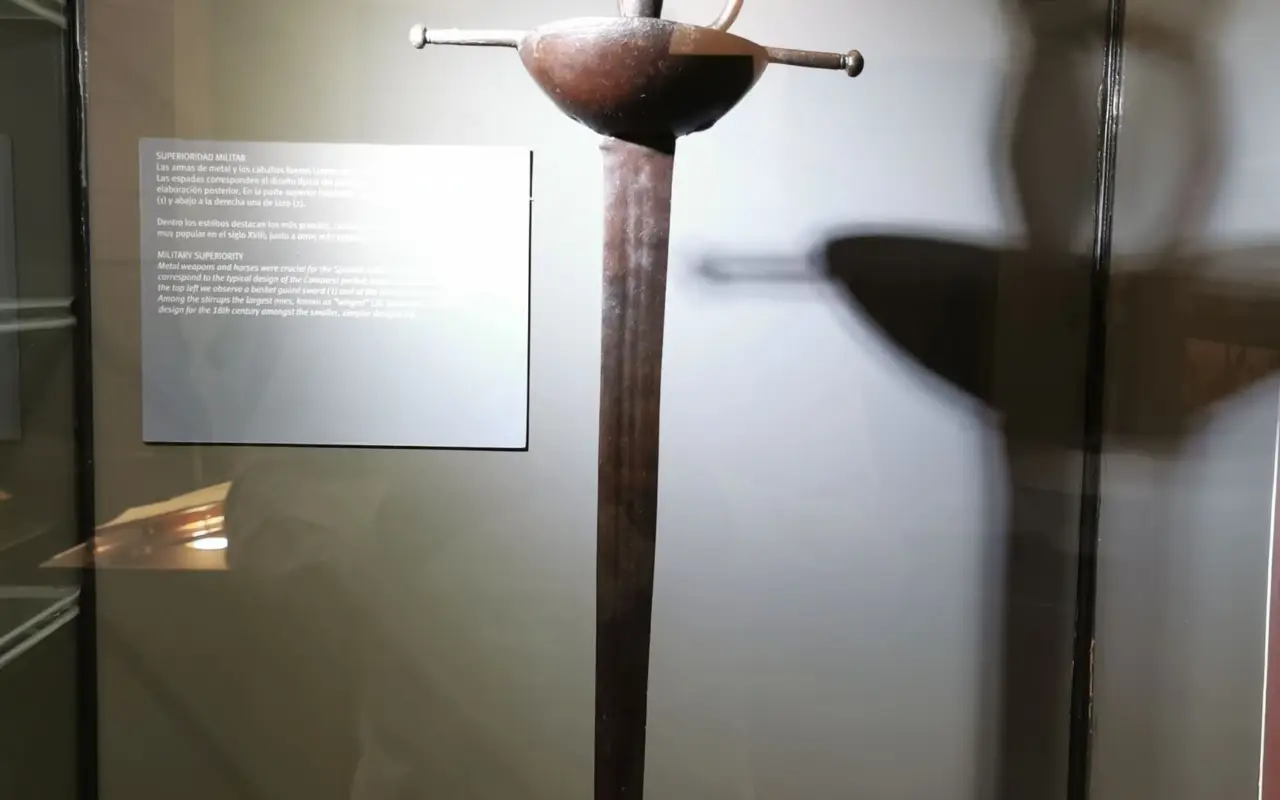
This pivotal period in American historyis embodied by the figure of the Conquistadors—these envoys from the Kingdom of Spain served as the military force behind the conquest of much of South and Central America. The subject is, in fact, quite controversial today, as the Conquistadors were henchmen, often with a dark past: former criminals, bandits, and other outcasts of society, who were offered a new life across the ocean under the guise of serving the Spanish Crown, the world’s leading power at the time.
The Conquistadors were thus responsible for numerous acts of pillage and massacres of pre-Columbian tribal populations in both South and Central America. Not to mention the thousands of deaths they unwittingly caused by bringing infectious diseases from the Old World —diseases unknown in that region—which wreaked havoc on the local population…
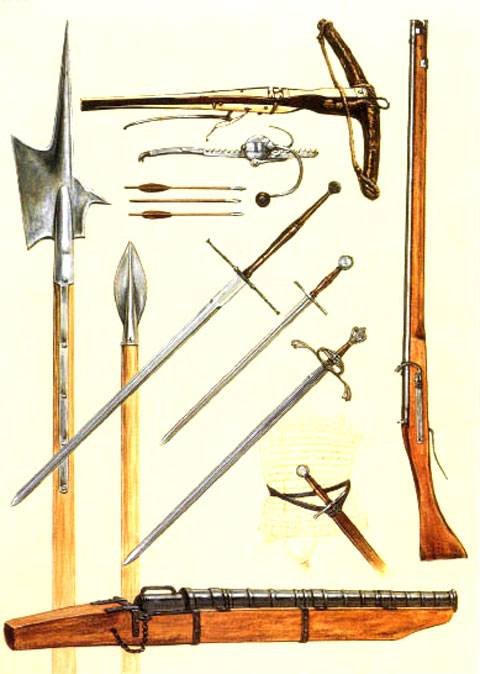
The tension surrounding the Spanish Conquest today is particularly well illustrated by recent events, including the discovery of the “San José treasure, ” a legendary Spanish galleon said to carry one of the largest shipments of precious stones in history, which is about to be recovered and whose ownership is the subject of debate.
If you’d like to learn more about this topic, you can check out this article from the travel-inspired media outlet Petaouchnok:
6. The Conquest Era: Local Indigenous Tribes
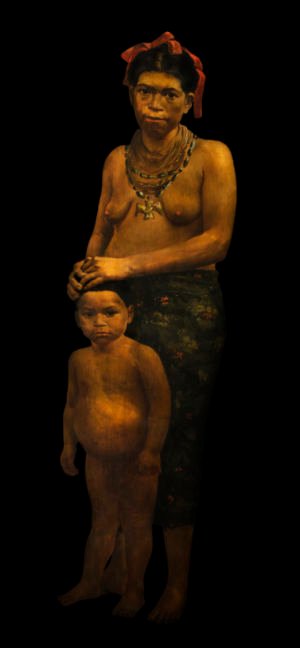
Let’s now turn our attention to the indigenous peoples who inhabited Costa Rica when the Spanish first discovered the country. Where did they live? How were they organized?
When the first conquistadors landed in Costa Rica, the indigenous population is estimated to have been 400,000, spread across the entire current territory in various ethnic groups living more or less in harmony.
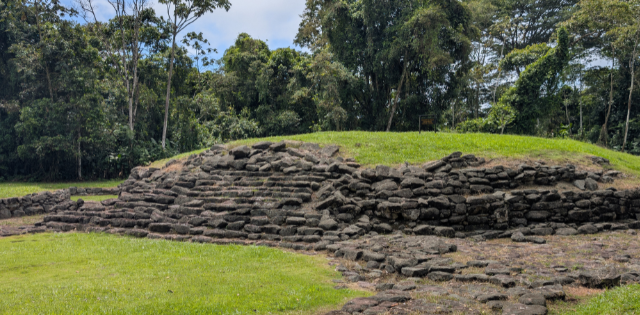
Two regions are worth highlighting, as they were home to the largest concentrations of people: the northern Pacific coast (the Kingdom of Nicoya and the Western Plain) and, above all, the Central Valley, which can be considered the main hub of the Costa Rican population and is home to the country’s largest archaeological site: the Guayabo site, located near the Turrialba volcano.
These indigenous populations are thus divided into different ethnic groups, some of whose names are still known today, such as the Bribris in the Talamanca Mountain Range, or the Burucaca on the southern Pacific coast (see“Boruca”). These tribes formed increasingly sedentary societies, organized along the lines of cacicazgos—which can be translated as “chiefdoms”—linked to the famous figure of the cacique, whose administrative, religious, military, andsocial roles are ensured through a system of hereditary succession, justified by the importance of family lineages.
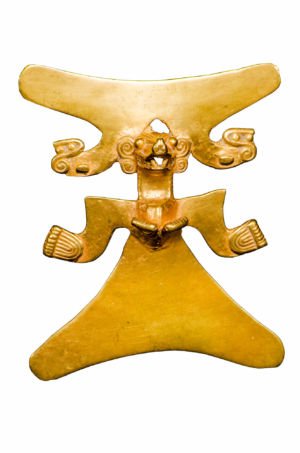
The caciques and their lineages often concentrated the symbols of power—most commonly represented by gold and precious stones—as exemplified by the King of Talamanca, whom I introduce in the video and who possesses a magnificent gold adornment.
It was this supposedabundance of wealth, made possible by contact with these early tribes and their leaders, that gave Costa Rica its distinctive name, which could be translated as “Rich Coast.” Ultimately, the Conquistadors would quickly realize that these riches were superficial and derivedfrom distant trade. Here, nature reigns supreme, with a territory that is generally hostile to humans, featuring difficult living conditions and a challenging geography. These characteristics likely explain why this territory waslong excluded from the colonial framework, as the final link in the Captaincy of Guatemala, which I’ll discuss later.
7. The Conquest Era: Indigenous Resistance
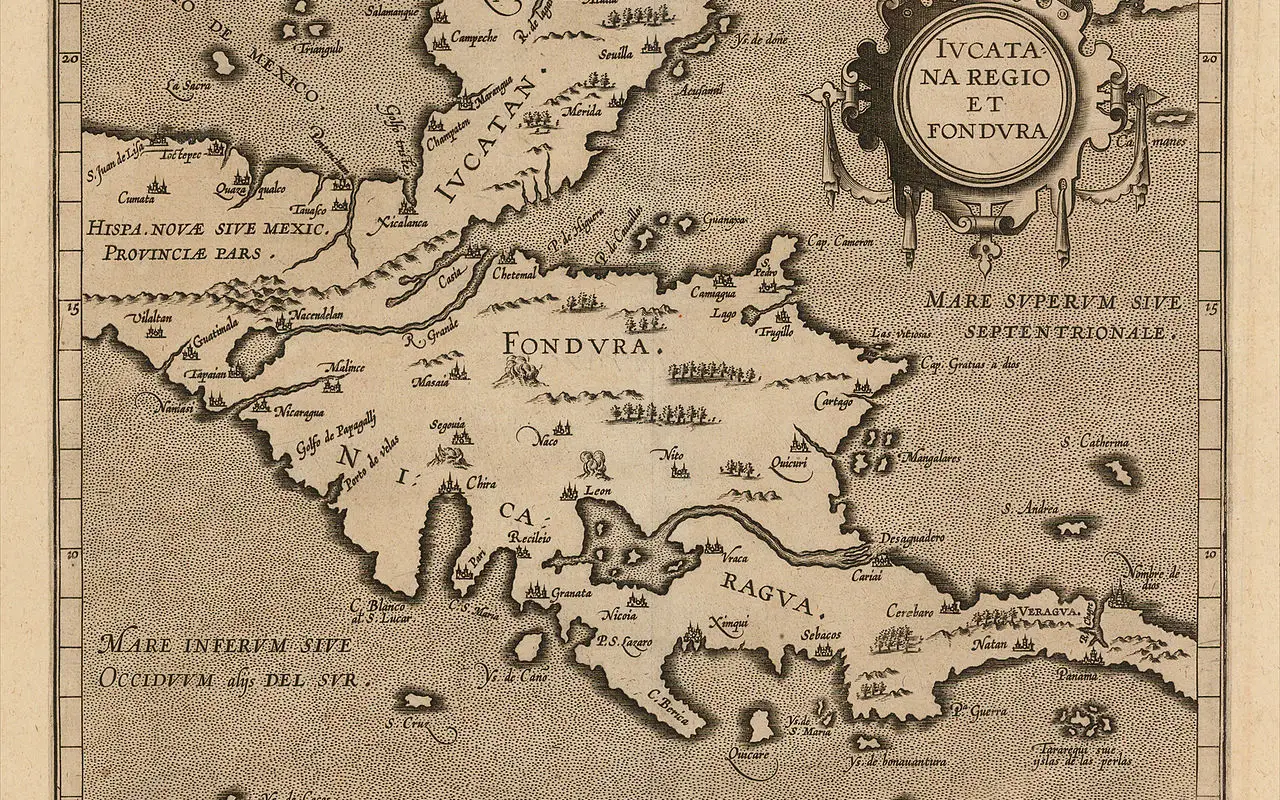
It is important to realize that the conquest of Central America— and Costa Rica in particular—was no easy task for the Spanish, involving numerous expeditions that can be broadly divided into two phases:
- An initial phasespanning from 1502 to 1560, during which the following areas were explored: the Caribbean coast, the northern plains, the San Juan River (Nicaragua), the Talamanca mountain range, as well as the now-vanished region of“Veragua”(straddling Costa Rica and Panama), and finally the Nicoya Peninsula and the northern Pacific coast. It should be noted that during this first phase, the expeditions were chartered primarily directly from Spain and, to a lesser extent, from the Spanish colonies already established (Mexico, Colombia, Guatemala).
- A second phase, spanning from 1560 to 1573, was the Conquest, which focused on pockets of indigenous resistance in Costa Rica, with the arrival of the true conquistadors in the “Land of Green Gold”: in this way, Juan de Cavallón is considered the first conquistador. In 1561, he laid the groundwork for the conquest of Guanacaste and the Central Valley, notably through the first clashes with the indigenous populations. This struggle was taken up by Juan Vásquez de Coronado, who became Costa Rica’s first official governor, with the mission of subduing indigenous resistance and establishing Spanish rule.
At the time, the Huetares ethnic group was considered the most developed and best organized, with two prominent chieftains worth noting: El Guarco (Central Valley) and Garabito ( Guanacaste and the western plains); the latter is a renowned historical figure in Costa Rica, known as the chieftain who put up the strongest resistance against the Conquistadors.
As you can see, the Spanish struggle for control of Costa Rica was a long one, marked by numerous complications, which partly explain the lack of resources the colony subsequently experienced.
The Conquest was a traumatic event for a large portion of the local population. It led to a veritable bloodbath across Costa Rican territory, with the population plummeting from 400,000 in 1510 to 10,000 in 1610… In 100 years, the indigenous population was virtually wiped out—a consequence not only of armed conflict but also, and above all, of the many diseases and disruptions to ancestral ways of life caused by the arrival of the colonists.
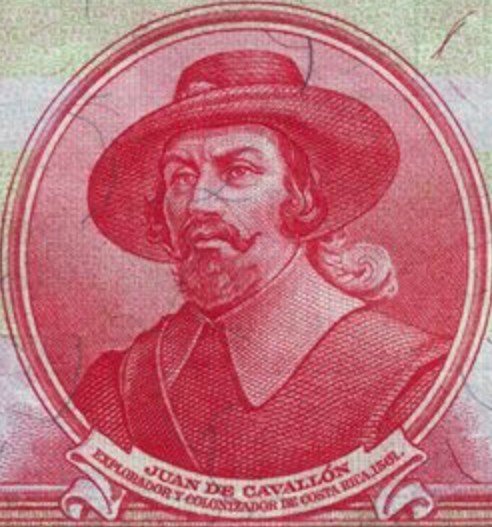
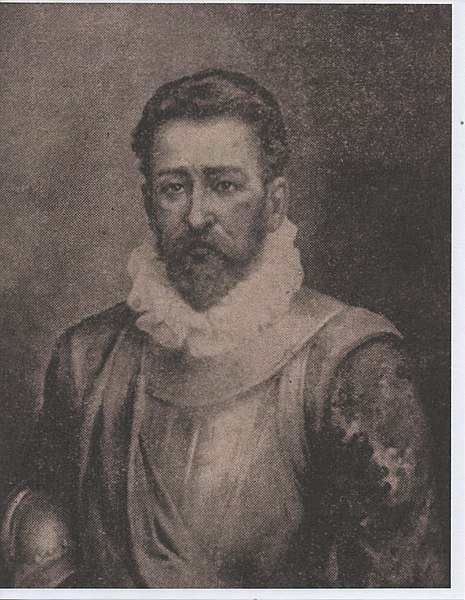
8. Colonial Era: Spanish Rule
Beginning in the 17th century, Costa Rica was thus officially linked to the Spanish colonies in Central America through its incorporation into the Viceroyalty of NewSpain, whose capital was Mexico City. This administrative entity, unique to the Spanish colonial system, extended over a vast group of territories, ranging from California and Florida to Panama (a territory belonging to the Viceroyalty of Greater Colombia). But it also included Caribbean territories, such as Cuba (the“pearl of the Empire”) and Santo Domingo (along with Puerto Rico), and, more surprisingly, the Philippine archipelago in the Pacific Ocean!
So how did Spain exercise its rule over these distant Central American territories?
To ensure better control over the territories under Spanish rule, the administrative structure was strengthened with the creation of Captaincies. These were entities comparable to regional provinces, each with an administrative capital where the Captain General—the King’s representative—resided.
In the case of Costa Rica, I mentioned that the country was part of the Captaincy of Guatemala, which included what are now Chiapas, Guatemala, Belize, El Salvador, Honduras, and Nicaragua. Its capital was located in Antigua de Guatemala, a city famous for its historic architecture, a legacy of the period when it exerted its influence over these various territories. This contrasts with San José, Costa Rica’s current capital, which was isolated within the captaincy’s northernmost territory and therefore did not benefit as much as its neighbors from Spanish investments and infrastructure.
What is certain, however, is that Costa Rica did indeed experience the repression carried out by Spain, which was used to quell uprisings by indigenous populations challengingthe kingdom’s authority. Indeed, Spanish rule was exercised primarily through force, with the widespread use of capital punishment, torture, and arrests followed byenslavement (e.g., the shackles). Nevertheless, it is important to bear in mind that, even after Spain’s authority was established in Costa Rica, isolated areas remained for a long time where indigenous tribes continued to live freely according to their traditions and occasionally clashed with the centralized government.
9. The Colonial Era: Evangelization and Cultural Mixing
Now, it is important to understand that the foundations of the Costa Rican nation are deeply rooted in this unique period, which facilitated contact between Indigenous and Spanish cultures —a process that would manifest itself through the concepts ofevangelization and cultural mixing.
In fact, we have already highlighted the importance of the Catholic religion in Costa Rica—for example, in Esteban’s article on the Christmas season, which highlighted the various religious festivals marking this time of year that are particularly important to the Ticos.
This predominance of the Catholic religion in Costa Rica is a legacy of the Spanish, who carried out a massive evangelization campaign among the Indigenous tribes. This process involved sending missionaries whose role was to preach the “Gospel” in order to convert the local populations and eradicate pagan rituals. In light of this historical fact, you are likely familiar with the Jesuit Order, a religious order deeply involved in the evangelization of South America and featured in the film *The Controversy of Valladolid*, a fine example of the prevailing mindset of that era.
A symbolic event that embodies the importance of the Catholic Church in Costa Rica is the “Miracle of the Virgin of Los Angeles,” which is said to have occurred on August 2, 1782, in the“Los Pardos”area, a place where the country’s African population — linked to the transatlantic slave trade—was concentrated. Specifically, the miracle is linked to the apparition of a Black Virgin, who became the country’s patron saint, much like the Virgin of Guadalupe, the patron saint of Mexico, who shares similar characteristics. This event gave rise to a pilgrimage, the“Romería,” which is still widely observed today in early August.
To learn more about this event, we invite you to read this article: The Pilgrimage of La Negrita
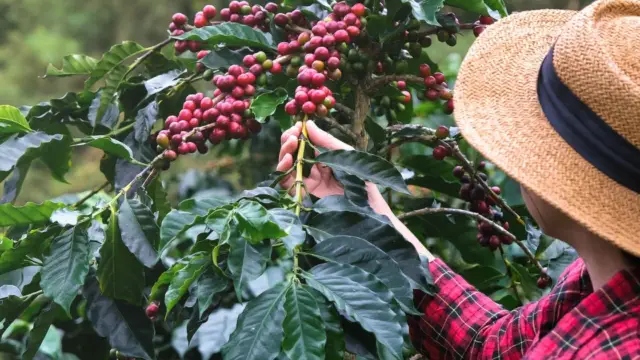
Finally, another important factor in the country’s history is the cultural mixing that occurred among the various ethnic groups present in Costa Rica, involving the blending of Indigenous, European, and African populations, whose mass arrivals began in the 17th century. African populations were forcibly displaced from their homelands to provide the laborneeded for the development of the captaincies, whose main economy was agriculture—particularly coffee cultivation, which was introduced to the Central Valley in the early 19th century. It was thus the infamous“triangular trade” that was responsible for part of the racial mixing of the Costa Rican population.
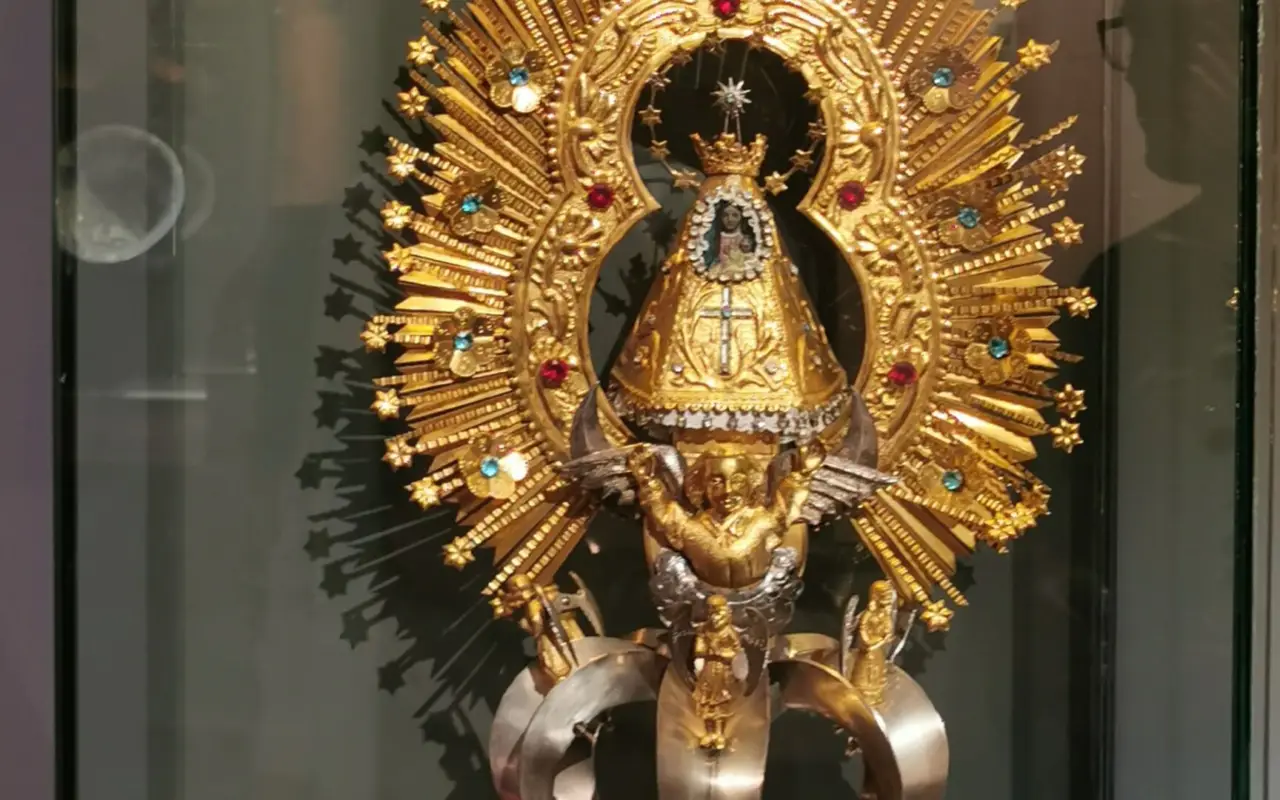
10. Modern Era: Costa Rica's Independence in 1821
We have explored various aspects of this pivotal period in Costa Rica’s history, during which the country was fully integrated into the Spanish colonial empire.
We will now turn our attention tothe modern era, which begins withCosta Rica’s independence, seeking to understand how Costa Rica, and all of Central America, managed to free themselves from Spanish rule in order to eventually gain their independenceand become fully-fledged nations?
RegardingCosta Rica’s independence, several key dates are worth noting: first , September 15, 1821, which formalized the emancipation of the Captaincy of Guatemala from Spanish rule—Spain was at that time embroiled in an armed conflict with Napoleon (see the Spanish War). This formalization was followed on September 28, 1821, by the drafting of the “Acta de los Nublados” treaty , which placed Nicaragua and Costa Rica in a wait-and-see position, as they wished to wait and see the Crown’s reaction before proceeding further.
To commemorate this moment, the“torch of liberty” is used , symbolizing the horsemen who traveled throughout Central America during the month following the announcement of independence to inform the most isolated communities. In fact, some regions of Costa Rica did not learn the news until more than a month later.
It was, therefore, a rather uncertain situation, during which independence was not officially proclaimed, but it became increasingly tangible as time passed and Spain’s response was slow in coming. This lack of response led to a first attempt at official independence with the creation in 1823 of the Federal Republic of Central America, which was intended to establish a federal nation comprising the former territories of the Viceroyalty of New Spain. This republic was never a success; disparities among its regions precipitated its collapse in 1825, leading to the enactment of the“Ley Fundamental del Estado Libre de Costa Rica,” which proclaimed Costa Rica’s autonomy within the federal state.
It is worth noting that it was during this period that one of thefirst pivotal eventsfor the nation of Costa Rica took place: the annexation of the Nicoya Region on July 25, 1824, which corresponds to the territory of the current province of Guanacaste. This event is celebrated annually in Costa Rica with the Nicoya Annexation Day holiday.
Finally, it was not until August 31, 1848, that Costa Rica adopted its first Constitution, which established the Republic of Costa Rica and allowed for the official proclamation of Costa Rica’s independence, making it a fully-fledged nation.
11. Modern Era: Costa Rica's National Symbols
We’ve told you how Costa Rica emerged as a nation following its independence from Spain. Now, we’ll explore the historical context that gave rise to Costa Rica’s main national symbols, starting with the official flag, the national coat of arms, and the national anthem.
Indeed, patriotic symbols became essential for legitimizing the nation-building process, which is why they were quickly adopted to ensure that Costa Rica would be taken seriouslyby other nations around the world.
As for the flag and the coat of arms, they were officially adopted on September 29, 1848. The flag is known to have been largely inspired by the French flag, which was particularly admired by Doña Pacifica Fernández, wife of Costa Rica’s first president, who designed it. Each color has a meaning: blue for the sky, white for peace, and red for effort and blood.
The coat of arms features various national symbols, such as coffee, the three mountain ranges, the main valleys, and the two oceans that border the country. There are also seven stars, symbolizing the seven provinces of Costa Rica.
Today, there are many national symbols, which we present on our “The Country at a Glance” page, such as the Sarchi Cart shown in the photograph below .
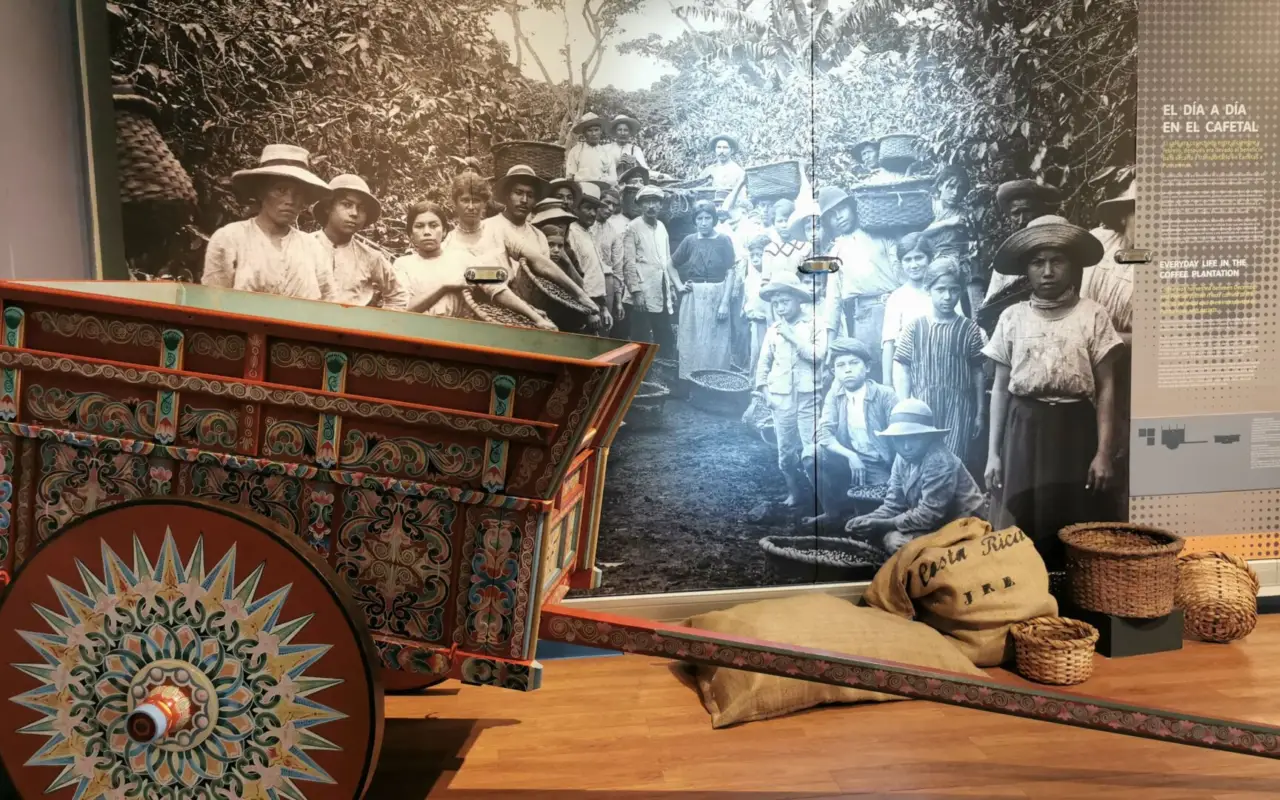

12. Modern Era: The War Against William Walker and the Filibusters
Beginning in 1848, the country entered the period known asthe “Oligarchy,” ruled by a handful of wealthy bourgeois who had made their fortunes through coffee exports and who would drive the country’s strong economic development by strengthening central authority and the main transportation routes (connecting the Central Valley to the ports of Puntarenas and Limón).
This period was marked by the construction of major infrastructure projects, such as the National Palace, the first hospital,the University of Costa Rica, and the first medical school, as well as the central bank, the National Theater, and the famous National Alcohol Factory, which is still in operation today.
But what truly defined this period was the“National Campaign,” an armed conflict that pitted Costa Rica againstthe “filibusters” led by William Walker, a mercenary hired by the United States to conquer Central America and establish a new nation there that would be subservient to the U.S.
This event was fundamental to the nation-building process, as it was a conflict that united the Costa Rican people against a common enemy that threatened the nation. After successfully conquering the various Central American countries with relative ease, William Walker and his men faced their first resistance from the Costa Rican army (though it was inexperienced). They therefore halted their advance in the northwestern part of the country, near the Santa Rosa area, where they took refuge and set up a camp around the now-famous Hacienda Santa Rosa.
It was here, on March 20, 1856, that the Battle of Santa Rosa took place, from which the Costa Ricans emerged victorious, thanks in large part to the legendary figure of Juan Santamaría, a valiant soldier who is said to have set fire to the buccaneers’ camp by surprise, inflicting heavy losses on the enemy troops, who were subsequently driven back beyond Costa Rica’s borders.
I use the conditional tense because the existence of Juan Santamaria is open to question, as historical records from that period do not confirm this story. Given that many nations around the world have created heroic figures out of thin air for nationalist purposes, this would not be surprising.
12-bis. The Modern Era: The Liberal State and Economic Development
This period of economic development continued into the early 20th century, with the establishment of a liberal state anda doctrine that would be enshrined in the new Constitution of 1871.
It was within this socioeconomic context that, in 1900, the colón —Costa Rica’s national currency, still in use today—was created. At the same time, the country began to open up to the world, with waves of immigrants arriving from Jamaica, China, and Italy to provide labor for the country’s major construction projects, particularly the building of the Atlantic and Pacific railroads.
Meanwhile, the first steps toward closer ties with the United States were taken with the establishment of the United Fruit Company in Costa Rica at the end of the century. This company left its mark on the continent’s history by imposing economic dominance over many Central American countries, giving rise to the “Banana Republics.”
It was not until after the economic crisis of 1929 and major social movements—including the “Lost Arms” strike of 1934— that the United Fruit Company’s presence and influence over the country’s sovereignty began to be challenged, thanks in large part to the reformist government.
13. Modern Era: Social Reforms and the Civil War of 1940–1948
The reformist state played a pivotal role in Costa Rica’s modern history, as it facilitated numerous social advances, but it was also the catalyst for the 1948 civil war.
Social advances made possible by the reformist government:
The central figure of the social reforms was Rafael Ángel Calderón Guardia, Costa Rica’s 29th president and an enlightened physician. He is one of the most important figures in Costa Rican politics, and his influence on the country’s politics is still felt today through the Calderonist movement.
His importance can be gauged , if only by the museum dedicated to him , located in his former home and office in the Barrio Escalante (50 meters from our agency), which traces his life’s journey.
A key point is that Calderón managed to forge ties with both the Catholic Church (see Catholic social doctrine) and the Communist movement (see Manuel Mora Valverde, an ally involved in class struggles), thereby establishing himself as a political figure concerned with social issues.
Thus, in 1940, he was elected President of the Republic and was able to begin implementing what would come to be known as the “Social Guarantees, ” which led to improvements in the Costa RicanConstitution and Labor Code. Among these advances was the creation of Seguro Social, the public healthcare system that drastically improved the living conditions of the local population by providing them with free access to medical care. He was also instrumental in the founding of the University of Costa Rica, which serves as a model in Central America.
He was thus a central figure, though one who proved divisive, given his involvement in the “Civil War of 1948, ” the deadliest event in Costa Rica’s modern history.
The 1948 Civil War: An Essential Event in Modern History
On July 8,1942, the other key political figure of this period— José Figueres Ferrer— delivered a radio address in which he denounced fraud in the 1940 elections. This led to his expulsion from the country but allowed him to rally his forces abroad before returning in 1944. It was following the 1948 elections— after he once again questioned the validity of the vote due to suspicions of fraud—that the civil war broke out, pitting Figueres’ supporters against those of Calderón.
The civil war was effectively launched by Figueres on March 12, 1948: at the head of his “National Liberation Armies, ” he marched toward the Central Valley and the capital, San José. He advanced from the Pacific coast, where he first captured the town of San Ididro del General, then Cartago, the country’s former capital, located a few kilometers from San José. It then took him only a few days to cut off a large portion of Calderón’s troops, who eventually took refuge within the famous “Cartel de Bellavista” citadel. It was here, on April 19, 1948, that the last of Calderón’s supporters surrendered, following numerous battles in the capital and throughout the rest of the country, which had claimed approximately 4,000 lives.
Figueres’ Victory and the Welfare State:
This surrender to Figueres enabled him to assume power at the head of a junta tasked with facilitating the transition to a new Republic. It was not until a year later that the transition process took shape, with the formal adoption of a new Constitution establishing the Second Republic, which remains in effect to this day. The announcement of the Second Republic was accompanied by a symbolic measure: the creation of the National Electoral Tribunal, anautonomous fourth branch of government tasked with ensuring the integrity of Costa Rica’s upcoming legislative elections.
A few months earlier, on December 1, 1948, Figueres had made history by proclaiming the abolition of Costa Rica’s army. To do so, he symbolically tore down a section of the wall at the Cartel de Bellavista, the country’s last military headquarters. Meanwhile, Figueres continued the social reform efforts initiated by Calderón, notably by establishing the principleof the welfare state: the creation ofICE andAyA, the two public enterprises responsible for the country’s electricity and water systems, respectively. It is also worth noting that the ICT, the Costa Rican Tourism Institute, was created during this period .
It is worth noting that these two camps—the Calderónists (see the National Republican Party, PUSC)and the Figuerists (see the National Liberation Party, PLN)— have represented the country’s two dominant political factionsfrom the second half of the 20th century to the present day . It was not until 2014 that a candidate from a different political camp was elected.
14. The Modern Era: The Economic Crisis of the Years and the 21st Century
The Consequences of the Economic Crisis of the 1980s:
Costa Rica’s modern history was profoundly shaped by an unprecedented economic crisis that struck in the early 1980s and called into question the existing economic model.
This crisis quickly led to a surge in national debt, as well as rising unemployment —with 10% of the population out of work—all accompanied by high inflation, which sparked popular uprisings in 1981, 1983, and 1985. It should be noted that these uprisings were also fueled by strong opposition from a segment of the population (primarily students) to the country’s intensive agricultural policy. This was driven by a growing awareness of the considerable damage this economic model was causing to Costa Rica’s natural ecosystems.
Thus, during the 1980s, Costa Rica implemented decisive economic changes, scaling back its agricultural policy in order to protect its natural heritage and thereby promote“tourism,” which was to become the new flagship ofthe national economy. Recognizing that this tourism must work in synergy with forms of agriculture that are more ecologically and socially integrated, this marked the beginning of ecotourism!
Costa Rica, a model country in Central America:
This shift in economic policy would give Costa Rica new momentum, restoring its status as a regional power. This return to prominence is illustrated by the awarding of the Nobel Peace Prize in 1987 to Oscar Arias Sánchez, former president of Costa Rica, who worked tirelessly to bring peace to Central America, which had been destabilized by Nicaragua —which had become an enemy of the United States (see the context of the end of the Cold War). The United States, in particular, attempted to remilitarize Costa Rica to help combat this geopolitical threat, but it did not count on the convictions of Oscar Arias Sánchez.
At the same time, closer ties with the United States intensified, particularly after the economic crisis of the 1980s, during which financial aid from the International Development Agency proved crucial. Foreign investment began to increase in the 1990s, exemplified by the opening of Intel’s first branch in San José in 1996, which was followed by numerous other American multinationals (Amazon, IBM, Microsoft, Walt Disney, etc.).
Costa Rica’s appeal to foreign investors is also evident in the tourism sector, as the country opened its doors to travelers from around the world thanks to its international airports. Let’s highlight the airport in Liberia, Guanacaste, as this region would establish itself as a premier beach destination for Americans— the country’s largest group of tourists —who arrived en masse by plane in Liberia. It was during this period that most of the country’s tourism infrastructure was built, paving the way for the emergence ofmust-see destinations : Manuel Antonio, Monteverde, Tortuguero, Arenal, Rincón de la Vieja, Tamarindo…
This explains why some tourist facilities may be showing their age, due to a lack of sufficient maintenance since those early boom years of Costa Rican tourism. At the same time, it is worth noting a shift in the country’s tourism strategy, with a commitment to opening up to other types of travelers—such as Europeans—who will visit the country in ever-greater numbers throughout the 21st century. This shift is illustrated by the strategic alliances Costa Rica has formed with Germany (student exchanges, knowledge transfer, etc.) and with the SUD region in France (“sustainable tourism” partnership, nature reserve management).
Furthermore, it should be noted that Costa Rica is a model country politically, taking strong stances on sensitive issues such as the fight against global warming, marriage equality and LGBTQ+ issues, and the defense of human rights, as the host country of the Inter-American Court ofHuman Rights (see“the little Switzerland of Central America”).
As you can see, with its extraordinary history and exceptional natural heritage, Costa Rica is truly one of a kind—a destination that captivates countless travelers inspired by its shared vision and eager to discover with their own eyes the “land of green gold,” the birthplace of Pura Vida!

Sources used:
- Wikipedia – Costa Rica
- Wikipedia – Conquest of Costa Rica
- Exhibition at the National Museum of Costa Rica—16th to 19th Centuries
- YouTube Channel – National Archives of Costa Rica (in Spanish)
- CNN – This Is Costa Rica
Cristo De Franceschi, a young writer for Terra Caribea.
Please know that I thoroughly enjoyed delving into Costa Rica’s history to bring you this article, which rounds out my personal story in the Land of Green Gold.