Fishing in Costa Rica
As one of the countries best known for sport fishing, Costa Rica invites you to go deep-sea fishing in both the Caribbean and the Pacific. Whether aboard comfortable boats, inflatable boats, or simple canoes, the fishing opportunities are extremely varied. Sport fishing in Costa Rica is always a rewarding adventure, thanks to the abundance of fish and the idyllic surroundings. Please note, however: when it comes to sport fishing, the “catch and release” policy is the norm in Costa Rica.
The Pacific region is home to internationally renowned spots, such as Samara, Golfito, and Bahía Drake. So, if this experience appeals to you, you know what to do…
Our team will be delighted to help you explore these world-renowned fishing spots under the best conditions, whether you’re a novice sailor or a seasoned captain!
– From May to November, during the rainy season, the best catches are found around Papagayo Gulf.
– From December to April, during the dry season, it’s best to head further south: Bahía Drake and Golfito are our favorite spots.
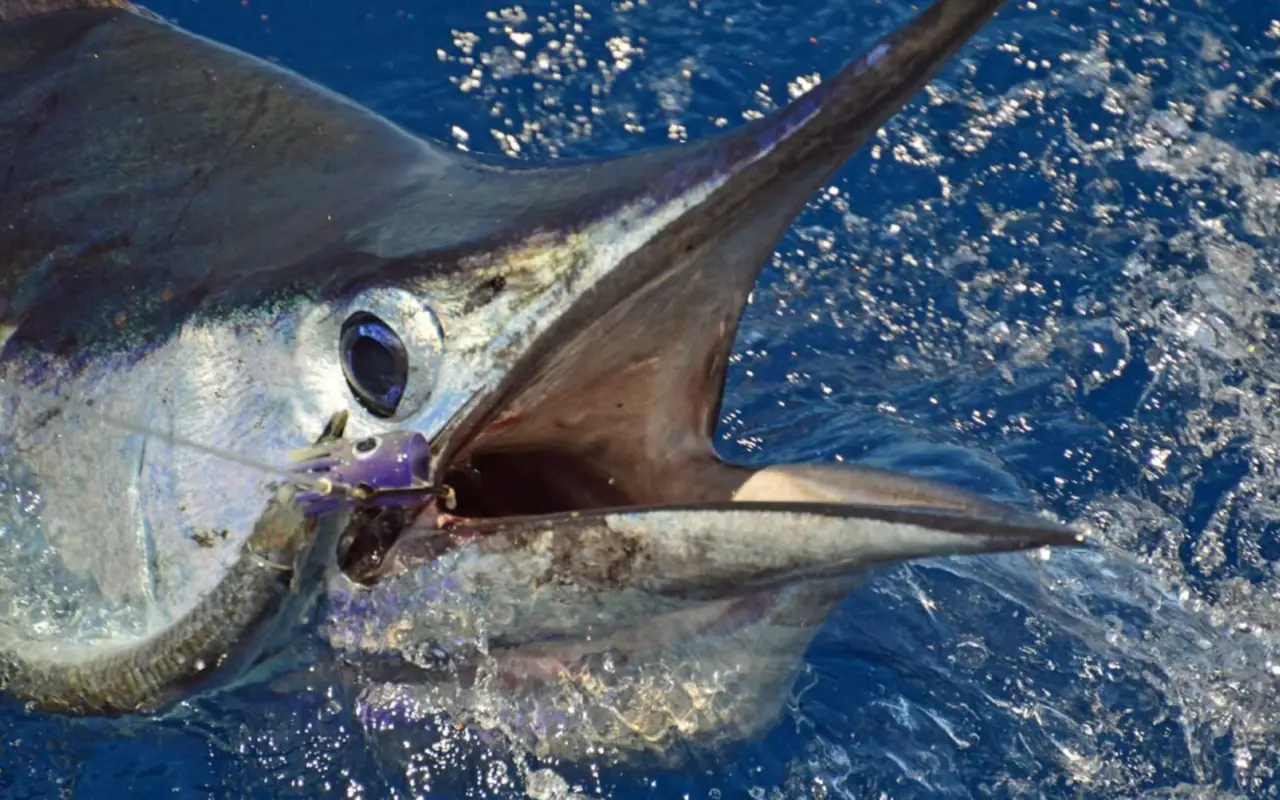
Of course, each species has its own preferred spots and peak season: so while you can fish year-round, you’ll never catch the same fish twice. It’s even said that Costa Rica is one of the only places in the world where you can catch three different types of marlin in a single day (black, blue, and striped), as well as sailfish that can grow up to 2 meters long… A fisherman’s paradise—we told you so!
Different Fishing Techniques
Below are the different fishing techniques you can try in Costa Rica. However, we’d like to emphasize that these are primarily practiced under a “catch and release” policy.
Surfcasting
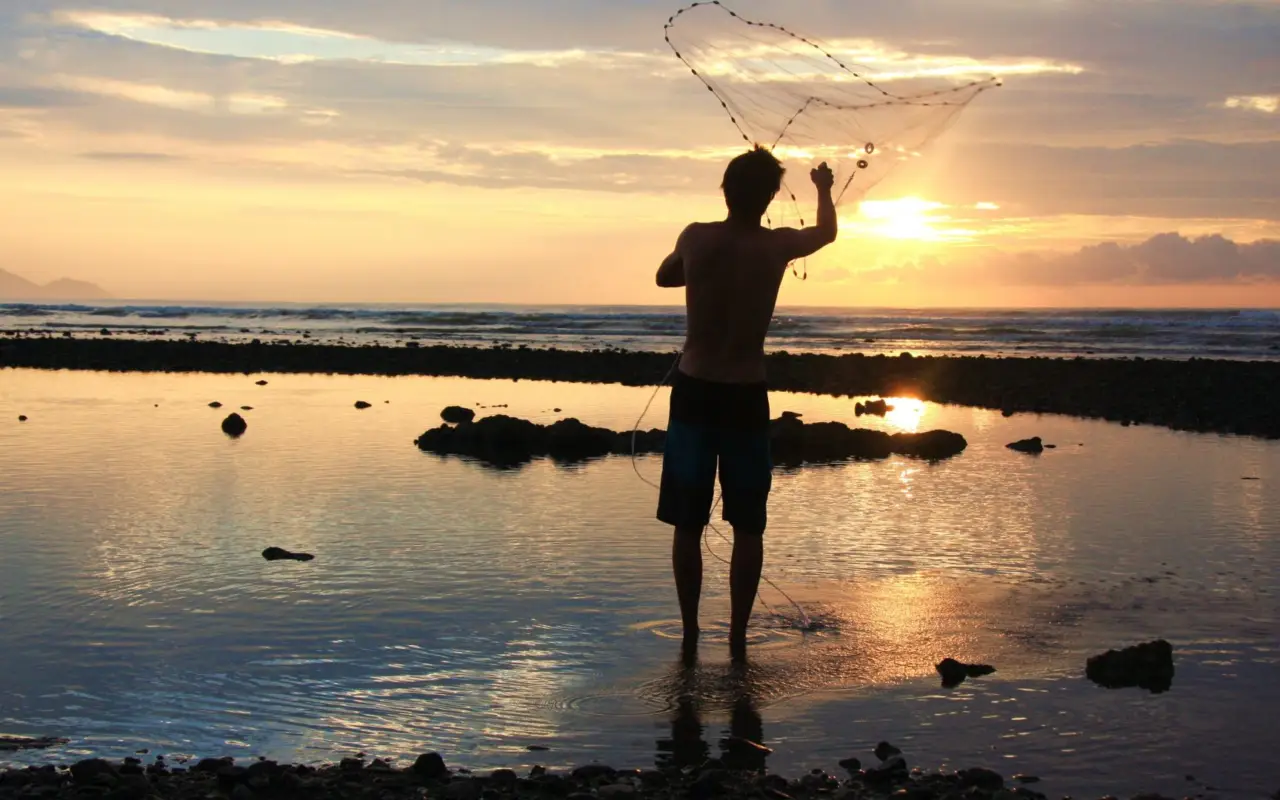
This fishing technique is practiced from the water’s edge along any coastline. The technique is simple and involves casting bait into the waves and waiting for a bite. This technique works well in areas with rough water, and works even better when the sea is rough (at night, sunset, or sunrise) and you use worms or shellfish found in the fishing areas.
Fly fishing
This technique is also practiced from the water’s edge. Fly fishing involves casting a lure called a “fly,” which mimics either an insect or a larva. There are two main techniques: the whip cast (the weight and thickness of the line propel the fly), or the arched cast (pulling on the fly’s body until the rod bends).
Bottom fishing from a boat
The angler holds the rod in hand and must let the line sink to the bottom and wait for a bite. This fishing technique makes it very easy to catch large quantities of rockfish or fish that primarily inhabit algae-covered bottoms.
Lure fishing from a boat
This technique involves using a lure and animating it to mimic a real small fish. If the lure mimics wounded prey, it tends to stimulate the predator’s appetite and thus result in a catch more quickly. This technique is primarily used to catch fish such as pike, zander, or bluefin tuna.
– Popper Lure Fishing
Popper lures are mainly used for challenging fishing conditions, such as windy days or rough seas. Using a large popper makes it easier to draw fish in and cast long distances into the wind.
– Trolling
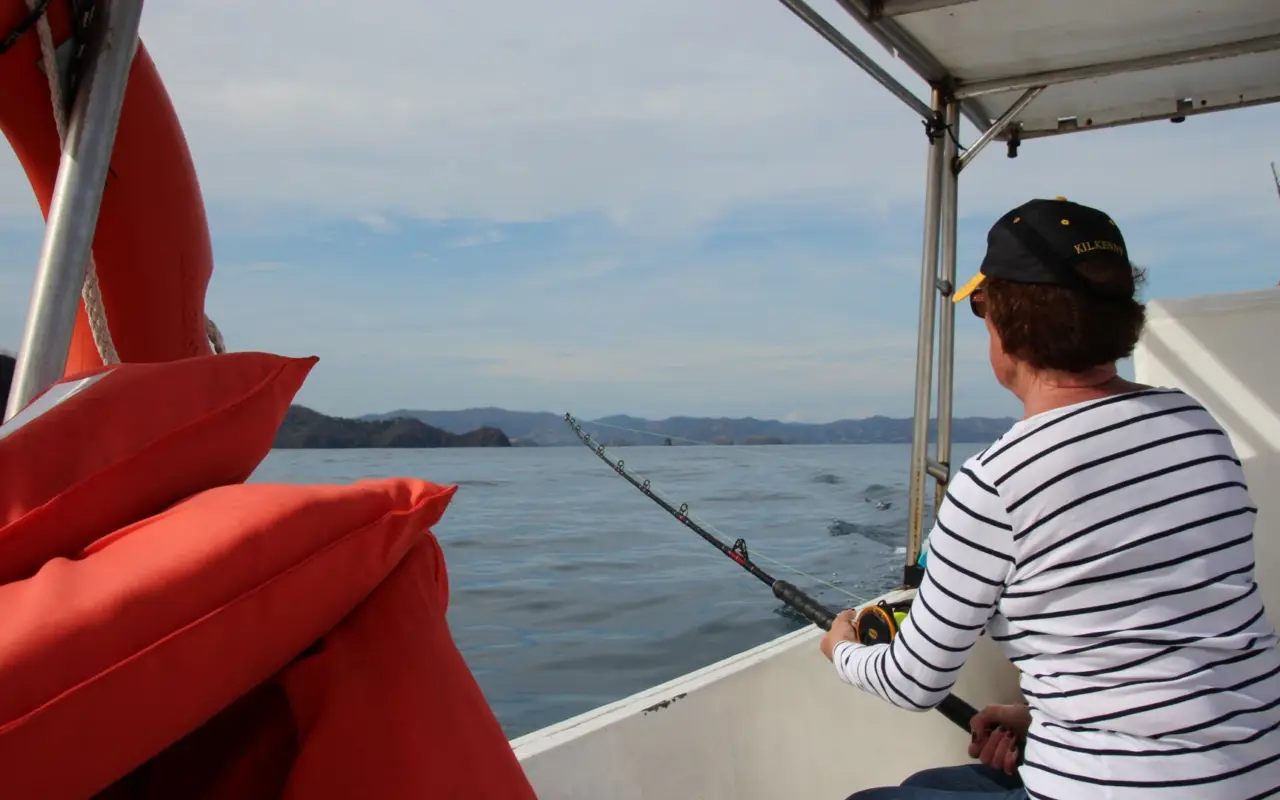
This technique involves letting the lure trail behind a boat traveling at a slow or moderate speed. In tropical waters, this type of fishing is used primarily to catch bonito, trevally, barracuda, and tuna.
The Different Regions
THE SOUTH PACIFIC
Uvita
You’ll be able to go fishing at Isla del Caño, located about 30 kilometers off the coast of Uvita.
The fishing techniques used will include trolling, casting, and, in some cases, deep-sea fishing.
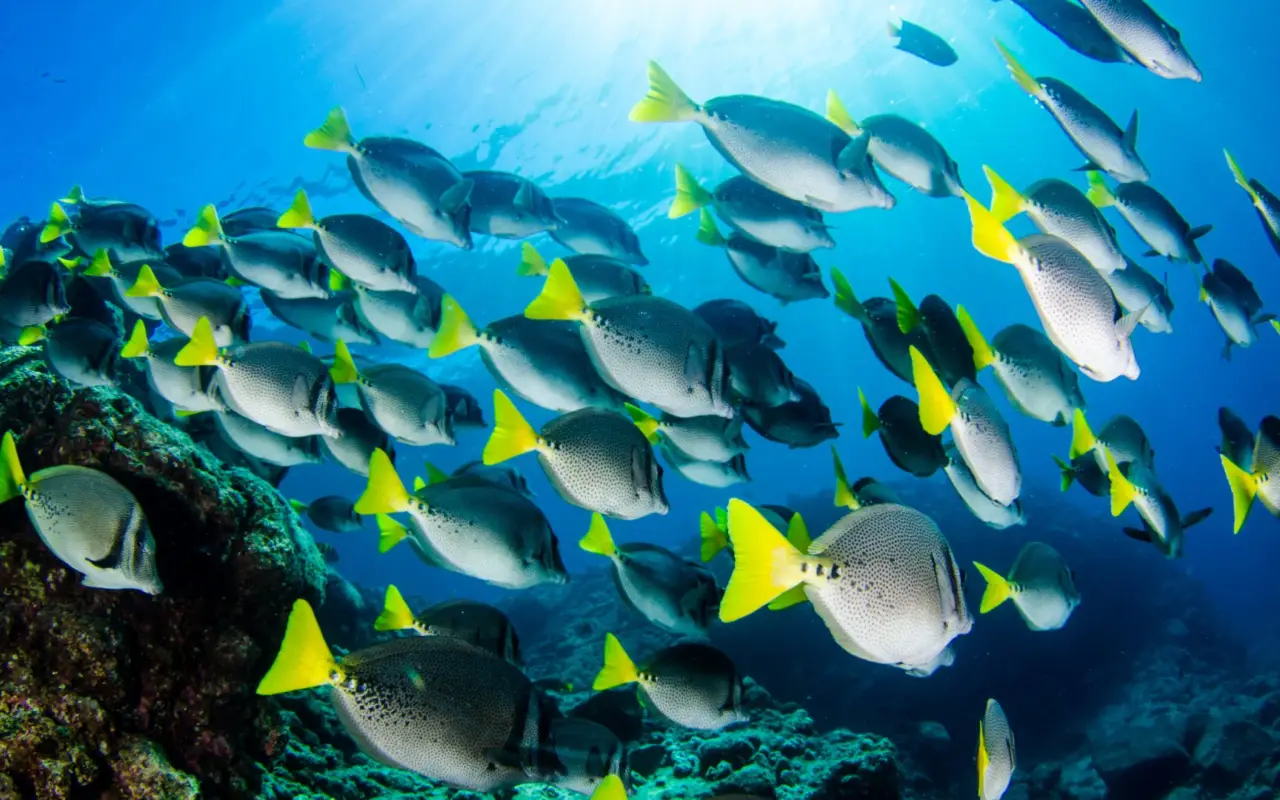
During this excursion, you’ll likely have the chance to spot dolphins and whales.
Expected catch: snappers, mahi-mahi, yellowfin tuna, wahoo, marlin, roosterfish, sailfish, and groupers.
Quepos
Quepos is often considered the sport fishing capital of Costa Rica. This is due in part to the fertile ocean currents, but also to its lush tropical coastline.
Likely catches: sea bream, tuna, marlin, and sailfish.
GUANACASTE
Papagayo Gulf and Tamarindo
You can head out to fish off the coast of the Gulf of Papagayo or in Tamarindo for a day of big-game fishing.

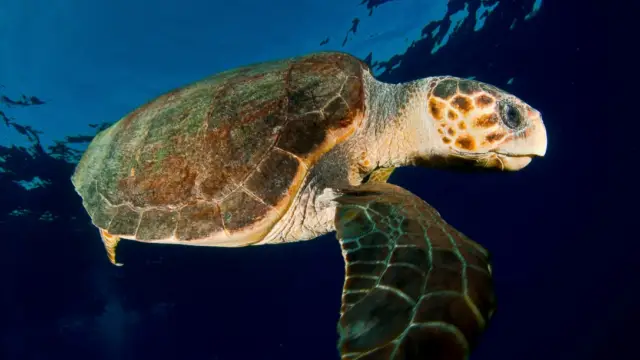
In this region, you’ll also have the opportunity to spot dolphins, sea turtles, and stingrays.
Expected catches: billfish, sailfish, tuna, and mahi-mahi.
THE NICOYA PENINSULA
Isla Jesuita
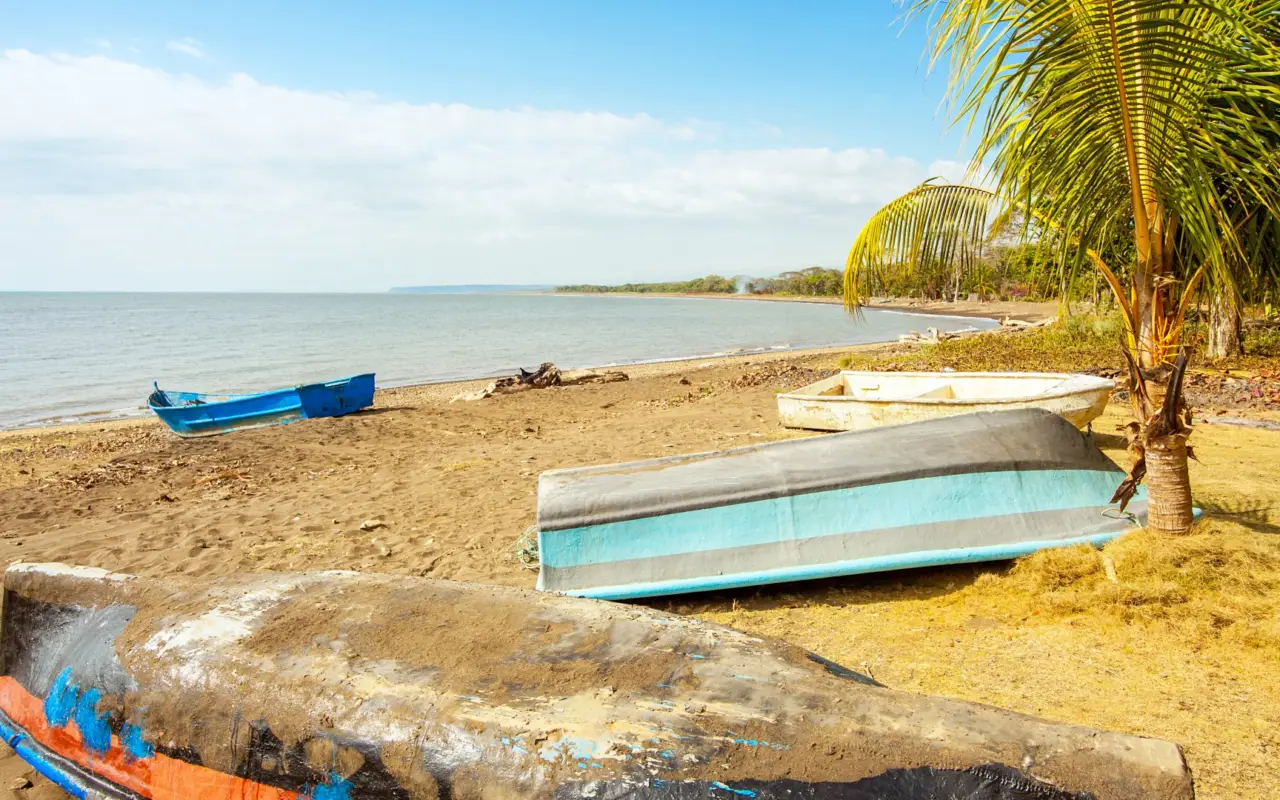
You can try your hand at traditional fishing, which is a key part of the region’s cultural and economic strategy. Traditions passed down from generation to generation are essential to the way of life of many local communities.
A local fisherman/guide will take you out on a small boat for a delightful expedition to the region’s best fishing spots.
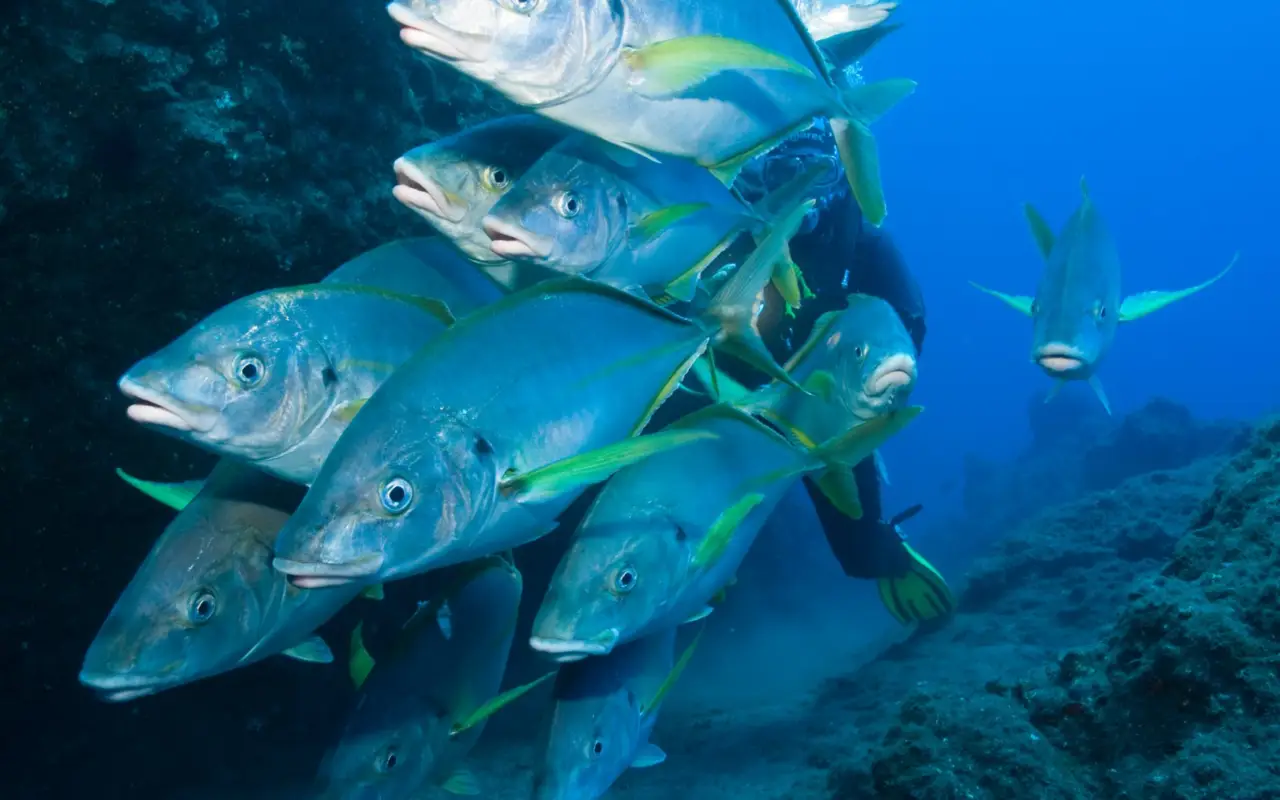
For thrill-seekers, sport fishing is also a highlight onJesuita Island. For many people in the past, this little corner of the island was a favorite spot for sport fishing enthusiasts.
Expected catches: snappers and groupers.
Samara
You’ll head out to sea off the coast of Samara for a half-day or full-day of inshore fishing.
The techniques used will include: bottom fishing, jigging, slow trolling, live bait fishing while drifting or at anchor, and, of course, fishing with dead bait.
You can also opt for deep-sea fishing off the coast of Samara, between 8 and 25 nautical miles out, for a half-day of big-game fishing.

During these excursions, you may be lucky enough to spot dolphins, whales, sea turtles, or stingrays.
Likely catches: mahi-mahi (dolphinfish), trevally, tuna, roosterfish, grouper, bonito, snapper, cubera, marlin, and sailfish.
OSA PENINSULA
Golfito and Drake Bay
The best time to go fishing in Golfito is from November through June. You’ll be amazed by the abundance of fish of different sizes, colors, and species.
Your fishing experience will depend on what’s biting and what you’re targeting as an angler.
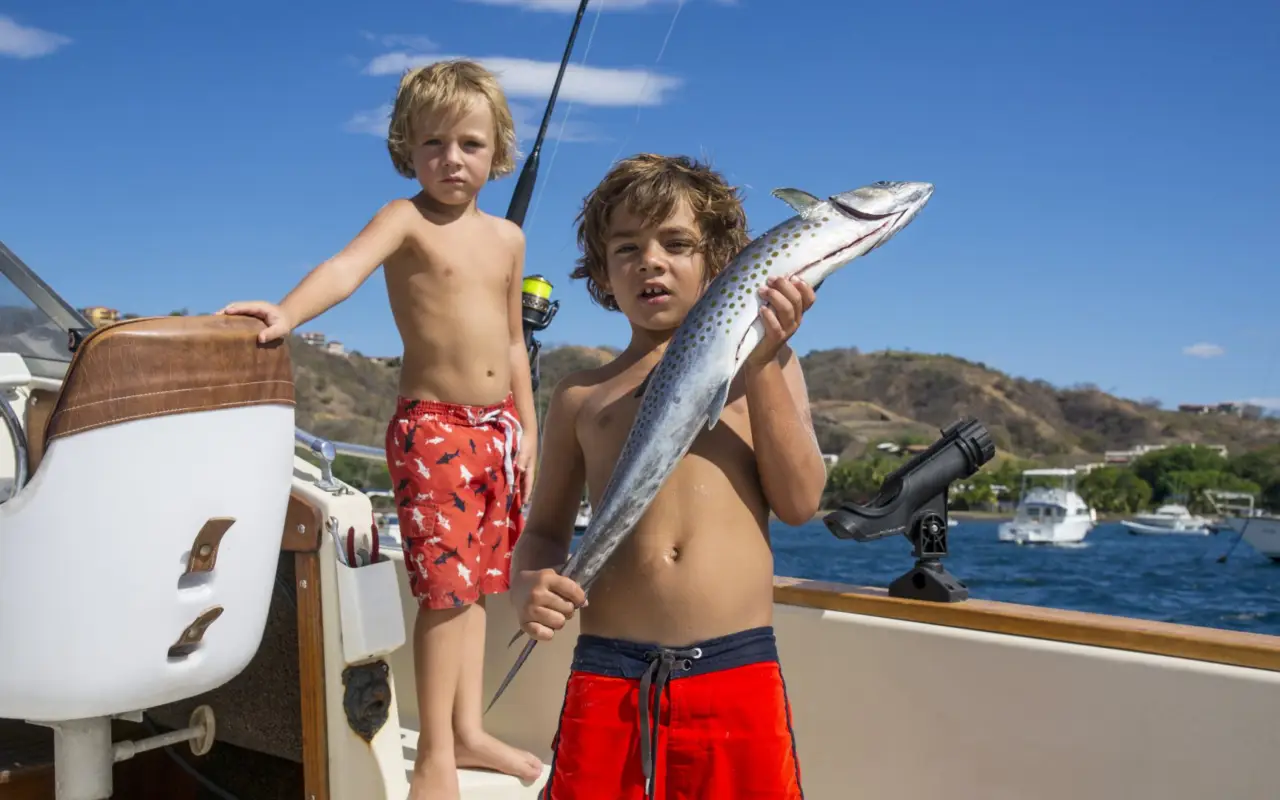
You can go out to the island or stay along the coast, depending on the target species.
Expected catches: cubera, trevally, yellowtail grouper, groupers, snappers, tuna, wahoo, rootfish, mackerel, crickets, and snook.
NORTHERN PLAINS
Arenal
You can head to the heart of Lake Arenal to enjoy some sport fishing on Costa Rica’s largest man-made lake. It was built in 1974 to provide the country with hydroelectric power.
You’ll fish with a fly rod or a traditional rod.
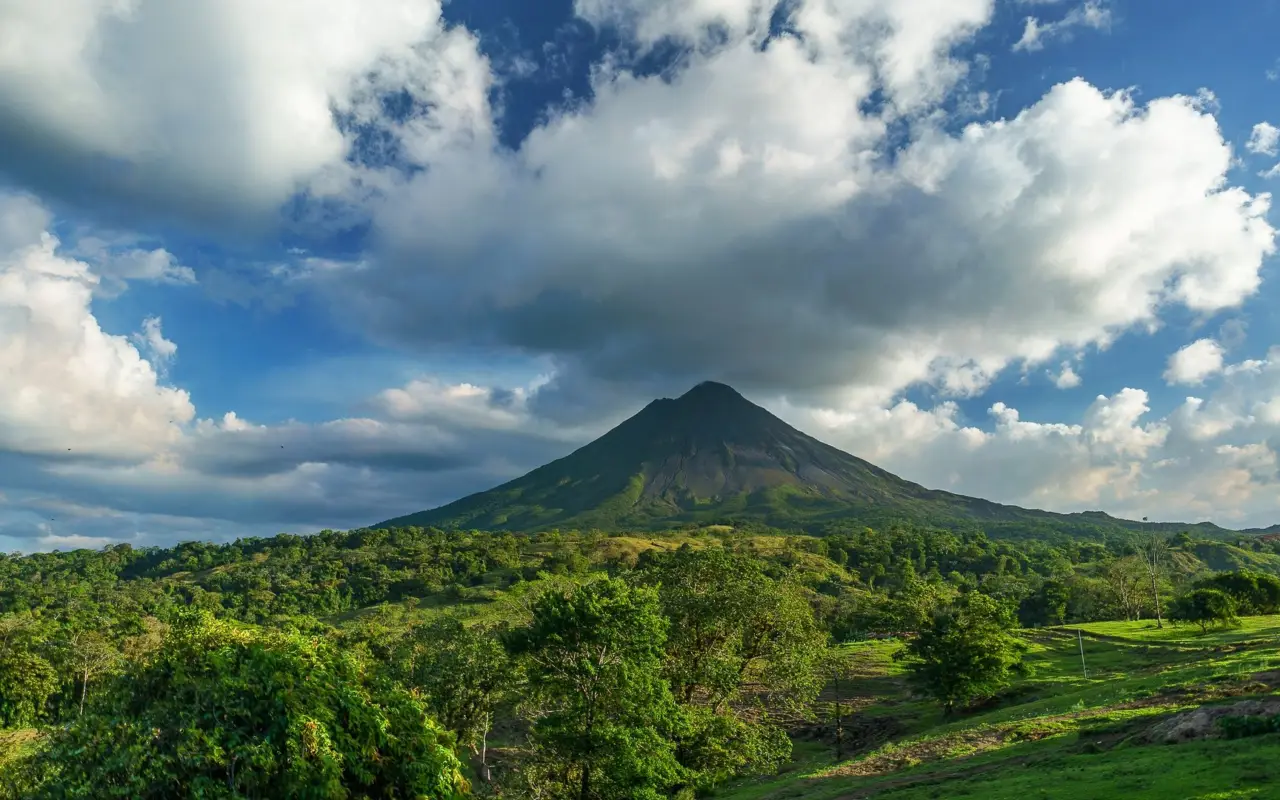
From the boat, you’ll be able to take in the lake’s stunning scenery, including a breathtaking view of the Arenal Volcano.
Likely catches: guapote (the lake’s toughest fighter), machaca, or sabalete.